I keep waiting but the phones only get bigger. Seems I’ll have to eventually replace my iPhone 12 mini with a 13 mini, or ditch Apple entirely.
The Google Nexus 4 was my all time favorite smart phone in terms of overall size. But I suppose it’s unlikely Apple will ever make a phone anywhere close to that size ever again.
Maybe you’re in the minority; but you’re not alone. I went the hassle of signing in on mobile just to upvote you! Sincerely from a 13 mini user, still grumpy about having to give up my se 1.
It depends on what your definition of "small" is. If you consider the iPhone 13 mini as small the only thing that comes to mind is the Unihertz Jelly Max.
As a recent Android foldable phone owner (Google Pixel), I'm excited that the Duo will get developers to actually design apps for foldables. Right now, some apps don't work at all and others are just stretched. I feel a better use of the screen space is around the corner for both Android foldable and Duo users.
As a dev who regularly works on apps for both platforms, I think one of the main causes for poor support for form factors beyond a standard smartphone on Android boils down to Google refusing to give developers fully fleshed out APIs to support said form factors.
Instead, they just hand you some poorly documented loose parts in a box and tell you, “good luck” and you’re on your own to fill the gaps. Compose is a little better about giving the tools you need than the preceding Android Framework, but it’s still much more “assembly required” and “batteries not included” than the UIKit+SwiftUI world is.
Many iOS apps built using system components will behave 90%+ correctly on the Duo by just compiling against the iOS 27.1 SDK because there are well supported methods of doing things that Apple can leverage to reduce dev work. In contrast, on Android there's 10 ways of doing anything none of which get full-throated support (on top of all the other ways devs invent), and so any time it gains support for a new form factor almost nothing is automatic and it all falls on the devs’ shoulders.
Android actually has one real way to build UIs — it's the views and the resource system. Everything else is just Google's abstractions over that, which are either beta or deprecated.
I'm not sure what kinds of tools do you expect. You do have to make layouts for different screen sizes, no real way around that. You'd usually want two breakpoints, so you have phones, small tablets (and foldable inner screens), and large tablets.
I'd like to see equivalents of UIKit/SwiftUI components that do most of the layout/navigation heavy lifting for you. For most apps, either the iOS 18+ UITabController or UISplitViewController comfortably covers every platform, orientation, and screen an iOS app can possibly run on with a tiny fraction as much boilerplate and manual ratcheting as is required in Compose.
There are, watch the "Strike a pose with adaptive layouts" video they posed yesterday (https://developer.apple.com/iphone-duo/). High level components like split views will adapt automatically, while things like scroll views won't, so there are new adaptive views (AdaptiveView, UIArrangementViewController) to help you move things around.
Another reason is hardware fragmentation. An Android developer has to account for over 20,000 unique devices, compared to an Apple developer targeting around 40 supported models at most.
It’s a factor, but the bulk of those devices can be generalized into a handful of categories. Google could also throw around its weight a bit more to get manufacturers to form a consensus on things like how various components are addressed so it doesn’t need to spin its wheels as much on papering over those differences.
Better support for variable form factors wouldn’t force anyone to do anything. It would incentivise them to use that support.
Danox is just saying (IMHO) that Google can’t be bothered because they don’t need Android to be good, they just need it to be good enough to continue existing.
It might, but if you look at other AOSP features in that vein (split-screen multitasking, popout volume sliders, standard dialer app) they're all largely ignored by downstream OEM Android ROMs. I wish that wasn't the case, but it's also clear why this happens.
Google has led many horses to this spring, only to watch Samsung ship some godawful monstrosity and refuse to drink. It's part of Android's identity, not Google's.
As if hardware companies don't quite famously include spyware in their products. Everything from phones, cars, fridges, TVs, monitors, speakers, light bulbs, laptops and everything else that supports inclusion of spyware.
WindowSizeClasses, Postures, Navigation3, ListDetailScaffolds, the list goes on. Android & Compose is pretty much flawless when it comes to develop for it, it's thoroughly documented and works well.
Layouts will not magically be not dog shit on iOS because Apple put out another version of SwiftUI that you can't use in prod because nobody has the update. 90% of the apps will be stretched. Horizontally. The reality of it is, it's pretty much never worth it to make layouts that are specialised for foldables/tablets.
Also, it's pretty fucking funny to be worshipping Apple like that when they have a single device to support, and then complain about Android that literally had to pave the way and today works on phones that can unfold three times, phones like the galaxy Z Flip that have instead half screens, etc. Apple will tell you they can't back port dynamic islands on last year's release, while latest Compose is happily running on devices from 10 years ago.
> WindowSizeClasses, Postures, Navigation3, ListDetailScaffolds, the list goes on.
Yes, those are the loose parts. They still have to be assembled correctly for everything to work as expected and every app does it a bit differently (there is effectively no endorsed "correct" way to assemble them). This means that Google cannot extend them with new functionality later without breaking some if not most usages of those parts in the future.
Compare that to UITabController in UIKit, which has been present since very early on and got extended recently. If the dev adopts iOS 18 revisions, configuring that single view controller gets you more or less correct presentation and navigation across all sizes and orientations of normal iPhone, iPad, desktop, and now iPhone Duo and implementation is close to identical between apps.
> …and then complain about Android that literally had to pave the way and today works on phones that can unfold three times, phones like the galaxy Z Flip that have instead half screens, etc.
That's fair, but users can't reasonably expect any kind of meaningful adoption of new oddball form factors like that until the platform vendor (Google) rolls out standardized APIs to streamline the process (which Google has partially done, but won't commit to a unified solution for).
> Apple will tell you they can't back port dynamic islands on last year's release, while latest Compose is happily running on devices from 10 years ago.
That is an advantage, but iOS users tend to stay much more up to date so it's something of a moot point. The userbase of versions just three major releases behind is typically below 5% and anything older is fractional at best, so unless you're a Google-scale giant you're probably fine only supporting the newest 2-3 versions of iOS. That's pretty nice since I don't need to keep a drawer full of prehistoric phones running ancient versions of Android to test adequately (so I don't find out about some weird behavior that only occurs under Android 11 in prod)…
You say it's pretty much never worth it to make layouts for foldables/tablets. To be worth it, could mean multiple things. But for the love of perfection, the craft of coding, and of UI design, I think it's totally worth it.
It would depend on the sales volume. For a long time the iPad has been available and many developers simply are content to have a stretched version of their iPhone app on their iPad, because the sales volume isn’t sufficient. If foldable phones sell like iPads, this could very well happen to them too.
I still think that there are very few examples of apps that utilize tablets well even among the apps that aren't stretched phone apps. I don't know if it is the ergonomics of the large screen or what, but the experience of using a tablet has always been pretty bad in my opinion.
Maybe the folding phone form factor will inspire some better UI/UX for apps.
The rumours say 10 million iPhone Duo are being made, there are hundreds of millions of iPads so the numbers might not sway any opinions for a while.
I think they need to aggressively court developers, just give a buttload of advertising credit to nice apps that predate AI slop if they add compatibility, what does it cost Apple to "give" you $10k or $20k credit in their own ad system...
But the rumours also say they are going to squeeze the App Store for higher margins so maybe it is too late.
It seems like apps by default fill one screen or the over in landscape mode, while by default they fill the whole screen in portrait, which is a nice setup that means that phone apps will mostly just work, which is nice. Some developers will customize how their interface works on the passport style ratio over the narrower design of current iPhone, like adding side controls, which will be nice, but not strictly necessary so smaller devs won’t need to do much. I do think the dominance of iPads really helps too compared to Android, as iOS users largely expect iOS apps to support phone, tablet, and laptop style use cases. So even when devs don’t do much to support the Duo, or take a long time to do so, work they’ve already done to support iPad screen sizes/ratios and the windowed multi-tasking setup on iPadOS will mean apps already handle some of the demands of the Duo, since even apps that generally prioritize phone use include the basics for iPad use.
> "A large fraction of the flaws in software development are due to programmers not fully understanding all the possible states their code may execute in."
This is a quote from John Carmack and should sit over every developers monitor. At the same time, OS designers should be doing everything in their power to reduce the number of states a developer has to think about.
Like one of the things I hate about frontend development - and admire people who do this professionally - is the stupid and arbitrary rules browsers impose on you.
'You may only play audio if such and such conditions are met. However these are different based on browser and platform. Good luck making a solution fitting all these.'
'The browser might lie about what's the available screen estate is, but only sometimes'
'There is a perfect API for what you wanna do, however it's not in Safari'
And a testament on how obscure and arcane knowledge is on doing things right is that I thought there would be some npm packages that do these things for me, but no - you have to hunt around for solutions and fix things yourself.
And LLMs are completely useless and confidently wrong mostly about everything involving this.
Yep fundamentally different from back end because you don't control the client.
In theory the client can do literally anything (for example, someone could be using an ancient version or have some features voluntarily disabled) and you have to decide which things you're going to handle
With AI that will be reduced, because the future is AI designed apps, just like sign companies slap Arial, Times New Roman on signs and others use wix/wordpress/squarespace for their company page
Same here. I ditched the google pixel fold after a year because the hardware had some issues, also tbh I prefer the iOS ecosystem. I’m so glad this is coming out.
Apple will gain more from their own existing ecosystems, all five of them most developers within the Apple ecosystems if they pretty much followed all the rules most of their software will work on day one with very minimum changes, in short, they will be 90% of the way there.
It is a thing to some extent, but there’s also a correlation of companies that do cross-platform for simple apps being cheap on development, and making it work very well on some specific platform isn’t their priority.
I don't know, their whole product announcements since they went the way of the pre-recorded ones seem like exactly the type of company they would smash in their 1984 commercial. Feels over-produced-airburshed-perfectly-rendered-ai-generated souless evil corporation trying to pretend to be good, completely disconnected from the real world, but that's just me, and I am deeply into their ecosystem.
It's really interesting to go back to some of the old Stevenotes and compare. They have a soul to them that's just not there with these newer pre-recorded ones. They were still polished like crazy, but there's this feeling of spontaneity and risk. At the very least, he had to stop and wait for applause and laughter. And there was this sense that they had something to prove. Now, of course the new thing is slick, easy to use, integrates with all your other Apple stuff. It's a sales pitch. Look at the original iPhone announcement and it feels like half of it is convincing the audience that, yes, this thing is actually real, we actually built this, it really does work.
Its the reality distortion field. (this term comes from the register)
The original iphone was full of tradeoffs that made it not a great phone at launch. It had no apps, it had no copy paste, it had no 3g, it had no flash.
The browser was good (apart from the lack of flash) and the touch screen was good. The big reason why it became a behemoth is that it had great music support, and it was fashionable.
The apps, and the thing that actually drove it to monster success only really happened because the public gave them the benefit of the doubt (and developers changed their products to fit)
> The original iphone was full of tradeoffs that made it not a great phone at launch.
Hard disagree. It was a great phone. The only disadvantage was battery life, if you were a heavy phone user you needed to charge it to get through the day, but as a phone itself (phoning/messaging people) it was delightful!
Look at the clip here of Steve scrolling through contacts like it is butter and the awe of the audience: On other phones large contact lists were cumbersome.
Than visual voicemail! On other phones you called into voicemail and had to hear sequentially through all. With At&t Apple had the unique feature that one can scroll selectively through voice mails.
Of course the second iPhone 3G with the wjooshing sounding light saber app and the app were a beer is poured out made it cultural viral. And then Apple noticed withe the 4/4S that a good camera in your pocket was THE must have killer feature (especially for the women and newborn parent demographics). But the first model was a great tool for just phoning people.
> Its the reality distortion field. (this term comes from the register)
It actually comes right from Apple. Andy Hertzfeld, an early Apple employee, has claimed it was originally said in 1981 by another employee, Bud Tribble, to describe Steve Jobs. It was supposedly a reference to Star Trek.
The capacitive multitouch screen and the software/gestures to go with it was what made the iPhone a success. All the other feature phones of the time were so much less pleasant to use - I had one, the Nokia N95. On paper it destroyed an iPhone. In practice, it was clunky and annoying to use.
If what you said was true then all the other companies in existence at that time Microsoft, Blackberry, Palm and Nokia should’ve been able to easily answer the challenge and kick Apple to the curb but they could not because they were so far behind…
The area where all the other existing foldable phones are dead in the water is the OS software integration with the hardware and unlike the first time around, they are competing with Apple that has four other ecosystems that can interface with the new phone seamlessly.
And more importantly, all the developers who bothered to follow most of the rules will have most of their stuff running on that new phone on day one.
The original iPhone was amazing to use. Yes on paper the Nokia destroyed it, as my roommate thoroughly tried to convince me, but browsing the web with multitouch was a revelation and just made the Nokia feel like an archaic tool.
The new phone OS destroyed them along with a few features integrated into the original iPhone all the existing companies were caught completelyflat footed and they spent the next three years debating on what they should do and by then it was too late.
The only reason Google and Android took off? Well it didn’t hurt to have a mole/spy Eric Schmidt on the Apple board.
I agree. The demos were great. They really showed off how things you already do today are "better" on two screens. This is in contrast to the Vision Pro where the demos were of things that were neat but I can't see myself needing (watching 3D captures, watching a big virtual cinema screen).
I think this will be a hit, but the $2k is a bit much for me to even consider getting one. Obviously they'll likely drop that price over time.
Samsung is dead in the water. They cannot compete with the operating system or the four other Apple ecosystems that this new phone will integrate with seamlessly. That being said this new iPhone is probably in a 5% at most niche market within the overall iPhone market.
It's interesting that unit sales as a metric was there from the beginning of this kind of discussions (which company is more successful) - and is still in use.
It had not hurt Apple to not have the most unit sold in the past while taking most of the money.
I imagine that the $2000 Samsung Phone has a healthy margin and makes money insofar it's not great for them that apple enters this segment of the market.
But of course you are right: Samsung is of course not dead in the water. But it's obvious that it already lost in regard to mindshare (exemplified by the number of comments here).
Yeah, I wish they would go back to live, or at least parts of it live. They did a great job during the pandemic but it has lost some humanity and authenticity.
I remember the presentation of the first iPhone and the extreme contrast of Steve Jobs to the representative of the cellular provider. Scroll to 1:11 and see for yourself:
Live resizing apps and dealing with apps that don't have a specified new design for the unfolded screen size is one of the big hurdles for folding phones that's new to the Duo for Apple so it remains to be seen how well that works for random apps.
It'll be interesting to see how many/how quickly apps adopt the UI that lets you make the most of the foldable screen. If it doesn't sell in big numbers app developers might not feel the need to and the user experience will be subpar. ...but I suspect it will.
> It'll be interesting to see how many/how quickly apps adopt the UI that lets you make the most of the foldable screen.
For iOS 27, apps are automatically automatically opted in to resizability. Apple was clear at WWDC that apps need to dynamically adjust to any available scene size at runtime, not just for iPhone Duo, but also for iPad windowing and iPhone Mirroring on Mac. There may be a grace period, but Apple hasn't shared one AFAIK.
Admittedly, software that's influenced by the iPad and iPhone, so there is new software, but it's not that new. Multitasking in iOS has been a thing for a while (iPad).
I'm not trying to discount the efforts involved here, just pointing out that they aren't starting from scratch. And much of the required features to support a dual-screen (triple-?) phone has been in the works for a while.
The Apple Vision Pro was a rare early entry into a field. Usually they wait until the technology is established and the userbase is just starting to take off, as is currently the case with folding phone displays.
Samsung has already worked out the major kinks for folding displays, over dozens of products used by multiple phone manufacturers including themselves, and Android has worked out how to handle the various use cases between the outer screen and inner screen, when closed, open, or partially open, so Apple can pull from the current state of the art and launch with a more fully developed product, as they usually did before the Apple Vision Pro.
Foldable phone experience is already past "interesting and fun" use cases to practical and useful day to day. Samsung Fold for American market and the various Chinese manufacturers in China proves that.
AR/VR market on the other hand is still way more niche than practical uses on a day to day.
The marketing pilled postures seem to have been toned down a bit.
I wish they would stop changing speakers every other sentence though. I swear drone cameras were the worst thing to happen to video, I'm gettin seasick over here!
> I wish they would stop changing speakers every other sentence though
Apple employees get to claim very little ownership over their work (even in the context of a large tech company), so having all those speaker slots is one way they can provide that ego boost that is so crucial for long term employee morale & retention
I wish they'd just give them more equity so we can go back to being able to actually name all of the people in one of these videos.
It's also probably better for Apple to lose the immature egoist weirdos as managers because there were thousands of employees involved in shipping all of the stuff unveiled today who didnt get their 5 seconds in the spotlight either, and I don't see any of them crying about it.
Emphatic gestures are one thing and descriptive gestures are another. But gesturing for the sake of gesturing is the irritating part.
You see it a lot on YouTube videos where people are talking to the camera and they're waving their hands around all over the place and pointing for no discernible reason. It doesn't change the information they're presenting, nor does it add to it. In fact, it just distracts you with someone waving their hands around.
So the same applies to presentations from a company. If you watched two people talking in a park, you wouldn't see this many gestures.
- It works with the pencil! This is a big big deal. I can do whiteboarding with customers quickly without having to break out a separate device, for example. Definitely unfortunate for the reMarkable Move and devices like that.
- They actually might have nailed the hinge and crease problems.
- I've been excited for this release ever since the rumor of the iPhone Air being a prototype of sorts for this came out. Two iPhone Airs fit very comfortably in my hip pack (though I only ever have one at a time).
The fact that it works with the pencil is a huge selling point for me. I wasn't really interested in a folding iPhone, but having something I can write on without also needing to carry an extra device or pocket notebook is really cool.
Yeah, I currently have a Samsung Galaxy Note 10+, Book 3 Pro 360, and a Kindle Scribe Colorsoft as well as a Wacom One attached to a MacBook and more styluses scattered around my house and bags than I could easily count, but this makes me at least a little curious about switching away from Wacom EMR.
Woah... thank you for sharing RE the Pencil, because that was the only killer feature that I could think of that would get me to buy the Duo. Taking notes during an in-person meeting with the pencil feels (and looks) much more "they care about what I'm saying" VS "they're texting/emailing someone" (when typing on a phone or computer).
And even with mobile dictation/notetakers, there's something that screams respect when someone writes actual notes down by hand.
Wowza... this is the first time in recent years Apple is introducing a mobile product that is a "change" from everything they have done in 10-years...
(I want one... find phone screens too small, but don't want to carry a phone and a tablet - yes, I know there have been other offerings in the Android ecosystem, but I am not in that realm)
(On review, I have better camera's on my current model - guess I will wait and see... "Duo Pro Max"... hahahaha)
Of course, the memes are already out about how large a hand you will need to use one of these... Harkens back to the "you're holding it wrong" antenna-gate controversy...
$2K starting price is rough. I’ve upgraded my iPhone every year since my first phone, the 3GS. It’s one of a few “splurge”-type things I allow myself. It’s a hobby and just fun to play with the new hotness. This year might break the cycle.
I don’t care for the 18 Pro colors, I still love my orange 17 Pro, and I’m not sold on the Duo (functionality or price).
I might still end up with a Duo but I’m very much on the fence. I’ll tell myself it’s for development/testing reasons, or just to play with the newest offering but I’m just not sure. I worry this will suffer from the same lack of developer interest as the AVP did. Yes, it’s very different from the AVP and SwiftUI will almost certainly make this process easier but I’m still not sure.
I’m in the exact same situation. Been upgrading every year for a long time (via the Upgrade Programme, making doing so more or less “free”). I was absolutely jazzed they finally did an orange phone, and this is the first year in a while that…I just don’t care. The Duo is far more expensive than I could ever entertain (plus buying a first-gen Apple product has never been a good idea), and there is quite literally nothing in the 18 Pro that makes me want to upgrade.
I may be swayed by a second gen Air in the spring, as I would like a lighter phone that feels less of an imposition in my pocket and my life in general. But it almost certainly won’t have the zoom camera, which has unexpectedly become one of my favourite and most used features of the 17 Pro. Why the two-camera phones all come with the ultrawide instead of the telephoto is baffling to me. Perhaps I’m an anomaly, but I never use the ultrawide lens.
Why do you think I put “free” in quotes? Realistically I was never going to keep the phone longer than the two year finance term anyway, because back when I started doing it a two-year old phone would be really starting to show its age running newer software. So I could either pay monthly and get a phone every two years, or pay monthly and get a phone every year.
Of course, these days a three or four or more year old phone is often still perfectly usable even for a tech enthusiast.
Because it's fun. That's it. I like new tech, I like playing with the "new hotness", it's fun to always try out the newest features. That's 100% the reason.
I could tell you it's because I always wanted to have the best camera, best battery life, etc and those are true too but the bottom line was: it was fun and I could afford it.
I've always known it wasn't the smartest financial decision but no one acts 100% financially "smart" and joy is something you can't measure the value of quite so easily, I got a lot of joy out of having the newest phone. Not as a "look at me, I have the newest phone", I never would shove it someone's face or even call attention to it, buying the new phone was for me, not for anyone else or some kind of "status".
It's a toy and I decided that it was worth the "waste" due to the excitement/joy I got from it.
Yeah like why did you upgrade last year or even the one before. I have a 15 and I can’t see anything I’m missing out on. I upgrade for the jumps. This year is the jump!
People have been leasing phones since at least the mid naughties, they just did it via their carrier. I distinctly remember standing in the Alltel store in 2006-ish, before it got gobbled up by ATT, and wondering if I could afford the extra $15/mo that the new Nokia candybar phone would run me. The only thing that's new is that Apple is offering it directly.
You could and still can do both from your carrier, it's pretty standard. In my experience, it's somewhat uncommon for people to actually buy their phones outright unless you make a lot of money (like the folks who tend to frequent HN). Every two years, my wife and I would sign up for a new 24-month contract, which would include two new phones. After those 24 months, we could keep paying off the remainder of the phones and keep them, or we could return them and start a new contract with new phones.
> Are you telling me people rented nokia bricks in the aughts?
Myself and my family did, for sure. My parents made me pay my own phone bill too, so I spent a long time in the Alltel shop staring at the different phones and probably annoying the clerk.
> it's somewhat uncommon for people to actually buy their phones outright unless you make a lot of money
Or like many of us, you buy cheaper phones outright for your prepaid phone plans. The fact that people still go for contract phone services and finance a new phone every two years blows my mind. Especially when I can get all the data/minutes/texts I need for $15 a month on a service like Tello, and just get a phone for $200-400 that I can use until it dies. Which is currently a used iPhone 11 I recently opened up to replace the battery.
See my comment elsewhere in this thread, but you are blowing my mind. I'm not from the US and I did not realize that renting a mobile device was actually this common. I'm one of the lucky 10,000 today, thanks!
It's a hybrid - the Apple Upgrade program (both the old and new ones) let you keep the phone and pay it off over time like zero percent financing but also give you the option of returning the phone and getting a new one.
The near perfect condition part is not strictly enforced though. For example if your screen broke you could replace with a cheap third-party screen.
Like leasing a car, the residual value may differ, which can either make it worthwhile or not. Around ten years ago the lease deals were really good. Nowadays my carrier has all but discouraged them.
I mean, you might find this hard to believe since you have a fixed view, but I'm old enough that we had one of those old-school rotary phones. My family literally leased that phone as part of our phone bill up until the late 90s. I recall at one point we were forced to trade the rotary for a push button since the telecom was discontinuing support. When "caller id" became a new feature it only worked for the first while on the rented phones.
To this day, I suspect many people have a line-item on their Internet bill for their modem/router rental/lease.
Why you would find this hard to believe is actually the curious thing to me.
Most people are short-term thinkers if you talk to anyone around you at work, school or at home and if you merely suggest saving and controlling their spending briefly to buy something in the future good luck. I have given up.
I just buy more shares of blue chip companies and let them pay in the future for anything I want to buy.
I honestly did not know this was a thing until today. I'm not from the US.
Where I'm from, it is common to finance a phone as part of a mobile contract: your monthly payment includes a device payment and the network subscription cost. Typically 24 months, but in recent years I've seen 36 month contracts as well. But at the end of the term the device is yours outright. No further down payments needed. Usually the device payment is effectively 0% APR over the 2 years, so it's a pretty lucrative deal. I've purchased all my phones this way over the past 20 years.
Then you’d like the upgrade program? The only difference is there is a final balloon payment for it to be yours. You end up paying exactly the same as paying up front.
To get close to the same functionality as the Duo, you'd buy an iPhone 18 Pro ($1199) plus an iPad mini ($599); that gets you to $1,798. If you want more storage than the entry level iPhone 18 Pro or iPad mini, you're going to surpass $2000 pretty quickly.
I think the Duo looks great. And from the few hands on video I have seen I think the Apple presentation actually doesn't do it justice. There is no crease at all! [1]
On the note on this year's keynote. I can't be the only one who feels the whole vibe of the keynote changed. This isn't Tim Cook style keynote and John Ternus wasted no time to try and changed a few things already. I can't wait for John to further shake things up at Apple. But everything so far, all the small minor details suggest they are in the right direction.
I'd wait before believing no crease. My Z Fold 8 had basically no crease for the first week, after it has a slight crease that hasn't seemed to get any worse in the 3 weeks since. It's only noticeable in dark room with dramatic down lighting at certain angles, or when display is off, but it IS there. There has been some talk of Samsung actually having a better anti-crease solution than they opted to include in the z fold 8. Apparently their display division and mobile division are pretty separate and mobile only gets what they are willing to "pay for". It's possible apple ponied up for the better tech where Samsung mobile did not this year. But I'd still want to wait until people have had the thing for a few weeks and put it through it's paces before I believe any "no crease" claims.
Only people who have not used foldables worry about crease. I've used one for 5-6 years, and even with an older generation it has never been an issue. Half the time it's literally bent, so obviously there is a kink. At this point my screen has hairline fractures down the middle and even that doesn't actually bother me.
Fold 6 user of 2 years now. Use unfolded screen daily. I've never had the crease or even noticed it at all because I'm too busy looking at the content.
Was going to say the same thing. I open this thread about the long-awaited Apple foldable, expecting to see discussion of the aspect ratio, and thoughts on why Samsung changed theirs late in the Fold8 development cycle. But no...it's all about the crease. My theory is that spin merchants invent this kind of drama issue in order for the coverage to seem more interesting. Otherwise it would have been "Apple follows market leader Samsung and other Android vendors with their own foldable". Even though crease-gate looks like negative for Apple it's actually not because the point is to create drama. As you say, nobody who is an actual user cares about the crease.
Creases are maybe the "range anxiety" of the fold world? TBH I had been eyeing foldables for 3-4 years before I got off the sidelines and bought one. My main "wait for the tech to mature" worry was the crease. Now that I finally have one, you are right I wouldn't have cared about the crease. But man I'm glad I waited anyway because the passport aspect ratio turns out to really just make the form factor work. It's been years since I've been truly delighted by a phone upgrade but this thing fucking slaps. I suspect apple people will feel the same about the apple version. It's just the right form factor for the job.
- Opened in portrait it has replaced my kindle.
- Opened in landscape it's the perfect tablet - great for media and web browsing.
- Add a GameSir G8 plus and it replaces handheld gaming device like a steam deck
- Dex mode + a monitor on an arm, keyboard & mouse and moonlight/jellyfin to your main computer and now you have a full fat computer at your couch
- Even closed the front screen is just better. I didn't trade in my Pixel 10 Pro XL because I like to keep one backup phone around. Now when I go to keep it charged it just feels goofily tall by comparison.
I'm probably a fold convert forever at this point. I don't think I'll go back to non-folds. But also I don't think I'll ever buy a non-passport aspect ratio phone again ever if I have the option. The ratio is everything, the crease by contrast doesn't matter a bit.
It might be because of all the time and content that Apple put into the crease. It’s an engineering wonder, but they could tone it down a notch.
Also: if you’re going to charge laptop-grade prices for a phone because it… gets bigger? Well, better make it a really good experience, i.e. no crease that develops fractures later.
I would wait until there's a display model at an Apple Store, then give it a week while it goes through approximately a bajillion fold/unfold cycles, then see what the crease looks like.
Creases are overblown. Z7 Fold had a somewhat noticeable one, except... I stopped noticing it after first few minutes of use, and only realized it's there when light reflected off it at weird angle. Didn't get worse over a year.
With Z8 Fold Ultra, the crease is much more subtle and flat enough that I sometimes don't feel it while sliding my finger over it. Doesn't show signs of worsening over a month of rather intensive use (average 27 folds per day, yes there's an app that counts it, and it's underreporting because it took me two weeks to remember and exempt it from background activity limits and battery use optimizations...).
Point being, crease has stopped being an issue for actual use experience at least a generation or two of foldables ago. It's only something you worry about before purchase.
The Find N6 still has a noticeable crease, it's just much smaller than the average foldable (here's a video of it with the screen off: https://www.youtube.com/shorts/Ss31thoK7xM).
If someone truly can't tolerate their phone screen being in any way perceptibly different from a single flat pane of glass, then they shouldn't buy foldables. It's something you have to get used to or ignore, with any brand. Especially over time as you bend and unbend the phone repeatedly and the crease deepens.
Yep, and at that point it doesn't matter. I mean, I know Apple likes to paint the back of the fence, but the technology isn't quite there for no crease just yet.
I highly doubt they're going to put out a product under their name that has such an obvious defect after six months. Something tells me they cracked this fully, and that's why this phone has been in development for over a year, so they can get actual long-term repeated use of it to see just how much this "crease" will or will not show.
It's Apple, not a budget Samsung. They 100% would not put out a product that starts having obvious lines down the center of it after using it for a couple months. You'll see when the 6-month reviews come in.
They come with one stock, and Samsung says you shouldn't remove it (which doesn't mean you can't, but I'm not brave enough to try). It's like $20 to get it replaced if you live near a Samsung shop
I removed it on Fold 5-7 and it felt a lot better. It won't kill the product like it did back in Fold 1 days. The screen is a lot more sensitive to micro scratches than your run if the mill gorilla glass though.
Is the factory applied screen protector user replaceable? Or is it a screen protector in the same way that the glass is 'screen protector'? It's just a part of the assembly?
I don't think the vibe significantly shifted in a positive way. It seemed like it was going to with Ternus' opening statements, but then it was back to the same vibe. Hard to put into words, but kind of a droning boring safe microsoft-y vibe. Craig Federighi brought more energy for his segment but he sounded almost sarcastic at times. John Srouji is a breath of fresh air. I liked Dr. Desai's vibe in the health section more than the average segment.
A real vibe shift might not even be possible if they don't bring back in-person live presentations. Can't believe they flew all these people in to play them a video. Though seeing how John Ternus' hands were shaking during his demo with ishowspeed, I don't know if they have it in them to go back to live presentations.
And what was the surprise in "surprise and shine" anyway? The name of it?
Yeah I was never the biggest fan of Craig Federighi previously but contrasted against the new generation of usual suspects being fielded by Apple, he actually stands out as having character.
But yes the format of the Apple Event was formulaic and way too scripted/produced. Sure there's a place for some scripted content but losing the live unscripted element makes it like a corporate event from Microsoft or IBM. In fact those guys probably do more live unscripted stuff nowadays.
The iPhone Duo is a nice change from formulaic iPhone designs but it's long overdue and is at best a sideways step not a forward step by an Apple that seems increasingly out of touch and driven by cloud service KPI-targets over all other metrics. I wonder how long it will be before the customer revolt manifests, not because I dislike Apple (I loved their products for years) but because I believe that their current business focus leads them to erode trust and play it safe which ultimately alienates the very demographics that made Apple cool and then persuaded all those wanting to emulate that demographic to join the Apple bandwagon. Many of those power users are increasingly moving to Linux or using Mac/Apple ecosystems tactically. It won't be many release cycles for Apple to become the new Microsoft - something you have to use for certain tasks in certain industries but increasingly something you would choose to avoid.
We've been with Apple long enough now to know exactly what their playbook is, and much to the dismay of their competition, they do it well.
They let other tech companies break the ground, release something new and truly innovative and unique -- say a folding phone (it's basically a solidified meme amongst the IT crowd now - "Oh Apple will get all of samsungs features from 2 years ago finally!" -- not realizing that this is intentional), and they will let them front all the risk of whether or not it has staying power -- then they will come in and innovate at the margins and bring it into the Apple ecosystem, which is an advantage in of itself at this point.
Apple has always done that do a degree, that’s not what I’m talking about. iPod wasn’t the first MP3 player, etc. I’m talking about the live announcement/delivery of the product.
FB's main monorepo was named WWW, and you needed to refer to it every 5 minutes, so everyone pronounced it "dub-dub-dub". A surprisingly hard habit to break once you leave their employment
Apple’s strategic position is to be the main device by which apps and AI can gain access to end users. This puts them in a nice position to charge a toll on everything that passes through their device. Now if someone were to come out with a new type of device and a new paradigm that could disrupt iPhone as the main device, Apple would be in trouble.
Not long ago, Zuck seemed really confident about metaverse/AR/VR. Apple took the disruption threat seriously and countered with AVP. Now it looks like metaverse flopped. I suspect the priority of AVP has gone down inside Apple accordingly.
Maybe but Apple doesn’t really have to worry because Meta basically is a website company, operating systems and high end hardware are beyond them (and no you can’t buy your way in there are no shortcuts not at that level), but the Apple Vision has its own problems.
The processors have to be what? Three or four times faster and the battery life has to be at the level of a MacBook Pro with everything squeezed into a device half its current size how many years away is that 3-4 years? And don’t forget the accessory processors that Apple designed specifically for that Vision Pro.
Interesting view, but not quite. The Big Changes in computing happen when both the mode of access, the demographic, and the primary use case change. So historically computing evolved from corporate server + batch -> real time "personal" scientific and technical -> mass market commodified PC for business and gaming -> social media, entertainment, and 'personal bureaucracy' (tickets, bank statements, and such) on mobile.
At each step the tech gets smaller and more physically accessible, the use case gets more interactive and less demanding and serious, and the demographic gets wider and less technically educated.
Apple owned a huge part of the last change with the iPhone.
What's the next step in the series?
Clearly it's not a huge device you strap to your face.
But it's also not an easy question to answer. What is the next step after social media?
From a software POV it's AI, but where's the matching hardware? The next gen has to be even smaller, multimodal, but still physically interactive, likely always on.
Glasses are the closest, but not there yet.
So I think we're still in the early Nokia mobile stage. The concept exists and the current tech is beginning to be workable, but the gamechanger refinement and perfection of the concept is still a way off.
It’s definitely glasses. Once you try any even low res HUD glasses like the Vuzix Z100, or even the Vision Pro, you might realize how annoying it is that phones, tablets, and even books subtly force you to look downwards all day.
There’s no reason I shouldn’t be able to for example take a stroll in the park and read my email, song lyrics, etc.. without craning my neck downwards or holding my phone right in front of my face. The content should just be where my eyes are looking. Even laying on the couch to watch a movie is annoying when you have to hold your arm up and shift the balance of your iPad all the time to stop getting tired. Just put it in front of me. For input, I favor a ring you can scroll and squeeze.
I’ve thought about hanging a book-holder from the ceiling by a string for this reason. Maybe a ton of helium or a quiet drone would work too. I think thats’ the frontier..having our current setups but just floating around us.
The tech is workable. The issue is the AVP is heavy and big. So I'd say we're still at the Motorola brick phone not even the Nokia stage yet. Shrink the AVP down to glasses size and I'll agree on the Nokia analogy.
I’d argue the fact that the hardware is still big and clunky means the tech isn’t workable. If it was about as light and easy to get on and off as a chunky pair of ski-goggles I think they’d have been onto something, but big and heavy with no “killer app” or feature makes it a tough sell.
VR gaming is a niche even among hardcore gamers. There’s some value in spatial computing for just being a more ergonomic way to do computer stuff (i.e. not being in a fixed position all day, being able to walk around while you work) but it’d need to be able to hit everything a Mac can do with no compromises to be worth it at that price (and at the cost of making you look goofy). So far it seems like it’s only found real utility in some very specific industrial and scientific research contexts, which is very cool but probably isn’t the lane a mass market consumer products manufacturer wants as their play long-term.
I agree with you, but the critical thing about AVP (just like iPhone, just like iPod, just like Mac) is the user interface. The device is just hardware to deliver the UI.
Apple’s UI work on AVP is under-appreciated. It’s been improving over the years, as real usage showed the need for things like shared world anchors and coordinates, prediction for pose estimation, etc.
The hardware isn’t ready yet. At this point I half-think the UI won’t be truly real until we have BCI (brain-computer interface for the offended party above). But it may well take a decade to really land what an always-on, sometimes-invisible AR UI looks like and how it works.
I found the AVP UI work to be bad honestly. I walked right up to a surface to touch it, you can't. Holding my eyes still so it registers what I'm looking at, not what I'm touching, was horrible and super unintuitive.
Everything has to be half the size or less, 3-4 times faster use less power etc… plus an even better more integrated operating system, not just with the device itself, but with the whole family of Apple devices, ecosystems and there are no shortcuts to get there and the cost will be the cost.
Are smart glasses not the modern, practical implementation of the metaverse. I don’t think Meta were banking on games and low-poly avatars for their next generation of revenue, it was more about building (and then — hold onto your lunch please — monetizing) new forms of social connectivity. The only difference is that your permanent social camera went from being in-game to in-reality.
Hadn't the Metaverse already well and truly flopped before the AVP came out? It's a cool device, but when it was released I felt like Apple was a couple years late and 3499 dollars short.
They failed to come up with a strong selling point. Health is the big seller for Apple Watch. But AVP, at its price point, needs something better than "well you can watch movies on a big screen or work in a café while looking silly".
It absolutely failed to justify its price point IMHO. If it were affordable people would be finding uses for it, but when it is that expensive you basically need a business justification for buying one. That means you won't have a hobbyist community finding new and interesting things to do with it.
This leaves Apple and maybe a handful of subsidized third parties as the only people making applications for it, which is pretty much a guarantee that it will remain a tiny niche industry.
As someone else said, it’s a developer kit. It was supply constrained and priced accordingly. IMO it was a mistake to not just call it a developer’s kit, abd promoting it as a consumer product was just weird.
But I guess the downside of the DK approach is it means telling developers when the “real” device will ship, which I’m not sure anyone knows.
As you note, the concept of a developer kit for a product that doesn't exist makes little sense. Why would I as a company spend the time and money developing for a product that isn't even on the roadmap?
This, 100%. The only other headset I was aware of even remotely in AVP's price zip code was the Valve Index, priced at $999 and the AVP was three times that.
And even then I proooobably would've been able to justify it? But no external connectivity at all just sank it for me. Like if it had a DP port on it so I could hook it up to a gaming PC, I would've probably at least picked one up second-hand, possibly even new when my bonus hit but 3 large for... what? Email in my house? Movies shown in a way that makes it damn hard to eat popcorn?
But remember health was a small thing when the watch was launched. Then the focus was on notifications, communications etc. Fitness was more of a ”oh and it also tracks your heart rate”
I have no interest in using a headset in public or doing work on one.
Watching movies on a big screen would be interesting, but they still do not sell the device in my country in Europe, so I had no way to demo it and judge whether the quality is adequate for a home theater experience.
As a medical device for the vision impaired, AVP has a built-in audience that is used to paying top dollar, especially if paying means just a co-pay. It also eliminates popular disquiet about improper recording--no one will complain about a device that helps the vision impaired get around. Why neither Apple nor Meta went down this path is inexplicable.
I'm partially sighted. I've yet to see an AVP demo that made me want to try one out as an access tool. In fact, everything I've seen so far suggested it would be a hinderance. Can you suggest how it could help? What am I missing?
(I accept, I could book a demo at an Apple Store...)
I think they're kind of saying that's the problem, that intuitively having a screen inches from your face displaying things that are further away in decent detail, with things like contrast and saturation and brightness color palettes being modifiable should have some obvious possibilities for people with limited vision - but Apple wasn't interested in developing for and demonstrating these options.
I'm near-sighted, so I can see how magic glasses that let me focus on everything as if it's six inches away could be nice. That being said, normal prescription glasses work very well for my particular vision impairment, and "You only have to buy glasses once more ever, but they're $3000, weigh over a pound, and need to be recharged" isn't a great value proposition for my needs, but it doesn't take much imagination to figure that being able to toggle even just dark, high contrast, or colorblind modes irl would be nice for some people. Not worth it for me, but possibly for others.
Seriously, this (and pron) is the only use case that will appeal to the mass market for a single user, un-shareable, stupid looking, immersive thing like this.
For nice hardware with hardly any content, not making huge strides to get existing VR content on it was a terrible strategy. And Apple can afford to just buy one of the bigger players to get content too.
Apple never goes all in for gaming. They are more than happy to base most of its software revrnue on Skinner boxes, but otherwise it feels like it wants little to do with games.
Every 4-5 years they need something to show off their tech and they begrudgingly look to gaming studios to provide some demos for them. They get the demos, get some hype, then put it straight back into the box. Devs move on because they know their audience isn't there anyway. Rinse and repeat. This last time was to help show off their unified architecture with AAA games running on an IPad.
I think the lack of a AppleVision non-pro that was just some really good screens and a battery, hooked up to your iPhone/MBA/MBP for use as an immersive display was a miss. I tried the AVP but realized I didn't want/need to strap a Macbook to my face: I have a computing device, I just wanted the display.
Scrap the passthrough cameras, the LCD eyes, and all that complexity.
Not if you’re driving it from your iPhone or MacBook. You’ll still need chips, but certainly not a M series processor, coprocessor, tons of storage, etc.
Yeah? It's just a display for sitting on the couch or in an airplane, watching videos or viewing a huge virtual desktop. Scrapping the cameras would save a ton on size, BOM, and complexity. Basically a "Pimax Dream Air" formfactor.
I'd love the ability to have AVP immersion with my MBP on a flight, and combined with Airpods, you'd be able to block out everything. I don't need to walk around and wouldn't need to interact through it. It's like transparency for Airpods: an overengineered alternative to just taking an airpod out (or in this case, lifting the headset up).
If that’s true, then someone else should catch up real quick is gonna have to have Apple Silicon and at least two operating systems in house I do believe one other company will come up, but you’re not gonna like the part of the world they come from.
Microsoft certainly did throw Apple a $150MM lifeline that was sorely needed, else they were looking at bankruptcy within weeks. I would say that "saved" them.
Commodore, Acorn, Arm Holding, SGI, Sun, and Next were relatively small compared to the Wintel juggernaut, but this did not imply that the technology driving them was inferior. In fact, much of it was superior.
What likely saved Apple was the fact that despite undergoing three CEOs, they did not squander the $150 million settlement with Microsoft.
But they still had sufficient funds, equivalent to $2 billion at today’s value, to continue their operations. They also had a team of highly skilled individuals who went on to develop a new operating system, OSX, and build computers with G3, G4 processors. They have also released new iMacs, Mac laptops, and Mac desktop computers to the public.
Does this imply that with $2 billion today, plus or minus $1 billion, one can achieve all these accomplishments and grow into a large technology company? It seems like an unlikely long-shot that Microsoft saved Apple.
In hindsight, it appears that Apple had some exceptionally talented individuals, certainty more talented than the group at Microsoft and Intel.
Because both Microsoft and Intel, in hindsight, sat on their laurels for the better part of two decades.
-
> Expensive boutique manufacturer that basically catered to a niche audience of media professionals.
As much true back then, as it is in 2026, with the added category of some GNU/Linux users buying shiny hardware and then complaining macOS UNIX implementation doesn't overlap with GNU/Linux, beyond regular POSIX.
Seriously? They were tiny, media production niche, crazily priced machines 30 years ago. Almost zero marketshare or mindshare, and most people (in e.g. EU) didn't even know anyone who owned a Mac.
Yes, it was pretty much Atari, Commodore, Acorn and PC over here, plus some lesser known brands, like MSX on Netherlands.
However even today, if you go to the European countries less fortunate with their economies, having anything Apple is usually obtained via credit, or some contract bundling, for example with the cable or Internet operator, naturally bound to a minimal duration of 24 to 36 months contract.
Not something like in US and countries with similar economies where most people don't think twice to get Apple gear, and quickly pre-order new gear after each couple of new product announcements.
> However even today, if you go to the European countries less fortunate with their economies, having anything Apple is usually obtained via credit, or some contract bundling
Given how many iPhones I've noticed suddenly showed up in hands of regular people, including teenagers, in the last couple years in Poland, I imagine there's healthy second-hand/used devices market going too. iPhones have reputation of being long lasting devices (battery shenanigans notwithstanding), maybe the reputation is true.
Not exclusively so. They were 'big' in some schools with their original Apple 2 lines. Even looked good, considering the later models. By school I mean anything between grade 5 and 13.
Especially when combined with competitors' bad decisions. A lot of the stuff Microsoft pulled with Windows 10 and 11 made the Mac platform look attractive.
Apple Silicon was autopilot. Or more specifically the insanely cool decision happened under Jobs, and everything else is just coasting (i.e. repeating the same business success again and again without taking very many risks). Their first custom core design was the A6 in 2012, a year after his death, but they bought the team that made the design (P.A. Semi) in 2008. It took the team about a decade and change to scale up to something that could power a laptop, but the decision was made very early on and was specifically part of the same set of decisions that Apple has been coasting off of ever since. If Apple hadn't bought its own chip design firm they likely wouldn't have remained competitive long-term, in the same way that their computers got really uncompetitive for a few years before every major architectural transition.
Unless by "Apple Silicon" you specifically meant "the decision to transition from x86 to ARM". There is actual work there, but not a lot of risk. Apple famously maintained an internal x86 port of Mac OS X for years after Rhapsody was shitcanned and renamed "Mac OS X Server", so doing the same with ARM isn't that worse. iOS was derived from OSX; and just having iOS already up and running on ARM is already a good deal of the way towards a macOS port to ARM. In fact, it got easier as iOS got more technology hand-me-downs from macOS.
An authentic Steve Jobs demo presentation would generate 100x more excitement than this canned, blan, nearly AI boring level cringe presentation. I'll just wait for a YouTube review where an actual human you can relate to handles it.
True, I remember years ago, the presenter was doing a demo and ran into a problem. He quickly transitioned to another identical device nearby, and continued almost seamlessly. Didn't seem like much of an issue. Although that might have been WWDC, which is a different crowd.
I’ve seen that happen a couple of times. I know there was an infamous Microsoft one, where the demo BSOD’d on Bill Gates (Not WWDC. I wasn’t there, but I’m sure there’s video). Microsoft used to demo real unstable stuff.
I remember one WWDC, where Ian Diery was giving a demo with a young man, and asked “Where’s the beef?” The kid looked down at his pants, and the crowd burst into laughter.
Diery did not laugh. He was a fairly serious chap, with no discernible sense of humor, so I expect his assistant was sanctioned for that.
I think the last DuDub I went to, was around 2005 (pre-iPhone). I know it was at Moscone. Jobs led that. He was one of the best presenters I’ve ever seen. He could recover from curveballs almost imperceptibly.
The first, was in 1987, or 1988. One of the first.
> Face ID ... didn't quite work as he expected. "Your passcode is required to enable Face ID" popped up, eliciting a nervous chuckle out of Craig and forcing him to switch to the spare demo phone
I really miss the live presentations. They had a lot more humanity.
But I miss the Steve jobs presentations the most. I was watching one of his old presentations the other day from when he was in his 20s - he’s just so engaged and present and speaks from the heart compared to the polished media trained drivel of modern ceos
Everybody is nervous their first few times. Hell, I’d rather see that somebody’s nervous and actually human at this point lol.
Apple’s post-COVID keynotes have been like watching plastic people try to out virtue signal one another as they do their best Zuckerberg imitations. Nervousness and humanity anytime, please.
The first few years of recorded presentation was okay because they were showing the Apple Park building which was pretty unique and the transitions were super cool. But now, it's the same old stuff again and again. It's the same building, same transitions. Live presentations would be so much more authentic.
There is also an uncanny valley aspect to the videos. Outside of the formulaic transitions, I find the scenes where they are standing in various parts of the building distracting, because everything looks fake, as if they are standing in front of a green screen and a CGI version of some internal space is added behind them.
In the later presentations, presenters definitely looked like Autons of the Doctor Who, from the first episode of the Ninth Doctor, where they were CGI.
I coded one of these for whatever was the latest Nokia handset ~2005. Live on-stage reveal and demo to the world's press by CEO IIRC. The software on the phone was supposed to run off our co-host server, but bugfixing down to the wire, so nobody knew but the demo was running off a half-built PC in my buddy's closet connected to his janky cable modem with us watching and sweating and praying. It would have been really, really bad if that demo had failed on-stage.
Unless people are investing their life savings in about-to-expire options, any ridiculous short-term fluctuations in the stock price aren’t affecting them at all.
Valid except for the issue that the live authenticity was part what Apple's culture and cult following attractive to many of the power-users and creatives that made the brand gain enormous value.
Playing it safe with media-trained MBA-centric thinking to avoid volatility works on one level if that's the KPI you're monitoring but it doesn't track the invisible damage done to the brand. Apple is at real risk of becoming a stagnant, Microsoft-like behemoth to the very users that made it cool and that can turn into an exodus that pummels the stock by more than 5-15% for a few weeks and would be much harder to fix.
Ternus hasn't impressed me so far - he's a safe choice and the iPhone Duo is a safe level of innovation alongside the predictable spec bumps to the regular phones and watches. Macbook Neo devalued the brand permanently despite its popularity it kills hardware margins and shows Apple is looking to move all its customers to recurring revenue models using the cloud such that low margin hardware is no longer a problem as it provides a ramp for more customers to the cloud. However that model is now being pushed by Apple like cocaine yet the tech-savvy creatives and heavy weight tech users want something not that. Apple's success or failure medium to long term depends on them not losing relevance to those demographics or the brand value will drop way way way more than 15% for way longer.
I'd say a big part of the problem too is the culture that developed at Apple after they moved into their new Giant Ivory Sphincter HQ building. It's isolated the company from users and allows their internal culture to disconnect from the real world. Such a shame as the HQ could have really been awesome.
Yeah, I'm interested but I'll definitely give it a year or two for other people to discover any durability problems before committing (plus it's missing a lens option compared to the 18 Pro but that's a minor quibble.)
It does make me wonder if the era of foldable phones is finally here. Apple probably wouldn't bother making one if the tech wasn't there yet, despite the questionable experimentals others have been peddling for years now. Or it's a sign of Apple dropping their standards perhaps.
At $2000, I'm not going to be an early adopter this time around. I'm concerned about screen crease/debris ingress, and I'll want to see user reports on how useful it ends up being.
That said, I'm much more intrigued than I expected to be, to the point that I found myself thinking "maybe ...". Kudos to the team. The fold/unfold transitions are really slick, and I like what they've done with the extra side space.
I really do love the idea. It just comes down to the idea that a cell phone shouldn’t cost as much as a run down, but serviceable used car used to cost in a world where inflation hasn’t run rampant.
The solution, of course, is the idea of leverage. 12 easy installments, or just lease it bro which apparently we’re doing now..for cell phones. But this solution isn’t sustainable. I’d have rather Apple not brought it to market it at all.
Disagree on it looking great. It doesn't look like an Apple product. It looks geeky and clumsy. Which I personally don't mind, but absolutely not the sleek one is used to from Apple.
This Reddit thread shows a slight “bend”[1]. I’m distinguishing between an intentional allowance for bending vs a deformation that shows up later due to folding. But this is obviously splitting hairs because whatever we want to call it, the thing people don’t like about folding phones is the bend in the display where the fold occurs. And it looks like the Duo has that. Maybe the optical and technical tricks Apple has thrown at the problem will make the slight bend so inconspicuous as to be a non-issue. To me, telling that story is more impressive than claiming it doesn’t exist.
To be fair, my Fold 8 didn't have crease either when new month ago. Now the crease is increasing when most of the use is on the cover screen. I notice that when I open the fold, there is noticeable crease but if I read or watch something for longer time, the crease levels and goes more invisible.
For an Android user, you can already build such a system yourself quite trivially by getting two phones, attaching them with a small hinge or case, and using an app to synchronise content between the displays. From a laptop or tablet, the same applications and files could be accessed through existing cloud services
I have a Samsung Z Fold 7. The stock keyboard is split so it's a bit more comfortable to type on with my thumbs. Granted, this phone is the square form factor and not the wide version but I think the concept stays.
My iPad from 2018 still has a full width keyboard so I have to hunt and peck which is annoying. I would hope that apple designs this better for the iPhone duo.
This esim handoff is interesting. Why don't MacBook pros have modem and esim and work even more seamlessly between iPhone and MacBook?
- Because operators wants to charge you for separate subscriptions
Many office workers gets some MacBook and iPhone by their employees. Do they actually need both if the employer can just hand them something like a duo which transforms to a desktop computer via usb-c cable?
Ive said for years there is nothing technical hindering an iPhone to become a something that looks like macOS when connected to large display, its just ui transformation.
But then, apple can't sell you an iPhone, an iPad and a MacBook. This is why they don't go this route I think, and this is maybe the hinder that something like the iPhone duo won't reach the full potential it could have.
This was the stated intention with Samsung DeX - and it almost works but there are just enough pain points in day-to-day use to make it unviable for me, and a thin&light laptop is almost always the better solution, and easier than carrying around a mouse, keyboard and docking station and hoping whatever desk I'm working at has a display on it.
It won’t be gone I agree with you there. However I don’t think this will replace the current phone size as the default. Think will be kind of a niche product.
I think it's always been the way they talk. When they were introducing Apple News, they were talking as if the fonts and colours were something absolutely revolutionary and talking about the "beautiful typography" and breathtaking style, when in fact it is just a web page.
I think it's a cultural thing to promote everything as absolutely amazing and astounding. Just being "good" is never enough, and it's wearying.
3) The book: an awkwardly squashed phone that folds out into two awkwardly squashed phones taped together. (e.g. https://news.microsoft.com/surfaceduo/)
The trifold fits in your pocket.
The clamshell fits in small pockets (making it popular for women).
The book in a pocket is just uncomfortable (assuming it fits in at all).
They looked at all the folding phone formats and went with the worst possible one: the one that you can't fit in your pocket comfortably.
Further more, they looked at the worst book fold and decided to associate themselves with it by stealing its name, The S̶u̶r̶f̶a̶c̶e̶ Apple Duo: https://news.microsoft.com/surfaceduo/
--------------------
Apple releasing this is exactly what it looks like when there's no one helming the wheel.
The trifold looks cool, and also solves the redundant screen problem - I hope we see more explorations of this form factor!
I think I'd prefer it over having a phone with screens on two sides (and the cost of having two screens over one that's partially used sometimes and fully used at others).
Anecdotal obviously but clamshell is the only one I've known people using, but it's several who switched from iPhone to Android for that form factor and yeah it's all women which is what really surprised me they didn't go that route as I thought that was the foldable that was most successful, not the Surface Duo phone to phablet size.
A proper PowerBook Duo of modern day would be a 32" iMac-like monstrosity with a big ass slot (opening on the right) into which you slide the whole MacBook Pro, and a whole lot of ports in the back. The MBP attaches by its thunderbolt ports and magsafe in the back of the slot.
Obviously, if you have macbooks of different sizes, you would need to buy separate duos for each size. MacBook Air might have a 27" dock, incompatible with the rest.
It isn't to me, kind of revolting, physically. Very off putting, likely because of asymmetry when shut closed, but that's not an Apple problem, they all look obnoxious to me. The tech is cool. I do want an iPhone and iPad mini in one, it's that this doesn't do it for me, I expected to be floored :)
Is there a way to do it differently without making it look strange? Perhaps using a different kind of hinge so that the primary screen slides out to a side?
To each their own. Personally, I find it horrendous. It’s by far the ugliest iPhone i’ve seen, possibly the ugliest Apple device ever. But then again, paraphrasing The Dude¹ “that’s just like, uh, my opinion, man”. The last time I liked an iPhone (I still use them) was the original SE. I loathe the camera bump; I’d gladly take a worse camera (and cheaper phone) to not have that.
One thing I love about metric paper is the beauty of the simplicity: When you fold it, it maintains its ratio. This is because it is 1:1.41, aka 1:sqrt(2)
When I saw that this new phone is 1:1.4, I instantly appreciated why it is that way. Metric paper wins again!
The aspect ratio is the biggest problem with foldables.
The main reason I'd want a bigger display is for more immersive content like videos, which are typically 16:9. On a Pixel Fold, you have all the added complexity of the fold to make the videos you watch on the train 1cm taller.
The iPhone Duo unfolds to be the same height as the iPhone Pro Max. Sounds like it has the exact same problem - a bunch of added complexity without a practical use for it.
-----
> Touch ID is integrated into the side button
Another major flaw with the foldable form factor - it's hard to distinguish holding the device e.g. to pocket it and holding the device to use it. My foldable does the smartphone equivalent of butt-dialing way more often than any phone I've had before because it likes to unlock itself when I'm putting it in my pocket
For media consumption on the go, I use AR glasses. They are considerably cheaper than the upgrade from an 18Pro to a Duo, and give you an absolutely giant screen.
Which AR glasses? I'm looking more for a travel MacBook virtual display that doesn't weigh so much as the Vision Pro. I would gladly trade away most of the Vision Pro features, but I'm also a huge snob about pixel density so remains to be seen if I can tolerate alternatives.
I bought them to code more effectively on my laptop at my then girlfriend (now wife)'s house. The display was too pixely and distracting for me to code on. However, its plenty good enough for videos.
For videos I mostly use it with my phone (16 pro). Some apps are great (Netflix, AppleTV) and are smart enough to turn off the iPhone screen. Others (VLC, HBO) leave the screen on and burn battery at 2x-3x the rate of AppleTV or Netflix. I can watch AppleTV or Netflix on a coast-to-coast flight an still have plenty of battery left over. With HBO I use probably 20% battery per hour.
iPads have the same issue (to a lesser extent) if you're really looking for a device primarily for fullscreen 16:9 video. To be honest, the iPhone Duo (and iPads) are much more suited for multiple tiled apps and multi-column app layouts than they are for fullscreen 16:9 video.
I enjoyed the subtle shade (presumably at Samsung) when they discussed existing foldables having an awkward size, and choosing their new ratios and the asymmetric form factor. One edge square, one edge rounded, so all edges are rounded when open.
I don't understand the value of the asymmetric corners, it seems to be working around their decision to have absolutely massive corner radius? Why would you want that?
I have a Z Fold 8 in the same passport form factor and it has slightly rounded corners on both the front and interior screen that are symmetrical along both axes. The usable space on the front screen is greater without those edges as it's just a ... normal phone screen?
> I enjoyed the subtle shade (presumably at Samsung) when they discussed existing foldables having an awkward size
I don't think that was subtle shade...
That being said, short-and-wide foldables have been done before, they just never stuck around. Google should've stuck with it on their Pixel Fold, same for Oppo with the Find N.
Shame that the short-and-wide foldables took this long to become more mainstream, since to me it's been the obvious form factor ever since I tried the older Galaxy Folds.
Of all the ISO standards I wish the US would adopt, ISO216 would be it for me, hands down. I recently needed to buy some A6 thermal paper, a size no one seems to offer anymore. And who cares! Why would they! I can just buy an A4 sheet and cut it in half twice, no fuss.
Same here. I wish I could just use A4 paper, but usually when I put something on paper it is to share with others, who will not have an easy way to store or process it. It has to be a widely mandated switch.
Like only allow A* paper for government forms or something that would force everyone to switch their paper handling infrastructure to A*.
As a reference point, I’ve stubbornly been using A4 paper in both USA and Canada for years now with governments and businesses. Never had any problem with IRS, passport agency, CRA refusing to accept them, or even mentioning it at all in person.
No problem buying it either, though it’s about 2x the price of letter. (I go through about 100-200 sheets per year mostly due to my daughter drawing on it.)
I don’t actually store any printed paper since anything gets scanned and shredded, so no comment on long term filing.
(Due to this experience I recently partially switched to B5 paper, which is a nice size compromise instead of A5 which would be too small. Anything A4 will print to it without scaling issues of course, just takes up a bit less space.)
The US would need a president who is bullheaded enough to executive order a thing, like drop the penny or paper straws, but that also likes Europeans, so we might be waiting a while for a push from the US government. Printed media nerds, however, already know about benefits of A* and will switch as soon as they're in power and can spend the millions and millions of dollars it would cost their company to switch. Printed media is not as important as it once was, though, so the switch is really to start outputting PDFs as A4 and letting people print scale-to-fit when they actually need to print something you've sent them. Given how often my printer sees use, I doubt most people would notice if the PDFs you send them started being A4 instead of US letter.
My pockets don’t care much about ISO paper standards (not sure why you call it metric? That doesn’t have much to do with the metric system as far as I’m aware?)
Most people in the US aren't aware that everyone else uses a different size of paper. Heck, most people in the US aren't even aware that there are names for the sizes of paper we do use.
Amazon typically has it; https://www.amazon.com/Hammermill-Paper-letter-Bright-Sheets... by Friday. I occasionally need some for Australian paperwork and forget where I stashed it every time. Some day I'll open a closet and find 20 reams of the stuff with a page or two missing.
You get it online. I keep it around to print booklets for certain community purposes. I can set latex for A5, design the pages, then print the A5 pdf to A4 paper booklet and Tex, Mac and Brother understand with zero further brain investment from me .. . Letterpaper is a nightmare
I see a possible future where we have ultra thin devices that can be successively unfolded to larger formats based on this ratio, making size-based product variety obsolete. After that we get screen origami.
I always thought when people mentioned a “legal pad” in us tv shows they were referring to the colour which always for some inexplicable reason seemed to be… yellow or blue…
I've had two folding phones and I am not going back until the issues are resolved. Here were my problems:
1. After a while, I think dust would inevitably get in the hinges and wouldn't fold flat. I've seen demos in stores of newer gen Samsung foldable phones and it looks like those wouldn't fold flat
2. The inner screen protector eventually lifted off the screen, causing catastrophic damage, and requiring repair (under warranty thankfully)
3. The aspect ratios were weird. I ended up using native app sizes, making the extra space kind of a waste
One thing I did like about the Samsung foldables was that when they were folded and using the front screen, I finally had a phone that fit my smaller hands! It was nice being able to use my thumb to reach the other side of the screen. Will be interesting to see how this works out because it looks decidedly wider.
> After a while, I think dust would inevitably get in the hinges and wouldn't fold flat. I've seen demos in stores of newer gen Samsung foldable phones and it looks like those wouldn't fold flat
For your first point, the iPhone duo is rated IP 68 Dust and Water protection. Literally none of Samsung's book foldables so far have achieved this IP rating.
1) mine folds a few degree short of flat. Not sure if it gotten worse over the years but never noticed not folding flat cause any less enjoyment of the large screen.
2. My screen protector started peeling near the top on the crease close to the 2 year mark. It's growing. Haven't decided what to do about it yet but I'm not against just ripping it and going naked on the inside.
3. 50/50 if an app looks good or not in wide. My usual use case that works great on full screen is web browsing, reading docs/ebooks, zoom calls when someone is sharing code/docs that's normally too hard to read on regular devices, youtube doom scrolling videos with comment/ai summary on 1 view. For those experiences that account for 90% of my reason to unfold it works great.
I get the form factor difference but Windows Hello (which actually works extremely well, probably due to its incubation with Xbox) came out two years before FaceID.
Anecdata of course, but my experience with Windows Hello is that it only works under perfect circumstances. Me just being positioned slightly differently in my chair is enough for it to not recognize me. As opposed to FaceID that has (for me) worked flawlessly for these past almost ten years.
Genuinely bonkers. I never thought they’d do this. Just seems so like a Xiaomi Xi7 Super Max Fold Z or something. But I have to say that when I used one of those Android folding phones it was quite cool to end up with a big screen in your pocket.
There’s a standard for paper sizes called the ISO 216 international standard, aka A-series paper sizes. You may be familiar with it outside of the American 8.5”x11” letter size. The simplicity, for example, where an A3 sheet is exactly twice the area of A4. One A3 sheet folded in half becomes two A4 sheets. This is intentional: when you fold or divide an A-series sheet exactly in half, the resulting sheets have the same proportions as the prior. The aspect ratio is preserved across all A-series paper sizes.
The iPhone Duo is designed with this in mind. The aspect ratio any way you view it, folded or open, is preserved. Apple design knows a thing or two.
I imagine that would be to account for the bezel. The outer display is slightly less than half the size of the inner display, so to get the same aspect ratio they would have to adjust it slightly.
Yes, that's what I mean. I didn't see the desired mode in any of the marketing materials. This mode would be an effective 1.4x full-screen scaling. To be more specific: if the OS desktop has XxY virtual pixels in closed mode, if the user opens it and rotates 90 degrees, the desktop still has XxY virtual pixels. No new usable real estate. Everything previously seen just gets a bit bigger. I don't expect it to be the desired default for most people, but I have middle-aged eyes.
Most users would prefer to have adequately-sized text and controls regardless of whether they're using the smaller outside screen or the larger inside screen. Who would spend $2k on a dual-screen phone if they expected one of the screens to be mostly unusable for them?
> Most users would prefer to have adequately-sized text and controls regardless of whether they're using the smaller outside screen or the larger inside screen.
Yes they would, and neither of the existing scaling methods works robustly on regular phone sizes, so this is a particularly exciting opportunity.
Also there is an under-recognized problem with touch target sizes. For most touch targets, the common minimums are OK but not great for many people with large fingers and/or minor tremor. With a 1.31 zoom (I did more precise math) you get ~1.7x total increase in pixels in touch targets. Some may read their messages, etc on the outside screen, then flip to expanded for the tricky interactivity.
I really assumed the point of this was going to be to complain about how no phone/phone cases are exactly the same... which is an absolute scourge on society that I assume is continued by Apple here.
Too wide to fit in anyone's pocket, but the ratio is the sine of 45 degrees! Seems like a very non-Apple thing to do, honestly. My jeans don't care about math.
How can you forget? Growing up in Australia, every computer I’ve ever owned has defaulted to “US Letter” as the paper size. (Even when your computer was set to use Australian localisations.) If you didn’t change the setting, you couldn’t print. The printer would complain that it was out of paper, because it didn’t have a tray with the requested us letter paper in it. It was one of those things you always had to check.
I don’t think I saw a “us letter” sized piece of paper until I was an adult.
> Growing up in Australia, every computer I’ve ever owned has defaulted to “US Letter” as the paper size.
I'm not sure how; the UK is an Anglosphere country that uses A4 and desktop machines as far back as I can remember (mid 90s) also correctly defaulted to A4 when printing. I suspect it's more likely to be that there's been English (UK) and English (US) options in OS's for a long time and Aus got defaulted to English (US) rather than English (UK) which carried some settings that weren't correct by default.
Every windows install I've ever done (in Australia) I picked "English (Australia)" when possible, and "English (UK)" before Microsoft provided that localisation option. I've never seen US letter as a default.
That's funny because (living in the US) I've noticed that many printers default to A4. Maybe 20 years ago, one printer at work would think A4 paper was loaded in it after every power-failure and we'd have to go through the menu and change it, or it would require you to clear a warning before it would print anything sized for US letter.
On page 52 (57 of the PDF), there’s a letter dated December 18th 1978 (Carter administration, not Reagan) from the Congressional Joint Committee on Printing adopting 8.5”x11”, effective January 1st 1980 so departments & agencies could use up their 8.5”x10.5” stock.
The government adopted 8.5”x10.5” to save money back in 1921 vs what was already the industry standard of 8.5”x11”, but this ended up backfiring and a General Services Administration report in 1972 recommended switching to 8.5”x11” would reduce by 5% the amount of times a secretary would need a second page. The Joint Committee of Printing estimated this change would save several million dollars.
> On hearing the news, one straight-faced bureaucrat in the Government Printing Office said of his colleagues' reaction to the news: "Some people think that this issue has been inadequately studied."
Apparently the American Forest & Paper Association is under the impression that it was the Reagan administration’s proclamation:
> Oddly enough, the United States used two different sizes - the 8" x 10.5" and the 8.5" x 11". Separate committees came up with separate standards, the 8" x 10.5" for the government and the 8.5" x 11" for the rest of us. Once these committees found out about each other a couple years later, they agreed to disagree until the early 1980's when Reagan finally proclaimed that the 8.5" x 11" was the official standard sized paper.
This would matter for bigger versions of the same thing. For side-by-side, the aspect ratio is unimportant since you naturally unfold to have two of them.
I think the person you are responding to is not thinking visually. They basically seem (to me) to think reformat-flowed fixes this, and that having the view of a web page alter because you open a book, is "not a bad thing" when you (and I) are of the view, if you maintain the aspect ratio and simply decimate how many pixels are available to show it, the actual "change" in the layout is kept to a minimum WHICH IS THE INHERENT GOOD HERE -the whole point of the A, B and C series is that the scaling function preserves the ratio of sizes of the contents, under the quality change of bigger or smaller fidelity of presentation.
Unless there is some upsight I am missing, I think the OP just "doesn't get it"
I don't think this is a killer logic either. If you consider that the apps were both running, both full screen on the folded state and alternate which is in view, and now can come into view side by side when you open, surely the "good" is that nothing positional in the layout or styling changes, when you move from swipe-and-select to side-by-side.
>If you unfold a square, you don't get two squares.
yes, you do. Two squares will fold together into the space of one square, and the same with 2 A4 sheets of paper, or two 8½x11 sheets of paper, two of them will fold together to make one of them.
You said: "If you unfold a square, you don't get two squares."
In the context of this discussion, it is reasonable to assume that any "square" available to be unfolded is something approximately like the folding phone, consisting of two layers joined by a hinge. When you unfold that, you go from having a square to having a rectangle equivalent to two adjacent squares, and usable as two adjacent squares.
I see. I agree (obviously, it's a fact), but in the context of this discussion about aspect ratios and why the golden ratio would be relevant to this situation, it is reasonable to assume that the point here is that a full-screen, unfolded image would scale exactly to a half-screen/folded image with no change in aspect ratio.
> it is reasonable to assume that the point here is that a full-screen, unfolded image would scale exactly to a half-screen/folded image with no change in aspect ratio.
Sure, but aside from being interesting from a mathematical standpoint, there are no practical implications from that fact. When the user unfolds the phone and rotates it by 90 degrees, the fact that they're left with about the same aspect ratio (modulo whatever changes with status bars, etc.) means very little for UI design in light of the much more important fact that the screen doubled in size and thus the application's layout should be using the extra screen space to show more information, and should not assume that a majority of the screen is easily reachable by a thumb.
  > None of that matters for a phone.
  Of course it does. They show the most basic example right
  on the page, which is that you can side-by-side full screen
  apps.
which is talking about the case of two separate apps running side-by-side (unfolded), as was shown in one of the pictures of the device.
I think they intended to continue "... without changing their aspect ratios".
I.e. an aspect ratio of Sqrt(2)is the only one where the inner screen (full) and inner screen (half) match, and they seem to have tried to make the outer screen share a nearly identical aspect ratio too. I guess it's a nice consideration for more consistency in layouts for apps targeting the device. Not sure I'm particularly excited about that myself though.
it's a neat tidbit, but not important in the slightest imo. Probably helps with smoothly transitioning between modes, but that's not been a particular pain from my foldable use.
Android devs have always had to handle different screen sizes. Not the case for iPhone devs e.g. I have a game "Ridiculous Fishing" (from 2013) which is a mess layout-wise on my iPhone because it seemingly hardcoded some pixel values and used percentages for the others. They have a fixed version for Apple Arcade.
The first new resolution for an iPhone was 2012 which also saw the introduction of Auto Layout. The second new resolution was in 2014 which added size classes. It's entirely possible that the 2013 game was built before they actually started caring about this. This is a non-issue for almost all apps you're realistically going to encounter.
>I think they intended to continue "... without changing their aspect ratios"
but the context was "see, you can have two different apps running side by side, each with the same aspect ratio as either of the apps when run in the space of the folded screen. not only the same aspect ratio, but the same dimensions"
the whole A3/4/5 scheme is completely overblown as a feature for consumers. You format a document for A4, ok, but you wouldn't print that document A5 because the fonts would be completely shrunken. nobody does that. We use word processors to format documents for the space we have, and we don't ever print wedding invites on A3 or A4
You have to understand 1:√2. It’s not merely folding in half. The test is the folded half has to be the same ratio as the parent. It’s same ratio all the way down.
You are not answering the parent comment. If the original aspect ratio was a square, making the "full screen" aspect ratio 1:1, then folded out it would have aspect ratio 2:1, fitting two squares side by side.
The sqrt(2) aspect ratio allows a portrait full app to be scaled up to the exactly to the folded out screen. But does anyone want that? You probably want to fit more content on the bigger screen, so some layout necessarily changes.
Both sides have the same aspect ratio as the whole screen.
> this isn't great design, it's tautology. of course the phone open is twice the size of it closed.
Well, it sounds obvious now, but before Archimedes, ancient engineers split their screens 60-40, so the full screen wasn't twice the size of either side.
Yes, I do understand the issue with the aspect ratio, which is indeed good design, but parent comment's example is that "you can run two apps side by side" is the tautology. Well, at least since the invention of double-entry bookkeeping and getting rid of Archimedian phone design.
If the outer screen has dimensions X by Y, then you unfold it to have the inner screen with dimensions 2X by Y, which cleanly permits side by side apps at the original dimensions of X by Y. This is true for any ratio between X and Y.
If the user isn't going to be multitasking, then the app needs to additionally support the widescreen dimensions of 2X by Y, and the portrait orientation of Y by 2X. Both of these are so drastically larger overall that aspect ratio is a barely-relevant part of the UI layout problem, because nobody wants every button and text label to be double the size (which would mostly defeat the benefits of having the larger screen for anything other than multitasking).
The inside screen, when divided in two vertically, along the fold line, is exactly the same dimensions as the outer screen. Pretty much by definition. Any folding phone, of any aspect ratio, can run two apps on the interior display side by side.
The issue of the internal screen being the same aspect ratio as the external when rotated is completely separate.
which they have to be anyway, to support normal iphones and maybe ipads and in many cases a cackle of Android phones too. (but I still think this is brilliant design)
Good list. And if you support both portrait and landscape, you need to support twice that, and you need to be able to switch on the fly.
But for the apps that don't currently support both orientations, it's possible they don't have support for switching aspect ratio on the fly. This design might help with those apps not completely breaking when folding/unfolding.
Yeah to be fair I'm all for the 1/sqrt(2) aspect ratio, I just think it's funny that it's treated as some kind of holy design constraint when they're all over the map on phone sizing :)
And the extra irony is I'm currently shipping an app that doesn't deal well with different size phones (just pads the edges), heh, so do as I say, not as I do.
The missing piece that makes it not a tautology is that two apps side by side have the same aspect ratio as one app full screen (but 90 degrees rotated)
first - it's not hard to make. Outside screen size doesn't have to be half of the open screen.
second - main idea is about proportions, if you want to design apps that seamlessly transfer from one screen to another they have to have the same proportions of the sides. This is not a given and depends on the height and width.
If you take iPhone 18 Pro resolution : 2,622 x 1,206 doubling it would make the screen with 2,622 x 2,412 - almost a square screen.
They chose to have the folded phone to have 1.4:1 aspect ratio which is consistent when folded and when unfolded.
What app is going to design to flow nicely with a iPhone Duo but not a iPhone 18? Unless Apple has a 1.4:1 ratio across their entire product line, app designers have to deal with variation.
Also, when you rotate the device, the ratio changes. This is especially common when unfolding a foldable.
Folded and unfolded will both be designed for 2 aspect ratios. 1 for Portrait and 1 for Landscape. Opening the fold and rotating 90 deg will give you the larger version while keeping the aspect ratio
"larger version while keeping the aspect ratio" is of minimal benefit. You still need to present a different layout, because eg. any toolbar is going to be a different fraction of the available area depending on whether the app is on the small outer screen or the large inner screen in portrait orientation. Nobody wants a naive 2x scaling of the phone app on their iPad.
You don't seem to be engaging with the point, which is that the space available for content after subtracting out the space taken up by other UI elements is not going to have the same aspect ratio folded and unfolded. A real UI doesn't actually get this supposed benefit. Only something like a full screen video player might (depends on what kind of keep-out zone you need for the front camera), and maintaining the same aspect ratio folded vs unfolded for video content isn't particularly helpful when the aspect ratio in question isn't popular so you'll have letterboxing regardless.
People keep saying it’s so an app can resize to the full interior screen but none of the marketing photos actually have this. So its hard to say “what a genius masterstroke by Apple.”
Most have the closed screen plus another view. Or the lock screen which is a full photo open and a small section closed.
Im not saying its not possible but it doesn’t seem like that is their intention.
The difference is that it has the same aspect ratio folded and unfolded. If you look at other folding phones the inside screen is twice the area, but the shape of the phone is different. 1 : sqrt(2) is the only ratio where you can fold one side in half and the ratio stays 1:sqrt(2). Any other ratio of sides and the inside and outside have different ratios. Therefore, things have to move around, or scale.
Yes, but 1:√2 keeps the ratio even when you rotate the screen vertically. A folded 1:1 screen becomes 2:1 when "unfolded" and the area doubles, so you can go from showing one 1:1 window to two 1:1 windows side by side. But when rotated to a vertical orientation, you can't just scale that 1:1 window to double its size. With 1:√2 you can.
But apps can just rejigger into widths that fit. It would be more of an issue back when mobile sites were first becoming responsive and we pragmatically chose 2 or 3 media query widths to serve different layouts and then applied the same thinking to mobile apps. Of course the initial mobile apps, particularly on iPhone, stuck to just one and later just a few sizes themselves. As there was a wider range we did things more responsively on a continuum.
I still think the broader point of there being design reasons to hit these ratios stands and is great. I just think the idea that it needed to be precisely twice the width so apps can fit full-sized doesn't hold too much because there isn't really a "full size" notion. Or if there is, the full-size is probably the double width one. If it wasn't exactly twice the width, most apps are already built to fit into varying iPhone/mobile screen widths.
Despite all the responsive design tools and declarative layouts to ensure a great layout even on an oddball resolution... the fact is that in practice it's nontrivial, and remember that the companies that make most of the apps you use have finite design and QA budgets. They need to actually use the resolution in question in order to really do a good job of designing for it, and giving them double the work, for a $2000 and up phone which probably won't be super highly adopted, is a recipe for getting apps that end up with layouts that aren't optimized properly on one (or both) of the screen sizes.
My point is largely that the nontrivial work you've described is the norm today. What's being asked for tomorrow is not new. Most apps are already set. Not just because of work Apple does to make it easier for apps to "port" out of the box, but because the multiple sizes that apps are already prepared to handle across iPhones, iPads, and resizeable iPad apps (and to the extent that devs are having React Native handle this, then across Android too).
So it's a lot of work, yes, but it's work that's already been done and that engineering teams already assume in their processes. The future is the same because this has been the status quo for a few years. Whether the Duo has a 2:1 ratio or something slightly different, the apps are at about the same readiness for it.
I'm not calling you a liar or anything, I get that yeah, no apps really survive today that are laid out statically for each resolution.
I'm just saying that they don't release a new version of Uber, Instagram, etc. without checking to see what that flexible and responsive layout looks like on the most popular devices and, where important UI ends up suboptimal on one of them, it'll be tweaked before release. And I'm saying that nobody really wants more of these 'significant formfactors' to check.
This is already something every app needs to deal with on iPad, where users can arbitrarily resize apps and windows. And apps that support landscape layout on phones have always needed to support their UI being rendered in different aspect ratios.
At WWDC this year, Apple introduced a tool[0] to let developers arbitrarily resize their simulated iOS device screens.
Flexibility and adaptivity are more front-and-center for iOS devs than ever.
I agree it will feel super nice to go from the front screen to the dual screen and have nothing "move". And similarly it will feel "mildly infuriating" if it doesn't do that.
I also think that I (personally) don't need a front screen and would love to have whatever cost savings or improvements would come if there weren't one. This last sentence is of course a me thing, but I mention it because I think that if people start on the front screen and then open the Duo, they may just want the full screen app or something else entirely. I'm not sure the use case of being in your banking app device folded, deciding midway through flow to open it, and wanting to be in the same UI is really what I want. The part I question is what's going on that step 2 came about—I think it's either you want to go into more depth on it or you're just opening the device the way you would had you not been in your banking app.
The case where I open it to find the app using half the screen and then I have to press something or drag something to make it full screen is not that great (and isn't great today with current iPad window resizing). The best case I can think of for wanting the app in the same size format when I open it is for is something like multitasking, I guess we'll see how that looks or feels and how you get the second app open (or whether it's very common use case anyway).
In general, I've long felt the folding tech is for tablet use cases not for phone use cases. I think Apple's foray (finally) into it more or less validates that. Even though there will be a meaningful number of people buying it to replace their phone, I think this is largely because their phone use is already tablet use case-y (for entertainment especially). I assume many people will also buy it as a(n expensive) tablet replacement in addition to their phone, which is perhaps related to the timing of iPhone Handoff (same SIM on two phones) too.
Proportions absolutely matter for displays, both for aesthetic comfort and for efficient scaling. Most of the world uses ISO216 and its pleasing 1:sqrt(2) proportions. Leveraging aspect ratios with wide acceptance is a win both psychologically and for graphic designers.
The algebra proving why "halving long side H and flipping maintains aspect ratio" implies a ratio of 1:sqrt(2):
    H/W = W/(H/2)       (halving long side H and flipping maintains aspect ratio)
        = 2W/H          (multiply numerator and denominator by 2)
    H²  = 2W²           (multiply both sides by HW)
    H   = √2·W ≈ 1.41 W (take the positive square root; H, W > 0)
Our world is full of artifacts from a previous ages and using some of those as standards is useful/convenient.
We still use QWERTY keyboards even though our highly futuristic typewriters don't jam anymore. We type commands on tty teleTypeWriter, we save files with buttons using a floppy disk icon, etc etc.
There are compromises to any proportion decision. A tall rectangle is much more natural to hold than a fat rectangle, especially at the size of this device. The user also has to relearn the location of on screen buttons that have always had a consistent location.
Take a sheet of A4 paper. Fold it in half. Fold it in half again. That’s about the size of the Duo inner screen (a little larger actually, A6 is about 13% smaller than the Duo screen).
I think the parent comment meant: "What's the point with respect to a phone's screen". As far as I can tell this is irrelevant for a technical screen size and app ratios? As far as I can tell the toothpaste is already out of the tube when it comes to reducing the aspect ratio testing burden for developers but maybe I'm just way too far away from the mobile development space to be aware of the pain points this is solving.
He is explaining that if you design an app that displays as desired on the outer display (in portrait mode). Then if you display that app to the inner display (also in portrait mode), it will show up exactly the same, just with everything twice as large.
This obviously makes life easier for both users and developers.
Size is even more important for UI design. If you don't think you need to re-design the layout of your app when the screen doubles in size, you shouldn't be doing UI design.
Moreover, app developers for iOS have to support fewer aspect ratios than developers of Android apps. In theory, this allows for more attention to be given to the UI design for each aspect ratio - rather than having to use a spring-style stretch layout.
If I were to guess, this does look like a new ratio to support, but at least it's just 1 instead of 2.
I would imagine this helps a lot having two screens side by side. You can remote into another phone and help a user like an old relative accomplish something. Or run a virtual machine or AI control panel
I often make the argument about whether metric is "better" being split by "is it better on paper" vs "is it better in day to day life" - and most metric stuff breaks down in the latter, meaning, the non metric systems seem to be perfectly fine in day to day life, but almost always better on paper.
Like Celsius - sounds great on paper, not any better (and in some ways, worse) in day to day weather/temperature.
One of the few exceptions I find is metric paper sizes. It's such a beautiful way of designing the sizes that is not only perfect on paper (pun proudly intended), is also totally practical in real life.
Speak to a carpenter or construction worker from any country with the metric system. Measure anything by simple powers of ten and simple decimal shifts makes life so much easier. Quick, what is half of a yard-length beam less 12 1/16"?
But realistically - most things are standardized. Nominal sizes. 2x4's, a sheet of plywood or drywall is 4x8 feet, etc.
(In fact, the metric equivalents of construction units are all based on feet/inches converted to a round mm because construction sizes are much older than metric)
So yes maybe you're messing with lengths, etc. 100% true. But unless you're doing fine carpentry, it doesn't matter.
The other thing is that it's a system that divides by 2 multiple times - it's not totally random. But metric only divides by 10 and 5 cleanly. You can't do a "quarter" of anything. Which is fine... but I'm saying that both systems have their advantages and disadvantages.
Assuming you mean (3 ft / 2) - 12 1/16 inches, it's about 6 inches, which is probably the accuracy you need. But it's exactly 5 15/16 inches, which is also easy to do in your head. Carpenters do it all the time, and even a doctor can.
My head did 36" divided by 2, so 18", minus 12 1/16", so 5 and 15/16". That is harder than working with quarters or fifths of meters, but easier than thirds or sixths of meters.
I don't know which is better. Considering how nothing stops you from doing decimal inches or fractional meters, but people rarely do that, both ways seem fine.
33.3 cm is easy to measure out, and 99.9 cm is exactly 1 mm short of 1 meter, well within tolerances for carpentry. Narrower than the mark left by your pencil.
Not sure how Celsius is worse? Its unit is the same of Kelvin, just shifted by 273. 0C is freezing, 100C is boiling. Some people say Fahrenheit is more representative of how people feel, but that is very subjective and biased towards the West and Northern hemisphere.
Celsius in a lab (or in cooking) is perfectly fine.
But as a way to describe daily weather (and thermostats) it's woefully inadequate.
The sum total of "comfortable" temperatures in celsius has to be squeezed between maybe 17 to 24 - why? you never ever use anything above 40 except when talking about people that died from a heatwave.
It's based on the freezing and boiling point of water _at sea level_ which almost none of us ever encounter (whether it's sea level, or the boiling point of water).
Fahrenheit is a much more intuitive scale (again... to describe daily weather or human temperature) - 0 - 100 better models the temperatures we experience daily, and you can intuitively separate into 10s, the way you "feel"
For example...
100s - honey, please, let's move to a cooler place.
90s - uncomfortably hot
80s - hot in the sun, not too bad at night
70s - you'd probably want a light sweater at night
60s - light sweater all the time
50s - medium sweater
40s - sweater, maybe a coat
30s - coat
20s - sweater and coat
10s - why am i living in this region?
0s - honey, please, let's move to a warmer place.
The point is that there's enough resolution to describe the actual human experience with temperature.
For everything else, celsius is perfectly adequate, totally agree.
FYI, none of this has ever made any sense at all to somebody who didn’t grow up with Fahrenheit. Numbers don’t need to go roughly between 40 and 100, and then occasionally 212 and 450.
The difference between 20 C and 20.5 C is not generally noticeable. The difference between 20 and 25 really is.
You’ll just have to face the fact that you feel comfortable with a really weird system that nobody else can see the point of, but it’s what you’re comfortable with. That’s OK, you’re allowed.
It's common here to say something like "this week it's in the 70s." In places that use Celsius, "in the 20s" must be too broad, so do they instead say something like "high 20s"?
Here in a metric country (Australia) they use words like cold, cool, warm, hot.
Otherwise people turn to BOM (Bureau of Meteorology) hour by hour / day by day records and forecasts of temp. and rain with radar cloud coverage - these just use nearest whole Celsius numbers, eg: https://www.bom.gov.au/location/australia/western-australia/...
Almost everything you've conjectured about "how they do it in a metric country" has been wrong; builders don't use a third of a metre, for example, everything is typically in millimetres - 1200, 1600, etc (aka, 1.2 metres, 1.6 metres) along side usages of 1 mm and 5 mm for small tolerances, expansion gaps, etc.
Why would you assume that this particular turn of phrase would be common at all?
People usually just say the temperature they’ve heard in the weather report, without giving a range. If you say “over 20”, people don’t assume “close to 30”, because then you would have said that.
Celsius has plenty of resolution for this; in fact I would say Fahrenheit has too much. You can feel the change of one degree Celsius, you can’t really with Fahrenheit. To illustrate this, not only is your scale in tens, but I often only hear people quote the Fahrenheit temperature in tens. In Celsius we almost always give the whole number, because it makes a difference.
They also accidentally got MPH right for cars. Fastest highway is like 85. 100 is the fastest a normal car can go and also a reasonable point to arrest the driver.
I regularly see people going over 110 MPH on European highways. And no, I don't consider it reasonable to arrest people just because they reached middle RPMs on the top gear of their cheap SUV.
The widest range of temperatures found in any country is the USA. In the continental US alone the temperatures easily exceed -50°C and 50°C in both directions (much colder if you include Alaska). The USA also has the largest temperature change ever recorded in a 24 hour period, at 57°C.
Merits of specific measurement systems aside, the USA is arguably the most representative single country on Earth when it comes to temperature and "how people feel". It has among the hottest, coldest, and most extreme temperature ranges ever recorded.
It doesn't mean that. F is better than C for weather no matter what kind of climate you live in.
A few comments up, someone was saying F only makes more sense than C because you live somewhere with specific temperature ranges. But the US has all sorts of ranges.
To be clear, I don't have strong feelings. Obviously in a lot of science/engineering fields we use Celsius degrees a lot. But we also us Kelvin absolute scale a lot which would be ridiculous for day-to-day usage.
I am used to Fahrenheit but it is also a finer scale and a nice round number for boiling is largely irrelevant for the vast majority of purposes. Yes, knowing the freezing point of water can be important but memorizing one simple number probably isn't a huge stretch especially that the reality differs based on a number of factors. Arguably, knowing that 0 degrees F means fricking cold is sort of a higher latitudes bias but I'm not sure the degree to which Celsius simplifies.
The problem with "0F is fricking cold" is that so is 5F, and 10F, and even 15F to many people; and the difference between, say, -10F and +10F is pretty much none for practical purposes. Whereas knowing whether it was +1C or -1C during the night can have major impact on road safety.
With literally everything else about those two scales being a matter of preference and getting used to, this is the only objective difference with real world impact. Very tiny impact but still. Focusing on this one thing is the only way to answer the question of which is better with anything other than "whichever you're used to, it doesn't matter whatsoever". And if you focus on this one thing, then by the slightest of margins, Celsius is objectively better.
As someone who lives in a northern US state, there are so many other factors that affect winter road safety that aren't a binary above/below freezing temperature at sea level. I'm not really going to argue against Celsius but F is a very workable scale that has some (minor) benefits at human scale.
As far as I can tell, literally every single benefit of Fahrenheits I've ever heard of boils down to being used to dealing with numbers around 100 but not around -30. I have yet to hear about any such benefit that isn't 100% attributable in its entirety to being taught °F before °C at school.
All those other reasons are exactly why I said the difference is minimal. But that minimal difference is not zero. If you add every single such difference that exists between °C and °F, of which there's literally just one, then Celsius very clearly comes ahead, although by an amount way too small to matter.
Black ice is always dangerous. No matter how many other dangerous road conditions you can come up with, black ice is still one of them. And black ice happens exactly when the temperature crosses 32°F boundary multiple times. It's far more important to know if it was 31°F than to know if it was 30°F.
> Its unit is the same of Kelvin, just shifted by 273
You mean shifted by 273.15 because Kelvin doesn't have tidy fixed points at the freezing and boiling point of water, unlike Celsius and Fahrenheit.
Celsius and Fahrenheit are both utilitarian systems. Kelvin is the scientific system. Arguments about the relative utility of C° and F° are subjective and neither is particularly optimal for science.
I have a kitchen thermometer for making caramel (can't remember exact number but ballpark is 200C). I occasionally use my oven at 250C. My wife fires her ceramics in a kiln at around 1000C. I don't feel like I'm "wasting" anything here.
> Celsius isn't granular enough.
This argument would be reasonable if we didn't have to cut inches into 16 or 32 parts to approach decent granularity. At least we use decimal for cutting Celsius up...
Yup, because neither has significant advantage over the other. The only place where Celsius imo has a slight advantage comes from how often the phrase "below freezing" is used when talking about weather. That to me suggests that 0C/32F has some special significance, and thus makes Celsius a bit more elegant because it acknowledges that point. The granularity doesn't matter too much, as long as we agree to use decimals for ease of calculations, instead of using 1/32nds or some other barleycorns.
Only Americans feel this way about Celsius. The only downside is that Celsius requires 3 digit precision to really accurately characterize what temperature a room feels.
I would be willing to bet humans are woefully inadequate at knowing the temperature of the room they are in anyways
I do concede the overwhelming majority of people that argue that one is better than the other (both ways) are basically just arguing "the thing I grew up with is better" - because when you probe further, there isn't really any supporting argument, just "I understand this system better because I grew up with it" but it's equally vacuous coming from people who grew up with Celsius.
I came to the US when I was 12, so I grew up with Celsius but didn't pay attention to the weather as a young child. But still, I've lived in both systems.
As an American, I find Fahrenheit much better for ambient temperature and body temperature, but I hate seeing it for things like melting points of materials and the like. I'm always thrown off by statements like 800-degree pizza ovens, because once you get above 500°F it is out of the realm of everyday measurements, and I have trouble mentally separating the values for metals melting in °C and "gee whiz" temperatures in °F.
All scientific and engineering use should probably eschew the customary measurements, even in the news. For example, in aviation, they use °C now unless your airplane is very old. Unfortunately, in the US we still use inches of mercury for pressure, both knots and MPH but never km/h or m/s, etc.
The only connection off the top of my head is that mL of water increases by 1˚C if heated with 1 calorie. Which is annoying because 1 Calorie is 1000 calories.
Because in Celsius, 0 lets you know the water outside will likely be frozen and 100 lets you know the water in your pot is likely boiling. This is utterly useless information.
It is nowhere near as useful day to day as knowing 0°F means a very specific saltwater brine mixture will likely be frozen, and 90°F is kind of as hot as your insides. Or 96. Or 98.6 as the third revision decided.
If you actually measure a boiling pot (assuming you aren't at the beach), it will likely not be exactly 100 degrees, but less (or more, haven't had my coffee so I can't calculate).
So for most day to day stuff, it's equally arbitrary. And pretty much _nobody_ needs a thermometer to tell if something's boiling, you wait for a rolling boil. Or frozen, you wait until it looks like ice.
So again, great on paper, but in day to day use, not necessarily more useful than F.
I find F way more intuitive for weather. The larger scale helps. 100 is hot. 0 is quite cold. Boiling point is irrelevant. 32 freezing is the only thing that feels arbitrary.
50 hurts to the touch, your chip has likely broken and given off its black smoke
30 is good for swimming in cold water
>25 is worth worrying about sun stroke. make sure to drink a lot of water
24-26 is a nice summer day
18-22 is comfortable room temperature
>15 is good enough shorts weather
0-10 needs at least a light jacket
<0 you have to be attentive about frost bite, but not worried
-5 either wants gloves or good pockets
-15 wants a sweater and jacket
< -15 you should probably plug in your car
-10 - -25 is good downhill skiing weather
-20 - -27 is right cold, full winter gear: toque, scarf, mittens, thick socks, the whole kit and kaboodle, but still chic
-30 - -40: ski version of the full winter gear, including snow pants, double socks, and good boots. both your warmest sweater and ski jacket
----
its really just what you grew up with that will make sense.
like, wtf is 72 and 54 and mid 80s? i have no backing reference to put them into scale, even after living in the states for a decade. 500, 275, 425, 150 do make sense in F for me because thats what ovens list
I find that increments of 1C are too small to be useful in daily life but increments of 5C are quite big. As a result, you can't really round degrees Celsius to a multiple of 5 whereas full precision integer temperatures are too precise. So for example 15C and 17C feel like different temperatures, but each 1C step from 15C to 16C to 17C is not really useful.
In contrast, it's very reasonable to round temperature to increments of 5 degrees Fahrenheit. So for example 58F and 60F are basically the same temperature as far as my perception is concerned.
It's literally does not matter in day to day life. In the end you get to X degrees is cold, Y degrees is perfect and Z degrees is hot regardless of C or F.
I grew up using C and now I'm using F, if I move to a country that uses C, I will switch again. Its meaningless.
This is the correct take. The better system is the one that you have intuition in - just keep using that one if building up intuition in a different system is not worth the cost to you. At least when it comes to temperature. :)
What are you talking about? The same can be said about 59F (15°C) and 60F (15.56°C)
"One fahrenheit increment doesn't feel like anything"
At least Celsius are grounded in reality, should I be worried about ice? Just check if temperature is below 0°C. But hey you may need to check if your solution of water, ice and ammonium chloride is frozen, so I just need to check if below 0F. That's probably something you do often right?
theyre both grounded in reality because the represent real temperature conditions.
theyre both just arbitrary degrees though, since 0 isnt actually 0. they both have better alternatives too - Kelvin and Rankin. your criticism about freezing applies to celsius too. freezing is at a certain pressure and temperature, so both the 100 and 0 celsius only sometimes describe boiling and freezing
...making the point that Fahrenheit's 0-100 range is better suited to normal day to day measurements than 0-100 Celsius. The numbers that feel easiest to communicate with are scaled nicely relative to the range of temperatures you most often want to communicate about.
> It is more precise. Fahrenheit has more frequent degrees, allowing for greater resolution with analog thermometers.
this is really about the graduation and size of the thermometer? you can print a useful line pitch as you like, and have it represent what you want, where thats a 0.25C, 3F, 10c or whathaveyou.
everyday temperatures are pretty well centered around 0C, half the year above, the other half below, and the 10, 20, 30, and 40 increments feel quite similar to each other in severity of the season. +30 is damn hot and -30 is damn cold. +/-10 is all mildly warm or cold, with +/-20 really being where you do seasonal acitivites like swimming or skiing.
as far as western units go, C fits fantastically for the the traditional western culture with 4 idealized seasons. I could see F being better for places outside the idealized west - eg. the american south/sun belt, the PNW, southeast asia, south america, a lot of africa, etc where the seasons are different
An Apple Miata is the dream. Take the design team from the MX-5 NA days and marry it to Apple's design team. Both are exemplar in engineering and the result has me drooling as I day dream here.
Apple design is the polar opposite of the MX-5. The MX-5 is a masterpiece of mechanical design and function. Apple makes minimalist purely electronic fashion gadgets that are highly form over function and remove user agency.
It’s a terrific car if you want a great handling convertible at a low price point. As you said, it’s fun.
It’s not good at moving a lot of people or things, or going really fast, or lasting for 500k miles, or being as cheap as possible. Other cars are good at some of those things, but what is the Miata missing that is otherwise required to be a ‘good’ car?
Definitely a v1 product but it's an interesting device. Apple is rarely first to market, but they definitely produce the device that indicates the point where there is a market.
You can also see where they are going. In a couple of years, assuming it sells well there will be a Pro model with a 3x fold and better camera system. I'm guessing to make in thinner they will have to drop USB-C and come up with a flat charging/data connector. The EU won't like that.
The final interesting thing is this is the first Apple product that I can think of since the iPod era that they've released a product that will cannibalize another Apple product. If you were looking at getting a high end iPad Mini this replaces both phone and tablet.
> Apple is rarely first to market, but they definitely produce the device that indicates the point where there is a market.
There's been a proven market for years already, but it's been less obvious in Western markets. In East Asian markets, foldables have had a very sizable market presence, especially in China.
There's other trends that are less obvious to US and western markets, such as phone crossbody straps (which are also very big in East Asia).
It actually looks really nice; and I'd consider myself their target demographic conceptually. My last iPhone was a Pro for context.
But at a $2K starting price, plus likely another $200 for the storage size they really expect people to purchase, in this economy, it is so far outside of my price range it is dead to me.
Which is to say: Cool tech, but I've already dismissed it as something I want evaluate for my next phone just based on price alone.
That's maybe the real death-nail for folding phones: Price hasn't yet shifted to allow them to be mass market rather than enthusiast phones.
In my location I can order the Z Fold 8 for cheaper than the 18 Pro Max, and I can see in the price history that it has also been available for cheaper than the regular 18 Pro.
If I wouldn't at the moment focus on developing iOS apps, the Z Fold 8 would be very tempting.
After four years of watching the JerryRigEverything YouTube channel snap Google's foldable phones in half at the same spot along the antenna lines, I'm looking forward to seeing how well this holds up.
Something this expensive should not be that fragile year after year.
JerryRigEverything drives me absolutely nuts as someone that works in product design. His tests have zero basis in reality and don't actually test whether a product will survive daily use. I wouldn't take anything from his videos as an indication of whether a device is fragile.
new foldables are surprisingly strong along the spine. Not impossible to snap or damage but would support being accidentally sat on without it being catastrophic, for example.
I think the use case here is for people who have an iPhone as well as an iPad they use occasionally for reading/watching stuff, as well as business people / execs.
Now you can (sort of) have both in one device. Reading the rumours, I was completely disinterested. Now I’m actually tempting to ditch the iPad Pro and iPhone Pro and have a Duo replace both. I’m excited to have a go with one in the Apple Store.
I feel like we're not talking about this too much. This phone-o-tablet is the same price as base Macbook Pro. Let me reiterate: a foldable phone costs as much as Pro line computer.
This is just crazy
With some of what they showed, I wish they never separated iOS and iPadOS. The duo seems to be bringing more of the iPad features and if they could position this as one device to replace both (and the price point sure reflects that) it could be interesting.
But without that, I don't see the use for myself. Though I also rock a 13" iPad Pro so even with that it would be a hard sell to replace both.
I still am not sold on the entire idea of a foldable, there is some interesting things here and I will be interested to see how they position it over the next few generations.
I wish that too. Too many convenience features on both sides that are accidentally or intentionally not making it over, even when they would apply to both. I wish it had to be an explicit decision to lock functionality to only iPad or iPhone, rather than it having to be an explicit decision to make functionality available to both. Make the more likely decision the default.
A lot of stuff showing its folding allowing you to "use it as a bedtime clock" - have apple done any kind if battery use trickery to make this a non-battery-draining thing to do? Or maybe I'm overestimating how much battery a screen uses? (I'd have thought a lot)
iPhone Pros have sported an always-on display for years now. It uses the OLED display at low brightness and refresh rates to preserve battery life while showing you the time etc. So I'm guessing this is using that same tech.
Out of all my time in HN I wouldn’t expect to reply with this, but I would most definitely 100 percent use this as a bed time clock, especially with my current room set up
The people at Microsoft who made the Surface Duo must be feeling pretty weird seeing this. The name, the aspect ratio, the way the UI works, the gestures for setting up split-screen, the "use it as a tiny laptop" mode... It's all things they pioneered.
Not that that's a bad thing. I absolutely loved the Surface Duo, it was my favorite phone until it stopped working correctly, and I hope other Android manufacturers take note of this, not just Samsung. It's just wild to see how similar this new Duo is to the original Duo.
In a completely clean room environment where a designer had never seen a folding phone, but had all the context of the iPhone and everything Apple had done, they would develop almost exactly the same design and features.
Designers have also been exploring the concept of foldable devices for literal decades, well before any reached the market. I have an industrial design and technology degree, we did a project in 2005 where we explored the designs around this, looking at the UI, the physical interaction, everything. My design had a similar aspect ratio and size, as I am sure half the student did my year and every other year they ran the project. (the iPhone Duo is about thousand times better than my design though!)
Thats not to say the Microsoft designers didn't do an incredible job, they did, but they were building on decades of design ideation from those that had experimented before them.
because when doing whacky hardware you need to control the entire UI stack. Android can never deliver this because of the fragmentation and you get apps that don't work right and bug out constantly.
Apple can force developers to use APIs that make the apps work correctly on the foldable even if they are not directly optimized.
I find that story hard to believe. Your industrial design class designed folding iPhones 2 years before anyone had even seen the first iPhone?
Sounds like a leap. That said, at the time, the most popular phone in the world was a folding phone, the Motorola Razr.
A whole market of 1990s/2000s folding devices in similar categories, clamshells, PDAs, microPCs, palmtops, subnotebooks, handheld PCs: https://en.wikipedia.org/wiki/Handheld_PC
Pixel Fold has had it for a few years, it's called "tabletop mode". Beyond just the keyboard "mini laptop" style, different apps also have special UIs for it, too. Like youtube puts playback controls on it.
Microsoft also had Windows XP Tablets [1] and also WinCE/PocketPC many years before.
While the Duo is more subtle for some changes, it might show us the "new" Apple where the innovation comes from fine-tuning and getting a mature product to the market.
At least from their presentation, it looks like they sat on the fence and looked at pretty much any good or bad thing that happened during the past years.
Seeing some reviews on the Samsung Fold for example, mentioned the speakers feeling weird as the audio orientation is fixed to the speakers location. Those little details make a difference.
I really hope modern Apple would go back to the details and nuances.
> the "new" Apple where the innovation comes from fine-tuning
That's actually the old Apple. Before the iPhone (and after Jobs' return) it was their standard operation procedure: the iMac was a refined workstation, the AirPort was a refined WiFi router, the Time Machine was a refined NAS, the iPod was a refined MP3 player...
Even after the iPad, they mostly cranked out middling stuff like the airPods, all the way to the Vision. They would take whatever good idea was floating around the hardware market, give it a careful polish, and sell it at twice the price. And there is nothing wrong with that - constantly chasing revolutions is risky (see the Vision).
> the iMac was a refined workstation, the AirPort was a refined WiFi router, the Time Machine was a refined NAS, the iPod was a refined MP3 player...
The word "refined" is doing a lot of work here. Just a few examples:
- The iMac had a design unlike any desktop computer before it.
- While a couple products had come before it, AirPort was the first affordable, mass-market consumer Wi-Fi router.
- The iPod was the first MP3 player to incorporate the then brand new 1.8" Toshiba hard drives that enabled it to have for the time incredible capacity for the package size. And Apple innovated with the click-wheel user interface.
All three of these products most people would see as much more than "refinements" but actually big innovations compared to what was already available in the market.
> The iMac had a design unlike any desktop computer before it.
Debatable, but it was still just a personal computer - sure, refined in exterior, but inside it was still just a workstation.
> AirPort was the first affordable, mass-market consumer Wi-Fi router.
Absolutely not. There were plenty already on the market. Was it the first one to have a name, rather than some crappy codename? Maybe. But mostly it was the polished version of an existing product.
> The iPod was the first MP3 player to incorporate the then brand new 1.8" Toshiba hard drives
It was still an MP3 player, there were already loads on the market - some even with similar capacity. It was refined in UI, yes.
> most people would see as much more than "refinements"
Most people with no knowledge of the market, maybe. Everyone in the space marvelled at the skills Apple displayed in taking existing products, refining them, and selling them like they were the first-ever products in those segments. That's when the "reality distortion field" was first described.
This is also why, multiple times, established players failed to understand these products would succeed - see the famous quips about the Zune and later the iPhone. Everyone knew those products existed already, they just did not grasp how Apple's knack for polishing (and marketing) could make such a big difference.
> Absolutely not. There were plenty already on the market. Was it the first one to have a name, rather than some crappy codename? Maybe. But mostly it was the polished version of an existing product.
Please tell us about the mass market, affordable, WiFi routers before AirPort. Links please. AirPort came out in July, 1999. Apple did deep negotiations with Lucent to get the price of the equipment down. And they also innovated with an incredibly easy to use software interface that set the standard for WiFi products to this day. I don't know what products you're talking about that came before it that similarly cost $100 for client and $300 for router.
And if you can't see why great product and user interface design can be a type of big innovation (re iMac, iPod) then you're blind.
And the original AirPort Express in 2004 had a headphone jack! Well, a speaker socket. And it showed up on your mac laptop so you could play music to it wirelessly with iTunes.
These are just... obvious design choices that a foldable phone lends itself to. I'm not going to complain when Ford comes out with a new car that has a circle you turn when you want to turn the car. It's what works.
It certainly feels like another 10% of the total effort expended would have made this product viable. And I keep saying that about Microsoft releases. It feel like an enormous effect to get to product release then complete abandonment - no communication, no improvements, no additions, no bugfixes.
The difference here is Microsoft didn't have to take the hardware and pivot a new OS onto it at the last minute.
Remember... the Duo was supposed to be a cursed Windows 10-esque device. They brought on Movial to do a pivot to Android, then bought out the porting team in early 2024 to keep working on what they should have released in preparation for the Duo 2 (which is what they actually NEEDED to sell as an Android device at the time, but flopped in doing so).
I returned mine in late 2023. It wasn't the best experience and I was missing out on things like NFC dearly.
Why do they insist on every new phone being bigger than the phones before them?
I don't mind folding. I think it's cool, and a nice way to get a useful space. But I have big hands, and I can't use my iphone 17 now without two hands. This is even wider before unfolding.
Who wants bigger phones? Who is like, "damn I wish I had a tablet that I could fold up and still barely fit in my pocket"?
I want smaller phones. The width of the iPhone 4 was nearly perfect imo. If they would take modern display technology with approximately that width and expand it to 16:9, I think it would kill, even if it were relatively underpowered compared to the modern top of the line.
> Who is like, "damn I wish I had a tablet that I could fold up and still barely fit in my pocket"?
Me. I get why people like small phones. But, I've have the iPhone Jumbo Huge edition for a long time now. I use my phone as a pocket tablet 10X more than as a phone.
1) 1878 pixels over 4.64" vs. 1284 over 3.07"
2) Default camera mode is 48 MP vs 12. Other modes are surprisingly similar.
3) A much faster CPU
I'm sure there are 1,000 more small differences. But, my 12 Jumbo Huge from late 2020 still runs great. If I were to upgrade, I'd get the Duo. We'll see how much longer I keep waiting, I guess.
The other night I was at an event and pulled out my iPhone 13 mini to show some people a video I had taken -- the two people on either side of me exclaimed and pulled out their iPhone minis and we all laughed about holding on to them until they turn to dust.
lol i have upgraded multiple times and i always end up back on the iphone mini. it's cost me a lot of money to find out how much i truly value small phones. my phone use is so balanced compared to some of the people i sit around who are just glued to their damn phones all the damn time. i love the utility that i can literally do whatever i need on the iphone mini, but i don't feel drawn to pick it up and just scroll much. i think the size helps reinforce that a lot, and i mostly feel like i have such a healthier relationship with screen time than my coworkers, family and friends.
if there was ever an iphone that was the size of the iphone 5 it would literally be over for me id pay 2000 dollars for it i dont care. there's literally no other options for small phones that don't suck right now i have looked exhaustively. the 13 mini is still the small phone king it's the best damn phone in the milky way.
Still to this day Apple 12/13 mini has been my absolute favourite form factor for a hand-held device. I appreciate Apple must have had their valid reasons to discontinue it, but it's such a shame.
The claim is that people weren’t buying it enough. Which, you know, might be because they made it as thin as a feather and the battery life was terrible…
Also still haven’t moved on from the iPhone 12 - it’s a beast. I’ve dropped it thousands of times. Refuses to die or break. I think we’re due another mini run. They seem to come every 5-6 years.
> Who wants bigger phones? Who is like, "damn I wish I had a tablet that I could fold up and still barely fit in my pocket"?
I have bad eyesight. I've worn bifocals since I was 16, and I'm twice that age now. I literally used to carry around a 7" tablet in my pocket in college because I didn't have a smartphone yet. I want to be able to make things big so I can read them easily and not have to scroll constantly.
When I go for walks I only bring my smart watch. If I break an ankle or someone has an emergency we can talk. But I can't pull up a bench and doomscroll for an hour.
I don't think that follows. You can doomscroll at any screen size, small or big. If they don't fit in your pockets, it's probably harder to doomscroll on the phone, not easier.
I actually read more ebooks with a foldable. It gives me more functional options for entertainment other than doomscrolling. Videos are also obviously better on the inner screen.
> Videos are also obviously better on the inner screen.
How? Most foldables I've seen have an inner screen with a ratio so bad that the full screen video results in mostly black bars and the image is barely bigger than watching it on the outside screen.
Some foldables do have poor ratios, admittedly, but none of the ratios are so bad that I've seen that you get a smaller picture in practice than a standard smart phone.
I can understand people want bigger phones. I just don't get why apple can't make smaller phones anymore, especially for a company that seems to advocate for accessiblity and inclusion. They can make different size tablets. They make different size laptops. Why not phones? It's all large or x-large. People point to the mini but it really didn't do that poorly. It also was released at a weird time right after a cheaper SE model and not to mention all during COVID lockdowns where fewer people would actually touch the phone.
Lots of people. There’s a reason folding phones have been a big story for years.
Maybe they only sell to 5% of users but they sell and at top prices, meaning more possible profit.
And you can’t grow the iPhone at the current sizes. Everyone who once wants at one of those sizes already has one. You either have to convince them to upgrade or switch, and those are both hard.
However, if you give them a choice of something they haven’t had before, it’s way easier. Get the people who wanted to fold and went to android and would like to come back. Get the people who have a max and want something bigger. Get the people with an iPhone 13 who are simply curious enough to do the upgrade, but otherwise would’ve stood still.
I think they could get 0.1 to 1 percent increase in sales by fixing family/ screentime. It doesn't work flawlessly and a teenager is basically the same as a hacker and there are too many workarounds and it is very hard to harden either iPhone or Mac.
It also needs a kill switch. (Non parents will judge I am sure)
The device with good parental controls will be the go to for many parents regardless of practically anything else.
Well, I'm with you and I was very excited when the iPhone Mini came out. However, the capabilities weren't equivalent to the regular-sized Pro (probably due to space reasons). So I didn't buy one despite loving the size and now cannot complain that it was discontinued.
Stumbled on my old iPhone 5S in the back of a drawer recently and could not believe how good it felt in my hand, even having only used 12 and 13 Mini models since 2021. What an excellent form factor and construction. Would happily pay a big premium for a modern version of it. Dreaming of a sub-mini phone trend. Sell me a $1500 Zoolander phone—not even joking!
The older phones didn’t have the screen extending all the way to the edges, but the size was ideal. And yes, Zoolander promised a future that never came!
I want the rest of you to have big phones, so that the concept of "mobile friendly websites" can die. This is my sole interest in phones. So I hope the Duo can be held comfortably in landscape orientation, but I guess in fact it can't be held comfortably at all. Oh well.
It is true that mobile oriented design killed a lot of great web designs from the 00s. But its not just screen size, thumbs are less precise than mouse cursors, necessitating larger buttons and click areas.
Bad luck, accessibility standards require you to support 320px width without horizontal scroll bar for most elements, especially the main layout. (1280px with 400% zoom)
Yep. Last time they made a mini iPhone it didn’t sell as well as they expected. It seems the market loves big phones. I bet these folding iPhones will sell like hotcakes.
I like my Apple phone 4s too it was fine in its time but these days I need a bigger phone because the eyesight isn’t exactly what it used to be. I don’t need a giant phone, but I need something a little bit bigger than a 4s.
There was a while where the bezels were getting smaller and the pixels cleaner where getting a new iphone/ipad pretty much kept pace with my declining near vision.
But these days I pretty much need to buy different pants so the goddamned phone fits without dislocating my hip.
I kind of thought the same and then I invested a bit of money into seeing(!) an ophthalmologist. If it's correctable, do it. Better investment than a damn phone. Now I can go back to asking for a smaller phone.
It was a genuine question. I also suffer from eye issues and a bigger font and warmer colours really help, with no need for a bigger screen in my experience.
IMHO, one of the reasons I've been delaying an upgrade is because the standard sized iphone 13 ( not even pro ) I've had for a few years now is big enough already, anything larger just would not be ergonomic ( and I have large hands )...
I carry an iPhone because I love the size. I carry an iPad to read. This would be nice, although I prefer to keep these devices separate. The iPad isn't connected to my life, so it can enter my bedroom.
I'd like to think if Steve were around, the apple watch would have been pushed for more battery life and connectivity instead of more health monitoring, which is a gimmick people mostly use for a few months and then turn off.
I'd like to carry my iPad and tether it to my watch instead of my phone, and just have those two and the headphones as my Personal Area Network. Nobody is even doing an all-in-one device anymore, but we keep pretending like that's the world we live in.
> Why do they insist on every new phone being bigger than the phones before them?
Folded, I get, I want it to be a "regular size", but the only reason I don't like big devices is because they are clumsy to store in my pocket and use/grab one handed. If I can use it BOTH ways, now I have a choice. One handed for quick usage, and two handed for extended sessions. For $2K, yeah, I'm going to want a full fledged computer in my pocket.
> Who wants bigger phones? Who is like, "damn I wish I had a tablet that I could fold up and still barely fit in my pocket"?
I literally just got 7 pairs of pants tailored with bigger pockets so they could hold my freaking phone without it falling out all the time. I would love a smaller more petite phone.
The same thing goes for cheaper phones. Apple has made some phones that were a little bit cheaper than the flagship phone, but most people still buy the more expensive phones if it’s not the most expensive, it’s the next one down that most people buy.
They sold just fine. They just didn't sell a billion million units, so in Apple land that was considered a "failure". Most manufacturers would've been stoked to get the sales figures the iPhone mini got.
I also want a small phone. I was happy with a Sony Xperia X Compact which is one inch shorter than my current Samsung A40, which is shorter and lighter than almost everything else.
The flip side is I used to be the person that upgraded every year. Meanwhile I'm now sitting here with the most recent mini model and HODLing. I realize its' a drop in the bucket for them, it's their loss that I no longer purchase new equipment.
What's particularly frustrating about the discontinuing of the Mini is that it really didn't sell badly, just below _expectations_. Compared to every other model of phone sold by other manufacturers, I suspect the Mini outsold all but the most popular models.
From that perspective, the discontinuation feels more like an act of embarrassment by management than the result of a rational cost/benefit analysis. Given that reportedly the Air is selling substantially worse than the Minis, and I suspect the Duo will also fail to match its internal sales target because IMO Apple _usually_* overestimates the number of buyers willing to drop $2k+ for personal purchases (lots of corporations are willing to buy laptops for $2k+, but I suspect that almost all AVP/iPhone purchases are direct to consumer), I wonder if Ternus be willing to adopt a strategy that will keep profitable products around even if they don't meet their target. I suspect this is sort of an effect of the predictors being in some kind of high income bubble where _everyone_ they know has enough cash to drop $3500 to try out an AVP.
I had a Mini 12 and upgrade every 3 years, so I didn't bother with a mini 13. I ended up buying a base 15 and hoping that I wouldn't mind it, but my regret has only gotten stronger over time.
* Exception: they have dramatically underestimated the number of people wanting to buy high ram minis/studios for local AI.
> I suspect that almost all AVP/iPhone purchases are direct to consumer
I have worked for multiple companies that provide iPhones to employees, but neither of them would budget for the newest best version, unlike with the macbook pros. Companies know that if they buy devs computers with more ram and a bigger high resolution screen, we will get more done, but the main reason to provide a top end iPhone is as a perk.
Might be different with the Duo because I can see an argument for it being a better productivity device for people who need to send a lot of emails from a mobile.
There's a sizeable amount of us. I finally had the battery changed in my 13 Mini a few months ago. I don't want a larger phone.
The Duo has the same diagonal as a Mini when closed (5.4"), so I'd love to see them eventually embrace that size and release a 7:5 ratio SE or something similar.
> Who is like, "damn I wish I had a tablet that I could fold up and still barely fit in my pocket"?
But this question is silly. When your reference point switches from people buying phones to people buying tablets, there's a huge demand for tablets that are more portable.
The obvious answer is that people actually want bigger phones and you're in minority. But no, let's pretend what you personally want trumps that and ridicule them for it instead.
Kinda of. But the mini was released at a terrible time to get accurate data.
The iPhone SE had launched 6 months earlier and had been lauded as the phone to get if you wanted a small iPhone. People who bought the SE were not ready to upgrade straight away to the mini.
I suspect if the mini launched today it would see (a little) more success.
I'm sure Apple, and most other smartphone companies who have released a smaller phone before, are also at least as capable as us at accounting for launch timing in their investigations of what causes a phone to sell well and what doesn't.
Can attest to that. My wife always complains how big phones don't fit well in her shorts. But when I remind her of that when she is buying a new phone, she goes "Yeah well its annoying, but videos are nicer on a bigger screen".
A bit over a year ago I got an iPad Pro with the nano-texture display and when hearing that apple was developing a folding phone I thought, man, if they put this screen on the inner display that would be amazing.
I assumed they wouldn't do it because they were marketing the nano-texture as a specialty thing for professionals and glossy screens were the popular ones, but now here we are.
Then they'd be seriously dumb people to buy an otherwise inferior (too thick, too heavy, bad cameras, small screen) device for $2000 to just use that outer screen alone
Actually kindof awesome! ...but when I saw the phone call at the end my mind immediately went back to "Taco-Talkin' w/ the Nokia N-Gage"! => https://sidetalkin.com/original/
I think the Duo is a really interesting product that I am not sure I would ever get, but the form factor is interesting. I don’t know if I would want it for out and about, but it is kind of the ultimate phone for around the house, which is a ridiculous thing to say, but it kind of bridges the gap to the iPad but is more handheld, which is nice.
At some point these phones are powerful enough that we need to be able go get a desktop experience that can run macOS. Why is a 600 dollar neo more capable for productivity than a 2000 dollar iphone with a much beefier chip?
It's a software problem. The OS has to switch seamlessly between the iPhone experience and a macOS experience where a full desktop/terminal/install anything is available. Merging the two is not an easy task considering how different the use cases are for both the OSes. Samsung DEX is also not great, it allows some basic stuff but is not going to replace your Macbook.
I think though that we are very close, perhaps < 5 years. Would be amazing to connect this thing to a Studio Display, keyboard and mouse and just act like it's a Mac Mini.
If another company could release something like the Duo that seamlessly switches between phone, tablet, and desktop experience and make it Apple quality then Apple are in trouble. The technology is all there since the days of Ubuntu Touch.
Sadly I don't think there is a company in a position to build such a device that could compete.
This is what I want. If the Duo did something like convert into an iPadOS-like environment I’d buy it day one and sell my non-fold iPhone and iPad.
But I don’t want macOS on an iPhone/iPad. If I wanted a device with poorer hardware security that ran an OS with a fundamentally weaker security model I’d just buy a MacBook and be done with it.
Even if most people never use it, they already have everything they need. And they could market it as a big feature.
Basically no one knows Samsung Dex exists. They could be the ones to bring it to the attention of the mainstream.
I like the idea that if I was stuck in a car dealership or something for service, I could just plug into a laptop docking station with USB-C and use my phone on a bigger screen. Realistically, I’d probably never do it.
But they also might be afraid it would cannibalize Macs, especially now that they have the Neo. And it would certainly just be one more thing to test and keep working.
IDK how a 2000 dollar phone would cannibalize macbooks more than a 700 dollar entry level macbook.
It's possible that the audience for anyone that would plug in their phone to a KVM setup is just too niche to care. Just seems like with computing being so expensive these days, I really want to get the most out of my devices.
Running android in a DeX mode is fine, but its still android. Now that MacOS is already optimized to run on mobile chips, it seems so limiting that it can't run on iPhones just because of customer segmentation.
iOS/iPadOS has way more optimizations under the hood than macOS does in order to keep heat/battery life/performance not poor, the most obvious feature being the way apps and tabs get killed or refreshed in the background.
I don’t think Apple should or even would allow any sort of bare metal macOS mode on their mobile devices, but at least for iPads with M chips I could see them offering macOS via VMs. We know hardware acceleration works, there’s a working virtualization app that runs macOS at native speeds on jailbroken iPads.
I get why they do it, but it sucks that at least at minimum we don’t have a mode that turns it into basically iPadOS when connected to an external monitor, even if the performance and heat problems would be worse. But making that feature available and exclusive to the Duo would have made it more appealing.
I mean, we still have the ridiculous separation between the Macbook Pro and iPad Pro with the same processors where you have to choose between a fully featured OS or a touchscreen. We are a long way from an iPhone being used in that way.
I don't think I would want this device for $500, let alone what Apple is asking.
What is the appeal? There are a few screen scenarios that make sense for my life: (1) Multiple displays at desk to work; (2) TV + couch; (3) laptop + lap or surface; (4) phone (anywhere). I'm never in need of a tablet. If I needed that screen real estate, I'd be reaching for my laptop.
Many people (possibly a majority) use their phone for most of their computing, and perhaps a tablet to stream movies/tv. They use a laptop or desktop for work only, and see those as frustrating and clunky devices. There could be a lot of demand for "phone, but with a tablet screen when I want to watch Netflix" from the segment of the population that has zero overlap with people commenting on a tech forum.
I just got the z fold 8. I'm finding vibe coding much more appealing in tablet mode with the extra horizontal real estate. Chat on the left, browser preview on the right. Before, vibe coding away from my desk has always been a PITA. This is actually useful.
Huge outside the US where people live in small places and use public transport rather than living in mansions with big TVs and be in a car (no phone use) all day.
I know someone exactly like that. He runs a very profitable side business (reselling) using only his smartphone to take pictures, upload them, message customers, emails etc. I'm always baffled how he doesn't at least have some small laptop to help him type out stuff when needed, but he's doing just fine.
> If I needed that screen real estate, I'd be reaching for my laptop.
Which you commonly have in your pocket? I have a GPD pocket 4 and love me some portable laptops, but I do sorta hope we get somewhere with foldables to where I'm happy just breaking out an arc mouse and small keyboard and treating that as the computer.
We're obviously not, and i'm probably not anywhere near willing to shell out the cash for this, but "the tool you have" and all that.
Well, good for Apple — at this point if they released an actual brick (I mean an actual clay brick), wrote a few Applesque things on it, showed it on stage, said stuff like "First Ever Apple Brick™," and priced it at, say, $399 (that's a conservative estimate), they still wouldn't be able to keep up with the demand. So, your loss.
I commute by train. I would never watch a tv show on a phone but watched plenty on my iPad. If the big screen gives you an actual access to “desktop” web, then suddenly more web starts working (the switch in Safari is perfectly useless)
Tmux does not work that well on a tiny screen, and I use it a lot.
I think the current iteration of foldables is still too bulky for me. But I can see how it'd be cool to have a large screen while the device still fits in my pocket.
> If I needed that screen real estate, I'd be reaching for my laptop.
It is increasingly common for people to have no laptop or any computing device other than their smartphone, smartwatch, and/or game console. I know very few people who have a non-work computer anymore.
I never thought I'd defend apple, but that was the arguments people (myself including) were making about iPads. So I wouldn't presume this won't find a public, starting with the apple fans.
I find the form factor repulsive though, doesn't fit comfortably in a pocket and seems pretty thick. Screen durability is described as "we have premium material" and an "scratch resistant" coating, but no mention of free screen replacements like samsung is doing ; so I assume you'll have to shelve off half the price of the device every year for a new screen. I think this might not be a great device.
I want this, this could legitimately replace my laptop. I never liked the samsung fold since the form factor was a bit too ehh. Apple did something right here.
Personally I find passports slightly too large to comfortably fit in my pants pocket, and a passport is definitely thinner than this phone. Whenever I travel and have to have my passport in my pants pocket I’m always a bit uncomfortable about it, I usually prefer to keep it in my backpack or somewhere else. If you’re carrying this in a purse then it sounds great. The passport aspect ratio is pretty awesome on phones, I tried one shaped like this at a Chinese phone store last year and enjoyed it. But shoving a $2000 device the size of a thick passport into my pocket on a daily basis feels like a bad idea.
You hold your passport a few times a year, for maybe a few minutes. Probably less than 1 hour total per year. Many people will 5x that usage-time in just a day.
They briefly showed the Duo opened partway like a laptop, and even had a keyboard displayed on the lower portion. Maybe it would be kind of like a smaller GPD Mini but with touchscreen instead of physical keys.
It will save people a lot of time because they don't have to go to the Apple store, they can use their own passport to discover that the phone is still too big in a different dimension to use with one hand.
They are so unwieldy that the US has a passport card because the passport is too big for frequent travellers. I also will complain about how my passport's ID page is the second, not the first page, so you open the passport, and then always have to flip to the second page (unless you use a tiny bit of tape).
The passport card is almost exclusively for people who go back and forth to Canada and want to keep it in their wallet. Nobody is complaining about the size of a passport.
The passport card is only used for land and sea entries, it's not a full replacement for the passport (would be nice if it was) and never has been. It does work as a federally issued ID if you need one.
I was actually looking forward to a smaller iPhone. To have less addictive screen time.
It looks like the Air was a once-thing. I don't see them releasing an e-ink phone either.
Maybe the answer lies in only wearing an Ultra watch if it becomes powerful enough and can function independently of a phone.
Most women I knew with shattered screens had relatively large phones (max, plus, etc.), and the few of them who listened to my advice and got smaller phones, never broke the screens. Either girls over estimate their hands size (I guess compared to some YouTuber they see), or maybe bigger screens is just a status, or something else, but most girls have large phones for some reason.
I see some iPhone Pro Max buyers getting this simply because they paid around $1200 last year, then after trade-in ($885 for a 17PM), they could get into the Duo for $1,200.
If someone had that amount of disposable income last year, they might have it to throw at another upgrade this year.
Foldable gimmicks aside the new materials and components sound really cool. How they have the screen layers that move freely seems innovative. The new ceramic they’re using for the outer shell/screen sounds great and I hope we see it in more of their devices:
“Ceramic Shield 2 on the outer display reduces glare and provides 3x better scratch resistance than the previous generation”
Apple killed the iPhone mini because it only had a 4-6% share of sales of all iPhone models. While some people may really want this, I can't imaging that it'll get more than 5% of iPhone sales (after maybe an initial higher novelty peak).
You dont seem to understand why people buy the most expensive phones. Most of the time (especially outside tech circles) its a show of wealth.
In a lot of ways the iphone has always been the Achilles Heel of the ultra wealthy, no matter how many billions you had, you could never do fancier than a 1500 buck iphone. Apple IMO is just trying to capitalize on this phenomenon and capture the pretentious luxury market. Anecdotally the galaxy fold did really well with the obnoxiously rich circles in my country, people who previously all had iphones. So they kinda have to do it as well now.
> Apple IMO is just trying to capitalize on this phenomenon and capture the pretentious luxury market.
Yes, that aligns with Apple offering their ridiculous golden watch faces and bands of $1000s for their Watch - it's all just about projecting wealth and 'success' (i.e. in these days of capitalism: mostly exploiting others and/or making them depended).
They're the same in this regard, and it’s insane that you think otherwise.
Asians might get the fame today with movies like "Crazy Rich Asians" but Americans have long been seen as the typical "flaunting wealth" conspicuous comsuptiom people by Europeans for example. In 2026 even the President has golden toilets and golden everything to flaunt his wealth.
IOS27 has a killer feature that will boost sales for duo. Iphone handoff. Don't underestimate how deep apple customers wallets are. You now can have multiple iPhones. A pro that you use day to day, an Air that you use when you go to the gym and a duo to use when at home. Now the crease lasts longer because you are not using it 24/7, you spread wear across multiple devices and pump the apple sales.
Why carry a phone at all? Just buy one and leave it at all the places you go. Have your personal security carry a backup in case you go somewhere your assistant hasn’t been able to get a phone delivered to yet.
My 12 was refurbished like... 5 times already - I break various parts of it, and I have a spare 13 that was refurbished 2 times. Even though I can allow myself newer phone, nothing comes close to these models in portability, yet speed.
This is likely a technical limitation rather than a preference; with the requirement to be so thin, there is probably not enough room for the necessary depth scanning hardware required for Face ID.
If the fold make up 4% of sales, but with 2x or more margin vs mini, it might be worth it for them. Seems like a product that MIGHT survive due to that.
+ the pricing anchor drags the others models up and makes them look "better value" ... vs a lower price model selling 4% but anchoring the price downwards.
I think fold phones are not at least for most OEM manufacturers the bedrock of their business whereas the Mini was supposed to perform at least as well as the mainstay iPhones cause it did not do much beyond being a percentage smaller.
I on the other hand hope they kill the slim iPhone and/or bring back the Plus cause the 16 Plus was a solid deal.
Lots of people in non-tech jobs are dropping their laptop/desktop for their phone for all work-related tasks. They love having more screen real estate, plus their company pays for the premium.
Basically Apple had Samsung et al validate the use case for a flip phone before executing their move. The others proved there is a market for this, hence Apple jumped on the bandwagon.
This is not like the iPhone mini, where they were competing with both lower end phone companies, and their own older refurb models. This one's all about ostentation.
3Lakhs in India (or 3.2K USD). I use apple products across including apple tv, but this is not - all the more i have started evaluating whether to even buy any more
I still don't get the fanfare over folding phones. They tend to be more fragile, and if I really need a larger screen, I'd much rather use a laptop or tablet.
There's totally valid criticism to be made about the durability, not to mention price, but the pitch is crystal clear, "your phone can be a tablet on-demand". You (the proverbial you, not necessarily every person) always have your phone with you, but often don't have a tablet or laptop.
>always have your phone with you, but often don't have a tablet or laptop.
I cant do any work on a phone or tablet (emails dont count). Laptops are fine, of course. Comparing to laptops just makes too little sense. The thing is over 1cm tick when folded - making it extra difficult to put in any front pocket (or I will have get skinnier hips)
Thickness is really never an issue. My current phone in its case is over 1cm already, and I could easily fit a phone twice as thick in my back pocket, and also a bit wider. And I'm a woman, with the deficient pants pockets that entails.
And I agree that work is probably not the main use case for this for most people. It's really just a convenient way to have a tablet with you at all times. There are certainly times I wish my phone had a bigger screen.
For many people the phone is the only computing device they use. Keeping portability and offering a larger display is a compelling offering for those people.
> For many people the phone is the only computing device they use.
I suspect the crossover area of the Venn diagram between people who spend what a foldable costs on a phone and people who have no other computing device is extremely small.
Why so? For most people a computer (in the traditional keyboard/mouse sense) isn't a leisure device, a phone is. They scroll social media feeds and watch YouTube or whatever.
I'm sure most of us on HN use them for leisure, but for most people a computer is a device for work, not for play.
I quite like the idea of a tablet I can keep in my pocket. If there was some sort of first-party attachable keyboard (a la the iPad magic keyboard), I'd be strongly considering getting this. In the age of AI and increasingly-mature cloud agents, I can get a lot of my work done from a setup like that.
Reminds me of the windows fold phone. ‘‘Twas the best of phones, but out of my price range at the time. Now I have nostalgia of windows phone, the best phone os that never was.
Even though I like the form factor I doubt I’d cash out 2k for it, seems like a waste just to spend more time on another screen.
I was quite surprised to see the under display camera. Wasn't expecting that.
Other than that, looks like there are some nice Duo specific features on iOS. $1999 is also surprising given that news outlets were reporting up to $2500. Plus it's price competitive with other foldables in the market.
I'm right-handed but I always keep my phone in my left pocket and use it with my left hand (keys have always been in my right pocket). I'm also pretty curious about the answer to this.
I had the Samsung Flip 6 and I liked it a bit in the beginning but quickly tired of having to flip it open and so I'm back to the soap bar- but otherwise this looks cool
The real trick is waiting to see if they make a iPhone Duo 3 or 4. Knowing they are committed to the form factor and it’s not another Mini would be nice to know.
Also time to work out the hardware and software issues. Not trying to spend serious money on beta testing like a Vision Pro.
I'll be curious to see how the hinge holds up against wear, tear and small particle intrusion over time. If people get to 2 years and it's still going great. Then I may pick up a Duo 3. But my adoption really comes down to the problems around the hinge.
This is what it comes down to for me as well. If Apple has somehow magically solved the reliability issues this will be fantastic, if they are just fad chasing it'll be DOA
The good news is Apple made a more practical dual-screen device than most previous attempts. The “big square” UI was awkward for both reading and video. Apple not only made it rectangular but kept it in the magic aspect ratio that’s able to be shared by single and dual screens.
I had written off dual screen when the square layouts were the norm, but I think Apple has struck a good balance here between screen size and price+chunkiness+serviceability. I won’t be holding my breath for an iPhone Trio. (Not to be confused with Palm Treo.)
It looks quite well done, though I'm definitely not in the target demographic for this. I'm happy with my high-end desktop devices and shittier mobile devices. The last thing I want is for my phone to be more capable and incentivize me to use it more lol. I use mine to call, text, listen to music, check email, use the map, track workouts, and basic web browsing. I don't need more than that.
I'm in the exact same boat. I already gave Apple a bunch of money for something with a hinge this summer, and it's a Mac that can actually run a terminal, a proper desktop browser, or even something wacky like x86 games through a compatibility layer, etc.
No way I prioritize that kind of cash on something that only runs mobile-tier software.
Will be interesting to see what these look like in an Apple Store after a few months of people handling them. Seeing the creases and crunchy-feeling hinges on well-used Samsung Fold display models has always been enough to put me off wanting one.
> Seeing the creases and crunchy-feeling hinges on well-used Samsung Fold display models has always been enough to put me off wanting one.
This has been a solved issue in modern foldables already. I live on a beach with Fold 6 and while I'm quite careful not to drop it I never had the sand stuck there for prolonged time. If there are any particles that crunch they do seem to disappear after a few folds which makes sense as metal is harder than sand. The inner screen has a soft protector you can replace at Samsung center for 15$ and 30 minutes of wait making the screen basically new.
One thing I generally trust with Apple is that if they finally released a foldable screen that they've overcome those issues. Apple tends to let others release new tech while they tend to be more conservative until they've polished it.
Honestly it works. I've never been tempted by foldable phones, but this version piques my interest.
In particular being able to do "dual screen" or large screen. Then add the behind screen facetime camera. Suddenly it goes from "eh" to "oh". Small tweaks perhaps but it changes how i view the form factor.
They've adopted OLED for screens, but it's gotten even worse with iPhone 17 with horrible PWM difficult to look at. While Chinese models are introducing DC dimming and fighting the problem.
I honestly still don't get how it's a good idea to have such a frail part being central to the phone experience and we probably don't know what are all the failure modes
For example, I bet Apple is not splitting the video signal and feeding it from both sides, which means that if your screen "fails funny" you get a dead left panel.
Folding screens have been a thing for around 6 years now and pretty early on manufacturers realized that 'zero radius' bending was not gonna work, so there were some pretty clever hacks that increased the internal space to allow the screen to fold in a teardrop form to soften the impact.
But regarding the dead left panel, you will have _no_ panel because if the panel fails, all of the inside screen will be affected, since it's one unit.
Samsung had 7 generations of the wrong way, then one of the right way after they learned what Apple was doing. Microsoft literally does not have a product like this.
>Microsoft literally does not have a product like this.
Well yes their product like this is so old its already been discontinued. The Surface Duo targeted the same unfolded layout / passport sized folded device the iPhone Duo is, but opted for different folding methods and screen solutions.
Microsoft had one with a different folding method and screen, but it was equivalent to a product in which the key differentiators are the folding method and screen?
It's so close to the "her" wallet thing that the main character pulls out to look at photos.
It's just too big, and too metal.
The form factor is good. I hope things move this direction.
More broadly, it's interesting that the movie has a beautiful future aesthetic that influenced tech most in the recent years. The muted colors with natural materials mixed with ubiquitous tech that was in the background of a human in a humane world where people mostly walk places. I feel like the AI company aesthetic barrowed a lot from that movie. Right down to their office furniture.
Now we just need to make a phone OS to put something like that on that isn't locked down. Forget the year of desktop linux. I am waiting for the year of phone linux. Android doesn't count.
I’m not the target market for this phone at all, but I have to wonder how many people are going to take the 256 GB option for $1,999. It feels like that option only exists so they could show a starting price under $2,000.
The 512 GB version for $2,199 seems like option you’d really want as a minimum, and then you’d need to add AppleCare on top of that. Pricey!
  But! just in my... scattered couple hours of using the iPhone Duo today, the iPhone... has a bunch... of...these tiny, frankly unnecessary, but also very awesome... quality-of-life things... that make it feel...like a more fun phone to use.

  I forget the specs and numbers and like raw horsepower and megapixels and stuff, but just, just the... fit and finish and the little animations and stuff like that.

  And the... feel of it. I feel like the iPhone kind of mogs the Samsung.

  Like, it really all starts with that animation... switching between the inner and outer display. It's... really clean and it's fast.
I am 75, and have a ton of computer gear. I can imagine myself as an old man later in life, not wanting to do any programming, and just wanting a single digital device like a future version of this product. Let’s see what Apple has available in 10 years.
Sir, I’m 40 and I’m already at the stage of not wanting to do any programming. I used to love this stuff. But after watching all my favourite companies and CEOs turn to greedy villains… I’m just done. How do I survive another 35 years doing this stuff?
I hope they're wrong, I need to squeeze out 6 years for this career. Fortunately I work for a big stodgy old company whose idea of fast tech adoption is measured in years anyway.
Go work for companies you like. There are plenty of good people out there making useful software. Or make your own opensource software and put your effort where your heart is.
It’s easy in our industry to burn out doing commercial work with no soul. But it’s not the only kind of work out there.
I worked for a large unethical company in the US that worked to emulate big tech, and took a page out of Jack Welch's playbook (stack ranking etc). I was miserable working there and thinking of changing careers.
I ended up moving to New Zealand and working for a small civil engineering firm that has developers to write internal tools that are used by the engineering team to process their data. The technology I'm working with is a lot more dated, the development processes aren't sophisticated (there are 0 meetings and no attempt at project management) and I took a real pay cut, but I genuinely feel that the software I'm working with is beneficial and has a net positive impact on the world, no matter how small. There is also no on call and I work exactly 37.5 hours a week, on top of all of the workplace culture differences in NZ.
I switched into medical 4 years ago because my top priority was making something that directly improves peoples lives. Early in my career it wasn’t so much of a concern. Now it’s a must. There are many companies like this. Highly recommended if you have the desire
Nah, this is a really dangerous narrative. Shareholder primacy is a pretty recent concept (a fundamentally anti-American one) that has recently gone metastatic and is now completely self-referential.
We've Goodharted the entire premise of the profit-seeking corporation and now openly say that Goodharting it is actually the point. Maybe it should be called Meta-goodharting or something.
Edit: Since large numbers of 1) historically illiterate and 2) "ideas don't matter" type people tend to congregate on HN, it's worth saying explicitly that the takeover of shareholder primacy is empirically visible in all sorts of corporate behaviors.
John D. Rockefeller, Andrew Carnegie, J. P. Morgan, Cornelius Vanderbilt, and the other robber barons of the Gilded Age have a hearty chuckle and say hi.
If you think Rockefeller (especially) is an example of unalloyed greed, you unfortunately land in category (1) mentioned above.
The problem is not wealth. The problem is not producing massive value and capturing a portion of it.
The problem is thinking that the system-level goal of capitalism is to extract wealth rather than to produce it and distribute it. Of the men you listed, only Vanderbilt supports your argument.
If you don't think underwriting and lending (and extended universe of financial services) are legitimate forms of value creation, I'm afraid that a hackernews comment thread won't be up to the task of demonstrating otherwise.
Theres a reason American capital markets and tech go hand in hand after all. Just read the recent Mistral thread about the lack of capital in Europe and why Mistral seems largely third rate in the AI frontiers.
... Aren't we back to a definition, then, that includes tech companies adding value too? All the free services I use every day I would consider value for me. Instant free search, fast home delivery, insightful educational content (90s educational TV had no competition over modern educational YouTube). Etc etc. I see fewer ads than I did in the 90s, too.
Rockefeller, the “competition is sin” guy, sure that has nothing to do with greed. His philanthropy had a positive impact but he was still an unethical business person hellbent on stopping anyone else from making money on his turf
Shareholder primacy certainly is relatively new, but it's also true that "the system-level goal of capitalism is to extract wealth". After that, hopefully we use that capital to produce and distribute goods "fairly".
But Capitalism isn't synonymous with the free market, or any other market configuration, and it's totally possible for the people who control the means of production and distribution to... not produce or distribute. In fact, that may be advantageous in their efforts to secure more capital.
Ultimately, "they" really always have been greedy villains. Shareholder supremacy just made it worse.
Could you elaborate? Goodharting what metric exactly and how was that different earlier?
Isn't the distribution of shares among the population instead of just a few private investors a good thing? Democratizing in a sense, everybody can participate? (If only wealth was distributed more evenly. But that's a different problem it seems.)
I highly recommend Incorruptible by Eric Reis - it makes it clear that shareholder primacy is a relatively recent phenomena, but capital and markets have been corrupting businesses for a long, long time.
There are several business philosophies a person (or a culture) can pick from. The dominant philosophy in the US today is "shareholder primacy" where business leaders believe their only dictum is to maximize shareholder value. This is so pervasive that many Americans (businesspeople and non-) think that it's baked into what it means to be a profit-seeking business, but it is not.
Shareholder primacy took off after Milton Friedman advocated for it 1962. The philosophy that it supplanted (in the US) was "stakeholder capitalism" where businesses explicitly sought to be positive contributors to a much more comprehensive set of stakeholders: their shareholders, their managers, their employees, their customers, their suppliers, and their communities (non-exhaustive).
The central conceit of capitalism is that you can co-opt the individual's greed and, properly constrained by laws and guided by markets, you can reward them for doing things of value for their community.
The question then is what philosophy do you build around that central greed-of-the-individual. Do you temper it with expectations of taking care of people other than oneself? Or do you fan it and unbridle it by saying, "actually, greed isn't the evil that we must co-opt to pro-social ends, greed is actually the pro-social end itself?"
It turns out that if you do the latter, business managers, shareholders, and regulators can collude to create extremely positive outcomes for each other at the expense of other stakeholders. You can save money by dumping your waste product into rivers, you can arbitrage labor away to infinitely far away lands, you can buy politicians, etc. etc.
How might regulators behave differently in a world where people believe a corporation ought to take care of its entire community, versus a world where the literal only purpose of a corporation is to enrich its shareholders? Quite different, probably!
Then all of this stacks on top of the natural "capital flows to capital" dynamic in capitalism which I'd argue is insufficiently mitigated, and you just get this ridiculous feedback loop that piles more resources and positive outcomes into a narrower set of people, while offloading more negative outcomes onto everyone else.
Obviously opting into a different business philosophy doesn't preclude negative outcomes, but I think that more budding business leaders could, should, and would essentially have their careers strangled earlier on if they exhibited antisocial traits if we had a business culture that didn't pretend like this was literally an asset.
Re your second question:
Assuming that shareholder primacy is the only philosophy we could pick from, then yes a market with many public shareholders is better than the alternative. But 1) not everyone is invested in public markets, 2) not all companies are available to purchase in public markets, 3) public markets are demonstrably not good at solving certain types of problems – especially problems that occur over extended time horizons or are easy to externalize off the balance sheet, and most importantly 4) costs-benefits are not zero-sum. You can't generally undo the harms of Company A by investing in its competitor Company B. It would be best if both companies' management felt they had an obligation not to harm their communities even if it could further enrich their shareholders to do so. It would be even better if investors in general felt both companies should have an obligation to take care of their communities or employees, and so companies lived in fear of divestment if they chose to violate their communities.
But in a culture that has opted into shareholder primacy, all feedback signals in this direction are removed. Regulators, investors, shareholders, employees, and the general public all pretty much believe that maximally externalizing harms and maximally capturing benefits is actually literally the way it's supposed to be.
AFAIK the go-to book on this history is "The Man Who Broke Capitalism" about Jack Welch. I haven't read it though so can't sign my name to it!
A few other threads that might be worth pulling on:
* Dee Hock, founder of Visa, advocated for stuff in this realm. Worth reading some of his writing.
* W Edwards Deming, oddly enough an American who is one of the father's of Japan's incredible manufacturing philosophy, believed in this more expansive idea of wholeness in industry ("Deming's Journey to Profound Knowledge" is good)
* Progress & Poverty (the famous Land Value Tax book) oddly enough is what really made capitalism itself legible enough to me to realize the positive-sum nature of what well-designed capitalism can do
* Costco is probably the most obvious success case of a stakeholder-capitalist company succeeding in an ultra competitive market, even while being publicly traded. I'm sure there are phenomenal books on Costco but the Acquired podcast's episode is a fantastic primer.
* "How the Other Half Lives" by Jacob Riis is a snapshot of the precursor conditions that led to stakeholder capitalism. Basically industrialization threw huge numbers of people into conditions even more destitute than the perpetual battle with starvation that predated industrialization. Jacob Riis documented just how horrific this was and contributed to a wave of social, political, and philosophical reforms that culminated in the advent of stakeholder capitalism.
Spend less money, save more money, then retire. I'm retired at 42 and I hardly had a top shelf career, middle of the pack at best. Even if you're starting at zero you can do it in 10 years very easily, 5 if you haven't spent every dime up till now and you are aggressive.
The answer to this question seems obvious. There are no 42 year olds that retire by merely "saving and not over spending" when even one child is involved.
Yes there are. My brother in law sold his startup and is sufficiently retired while raising my nephews. Not a common case, by any stretch of the imagination, but it's not zero.
Find a hobby that doesn’t involve computers. It’s the only thing that will keep you sane in these trying times.
Switch the work mindset off, turn your nose up at technology and go touch grass. I wouldn’t be recommending if it didn’t work for me.
If nothing else it helps reframe your perspective on the world which technology companies as of late have been trying to distort to enrich the dozen or so people at the helm to their own benefit..
I have come to the conclusion recently after trying to use computers as a hobby for years. Hobby coding, games, shows … anything with a screen just doesn’t provide the relief I need. Just takes a lot of time and leaves with a feeling of exhaustion
Holy batman, are you me?? I too am 40 and so sick of this industry after the masks came off and AI greed forced all CEOs and execs to salivate like hungry hyenas.
My dad is 87 and I'm seriously thinking about buying him one of these. He wants a phone that will fit in his pocket, but his vision isn't great so he has the text size bumped up pretty high. Right now he's using an iPhone 15. Large text size on a small-form-factor phone, it turns out, makes a fair number of apps nearly unusable. For example, it's super common to see a dialog box pop up where the "OK" button is pushed off the bottom of the screen by the text, leaving you with no way to dismiss it. I frequently get tech-support calls from him that end up boiling down to that problem, and it makes using apps a pretty frustrating experience for him.
A device that fits in his pocket and that he can still hold in one hand when he's using it as a phone, but that has enough screen real estate to run apps in large-print mode without constantly breaking UI designs, would meaningfully improve his life.
Im not 87 and have great vision but I recently got some magnifying shop style glasses for close up work on tiny stuff. It also has the advantage of being like readers in that it corrects for close vision (closer point of focus) in addition to magnifying. That could also help.
This would actually be a growing market in 10-15 years due to increased life expectancy and every boomers has reached retiring age by then. Maybe Apple would introduce an iPhone optimized to be used especially for older people
I know my Pixel has an accessibility setting that is effectively "make this device more usable for older people." It gets rid of the home screen/app switching/go back gestures and replaces them with the old icons at the bottom of the screen, makes all the text and icons larger, and apparently increases the amount of time you need to press on the screen for it to count as a long press.
I encounter the same problem of unclickable buttons on my iPhone 15 fairly often. Sometimes I can make them reachable by switching to landscape mode, but not always. I’m 69 and do prefer larger fonts, though I don’t think my font size settings are causing the problem.
I have the disposable income and would still not pay 2k USD for a phone a FWIW. But I spend that on other hobbies (just ordered a programmable power supply and an oscilloscope earlier this week, close to that price when taken together)
It’s of course a guess, I don’t know how else you would read such a large generalization. Most of the HN audience is based in the US, most people here work in software. It’s not a crazy stretch
Blue collar maintenance worker here. I will have a yearly average income much higher than most of my peers because I'll likely die before I can retire and spend it ;)
OP is 75 years old and belongs to the generation that already own a house and pretty much comfortable in their lives and any money they have/earn is just to consume things and live life. So why not spend it on a first generation device
i've been hearing this critique of new apple products for about two decades now and inevitably:
- apple's product "does the same thing" as [device sold at 25% of the cost]
AND
- apple's product "does the thing" at a level of polish that's in an entirely different league from every competitor.
siri is the great exception here. jesus christ what a piece of shit
a better analogy would be a toyota hybrid, which is basically the same as any other hybrid car, except for the one issue of reliability.
So yes, a toyota hybrid and a chevrolet hybrid should be exactly the same, but they are not, the price difference reflects it, as does the number of twenty year old toyota hybrids still on the road.
My wife has gone through a large number of iPhones in the past 14 years, where as I've had a total of 2 android phones. Way easier to repair, and add software well past the end of life date.
Why has she gone through so many iPhones? I’m typing this on my iPhone 12 from 2020. Before that I had an iPhone 6s from 2015. I’m considering upgrading this year, but I could hold off for another few years if I wanted to. My phone still runs like it did when it was new. I get through most days with 60%+ battery remaining.
The biggest problem with my phone is modern software bloat. I only have the 64gb model. Modern software - especially iOS itself - has gotten ginormous. Every time a patch comes out I’ve gotta delete a bunch of stuff in order to update. And running unpatched software seems pretty dangerous right about now.
I have an iPhone and an Android phone and I don't see the gap at all when it comes to software. Quite the opposite, I think iOS regressed a lot with iOS 26 to the point where I see quite a lot of render stutters on an iPhone Air and 17 Pro. Besides that, Android is much more configurable (especially OneUI).
Apple is still the indisputable leader when it comes to hardware though. Great SoC, great cameras, great build quality.
That gap isn’t closing when it comes to the total package software plus hardware, and fit and finish there is a huge gap between Apple being a vertical computer company and whatever PC, Linux, Android product you look at, someone else brought up Toyota or Honda when you look at those two companies and you compare what they make to what GM and Ford make there is still a gap and you can also still see a gap when you talk about some of the other German companies when it comes to fit and finish too.
You sound like ESR ranting about how Apple was doomed by Android back when the iPhone came out. He would rant and rant every time about how there was no conceivable way that Apple could survive. Somehow, Apple has managed to survive by the skin of it's teeth.../s
Do you think there’s some cabal of executives trying to use more resources so that users are forced buy newer hardware?
Or is it more likely that software companies are making a tradeoff based on typical consumer hardware and would rather prioritize making $$$ over optimizing their software?
You all laugh but yeah your brain is going to directly interface with some small portable client hooked up to the internet. Will probably just be integrated with the microchip in your head.
We can do this now, but I don't think the user experience makes it worth it compared to casting. Bandwidth limitations require lower frame rates and responsiveness, which is fine for video but bad for interactive apps (most phones are native 120+hz + VRR_. But re-encoding video is (processor & battery life) expensive and probably lower quality than the original stream.
People who do this a lot probably just use a DV adapter (maybe it just works with USB-C, but I haven't tried it) for native apps, or casting for streaming video.
Right — I would have hoped a while ago already that we transcend past the notion of an endpoint device. A tablet, a laptop, or a phone should all just be entry points to access my one OS instance.
You could think this a bit further still, and have all kinds of devices offer an interface to nearby endpoints with a display or controls, establishing connectivity automatically.
Right now, Apple is the only vertical company out there at scale. Maybe one of the Chinese companies might eventually get there but who is this western company other than Apple? It certainly isn’t Google or Microsoft at this point their efforts are more halfhearted me-too products, and when I say hardware, I mean in-house designed and engineered hardware not buying it from somebody else.
There is a difference between laptop and a phone. Hopefully in the future phone can be switched to a full desktop mode and OS when it beams to large screen. Well that is unless by then we have chip in our brains or what's equally bad everything rented and leased and can be used from any physical location. Convenient but deadly.
I find Dex to be decent enough. Its biggest limitation is that it runs Android apps, but for doing stuff in a browser on a big screen and multitasking with some other apps that are tolerable to use that way it's pretty good.
I presume you're trying to be friendly here, but your first couple sentences come off a bit harsh.
I like that he's well into his life and still enjoying writing (or authoring, or whatever we call it now) code, and looks forward to a nice long life. No one lives forever, and I'm sure he's aware of that.
I take it this is a joke? I am in my 50s and don’t see myself staring at screens for too long, let alone coding.
Edit: I don’t know of anyone 75 still coding outside of retired professors here and there. I am not trying to be an ageist. I just don’t think I will be physically capable when I am 75.
>"I am in my 50s and don’t see myself staring at screens for too long, let alone coding."
I am 65 and still enjoy software development (not coding in particular) but decomposing business idea into software architecture and functionality. Decomposing is the part I really enjoy, the rest is a necessity but with AI that rest takes way less of my time than it used to.
I do not work for someone though. I develop products for clients or for my own business, was doing it all my life and was doing it from my own office for last 26 years. Not overworked either. Have enough time to enjoy life. Al in all very happy
I wrote a long comment about how this product does not make sense, but I changed my after having written it. There are some overlap with the iPad and I thought that this might compete with that, but I no longer believe that.
Here is why, and why I personally believe this product might be great.
I will never carry an iPad when I am out and about. If I am going to carry a device of that size, I will bring a laptop. The only use that I personally have for an iPad is laying in my couch or using it as a stationary device for a baby call or something like this.
In this scenario, the bigger screen size is nice.
I often find myself on the go, wanting a larger size screen to deal with random incoming stuff, accountant, customer issues, PRs, and so on. In those cases, it is very handy to have a larger screen. I can manage with my current screen size, but it would definitely be more productive with a larger screen.
I am personally worried about the reliability of the mechanical parts, and I would be really annoyed if the screen started to crease, as I have seen similar devices do before. But if Apple somehow magically fixes that problem, then I would be inclined to buy a product like this for my next phone purchase.
I also usually just carry laptop if I need a bigger screen (and usually never use it on trips or holidays), but I do remember fondly of time when I had an iPad mini (not sure which gen), and it was very often in my jacket's pocket and was a really enjoyable device for consuming content, reading stuff, etc.
So when I was watching the keynote, I got those vibes of 'this is actually a form factor that I used in the past, if the price is not too wild I might get it'.
I really hope that in the coming years we will be able to get smaller phones back into the market. Apple compared this to the size of a passport. A passport seems even bigger than a normal iPhone, even when folded. A number of people (especially women with smaller hands) I know are holding onto their iPhone Minis for as long as possible. I’d love a phone that was roughly normal iphone sized when unfolded but was a flip phone à la Motorola razrs in years gone by. I wouldn’t even need a screen on the outside. I know it’s hard for a company like Apple to be able to market “less phone” as a good thing, and I know the iPhone mini didn’t do great commercially but there’s a small cohort of users clamoring to have something for them.
They still sold millions of minis. Can't sell is about relative terms to the rest of their iphone sales. Against that it looks poor. Against mac pro sales probably looks amazing. Sold by any other company the phone would probably be considered a success and still in the lineup.
And really, poor sales are no excuse. How many macbook skus do they have that barely move when you go through all the permutations of config? I don't want to work it out but I'd guess there are something like 24 skus of macbook pro they are barely selling in comparison to iphone sales. What's another model iphone in 3 storage tiers?
They could. I think it would be nice if they would choose to.
I doubt they lost money on it. I’m guessing they just “didn’t make enough“ and decided it would be more profitable to spend that money elsewhere.
I will say as a software developer it was rough getting things working on that tiny screen.
But I know people loved it. I have family members who did. And I totally get it. But it just doesn’t seem to be a big enough part of the market for any of the big players to care at all.
Have you looked at the new Motorola Razrs? They're great. 4" external display that is easy to use one-handed and can run any Android app (though some apps and websites struggle with a screen that small), and it unfolds into a phablet for when you want a huge display.
I believe Samsung has a new one with a similar form factor too, though I haven't looked into it.
When I was 12-13 I started taking a steroidal inhaler which inhibited my growth, so my hands are literally the same size as when I was 13. (maybe slightly wider).
As such I have about the same finger length as the average woman, and when I used the iPhone 4S and 5S I had no problems, I was not able to comfortably use the 6 with one hand, and it came with that ugly camera bump, so I returned it and tried to go Samsung. (it was big, but the rounded edges helped a fair bit) - the software sucked.
I bit the bullet and went back to my 5S, and when the SE (2nd gen - shaped like the iPhone 5 but with beefed internals) rolled out it was a day 1 purchase for me.
Ever since then I've been looking for a phone -- the iPhone "Mini" was as large as the 6 which was too large (I did buy one though) -- I eventually bought an iPhone 15 pro, but honestly, I hate it. It is the heaviest thing I carry daily and it doesn't do anything more than my 5 did that i care about, and I can't comfortably operate it. I start really disliking mobile devices because of it- and the software is getting worse year on year too.
I'm getting serious fatigue from this, but the world has not only caught up to a mobile world, now many things actively expect/require you to have a modern smart phone, especially in Sweden.
I already had the backup but I'll keep that in mind for next time. the screen is fairly beat up too so I don't mind. I'll keep the old one around in case the replacement gets lost or stolen.
"Seated. Set iPhone Duo down and watch a show or follow a workout at the perfect viewing angle — with easy access to the controls on the bottom." -- Is the outside screen REALLY that strong? Is it okay to put it on a rough surface like gravel?
Both could be said of the iPhone Pro as well, which continues to sell and sell well. It's obvious to me there's a market for this stuff I'm not part of, same as the Vision Pro, and that's fine.
They sold at least a half million of them, surely not all to app developers trying them out. There's some market, I'm not part of it, maybe you aren't either. I'm sure there will be a Vision 2 some day, we're talking about a company that won't release a new Apple TV until they have a good reason even though everyone I know in THAT market wants one.
Beauty is subjective. That's not snark, that's reality. Nothing is "genuinely beautiful". You can't just call something beautiful and have everyone agree that it is in fact "beautiful". It's the most overused word in marketing.
So I’m starting to think this is why the Microsoft Surface Neo never got released - so hyped up and then lost into thin air- circa 2019. To me it looks like it was sold to Apple to refine the design. I’m not sure I’ve seen it yet, but I’m sure you will be able to use one screen as a keyboard in a type of laptop mode - a big feature of the Neo back in the day ( I so wanted one back then, not sure how I feel now)
Surface Neo came out in android form called surface duo. It had the amazing hinge that somehow locked in place when rotated just the right way. I think The windows version never came out because MS couldn’t commit to this form factor
Trying to figure out what demographic this is for and I'm coming up empty. Any ideas?
It's too small to replace my ipad, too big to replace my phone. Seems too fragile for kids, plus they don't need that. Maybe it's good for the elderly?
I'm a (Samsung) Fold user. They're great - a year in I never, or rarely if ever see the minute crease, and ditto here with Apple. The reality is that ~70% of the time I want a small screen. It's perfect (if thick due to the fold). It opens to "larger" (i.e 8 inches) which is great - compared to what I had before (6.9").
I'm actually hoping that this will force Samsung to solve their silly lockscreen choices, and the fact that it needs to be "configured" to be useful, because it's separate (Multilock - I'm talking to you). Honestly, I would happily take even bigger. The extra real estate when you want it is great. But it needs to hit tablet(ish) sizes. We're just in early days.
I've been out of the loop on foldable phones, and this is question is not related to specifically the iPhone Duo. How does it work that it doesn't show a crease in the middle? What's the breakthrough technology there? Or is there a visible crease?
the lcd is flexible, it doesn't fold in a sharp crease but uses a complicated hinge to roll it into a loose bend when closed. But maintaining a "crease-free" appearance after many use cycles seems to be a major challenge in this market.
Ahh, this makes more sense then with the animation on Apple's marketing landing page. There that shows all the parts for the hinge that shows that the materials slide over each other and that must be what maintains the loose bend underneath the scenes.
There will inevitably be a crease after a few weeks/months, as every folding phone has had. Apple is relying on Samsung's display tech, and Apple doesn't have better solutions than Samsung.
The reason it doesn't actively crease is because it's not like a piece of paper you press on to fold: the screen "rounds" itself, and as long as it doesn't go past a breakpoint (which is what the body of the phone prevents), it'll restore.
Apple often aggressively cuts scope like this on first generation products and then brings back the features in the future updates. Maybe it’s to provide a reason to upgrade, maybe it’s just good project management but iPhone Duo 2 having “dual FaceID” sounds like something Apple would do.
Look at the low end iPhone’s slowing getting better screens, TouchID, and then FaceID.
They would have had to make an even larger section of the OLED translucent and traded internal space for an IR dot projector and a second camera beside the main one.
It would have made an even larger splotch of the screen look odd.
I'm surprised people like Face ID so much, it very often doesn't work for me. I frequently want to unlock a phone when I'm not looking at it or my face is not visible. Having Touch ID is a feature for me.
Smartphones are worse computing devices than laptops or desktops. Smartphones are also the most widely-used computing devices in the world, even by people sat at home with a better computing device on the other side of the room. History suggests worse just doesn't matter in the face of convenience.
I wonder if there's a practical way to protect the phone with a case, given that it folds and the dual screen is a big selling point. It feels like one accidental drop on concrete or a ceramic floor would cause a lot of damage.
Give me a single-screen phone the size of this thing closed, and use the extra space inside for more battery and not more displays.
Aside: I'd also love it if it could be plugged into an external display and have a "desktop mode" (like a macos VM) that gets suspended/resumed on connect/disconnect instead of just expanding the "mobile mode" across the new screen. I realize this is probably a dream too far for most companies though, as it doesn't allow them to segment the market as much as requiring people to buy multiple devices.
It took me a while to figure out I had to click "Explore" to get to the specs, so I'm saving you the trouble.
As long as I'm griping about the web site... Apple, when you introduce a phone with a new and different form factor, please just tell me the dimensions straightaway. This one is shorter and wider than most phones. Is it too wide to fit in my pocket? I need the dimensions to answer that question.
It's a bit disappointing that it's 50g heavier than the Z Fold 8, and similar to the Pixel 9 Pro fold in weight and thickness, at 254 g / 5.2 mm / 11.3 mm.
Does anyone use their phone “like an actual phone” anymore, as in held to their ear?
Most people I see out and about are either using face time, or inexplicably speaking in speakerphone and holding the flat, face up, with the bottom of the phone towards to their mouth in a weird awkward way, or they are using headphones, wired or wireless.
Despite what the marketing material would have you believe you can always see the fold. Even when it's fully open. Folding screens have been a solution in search of problem for like a decade now
I'd take a bet with you on this. Apple Vision Pro has sold something like ~600k units while the Fold7, one of ~a dozen foldables from Samsung, is estimated to have sold ~1.9 million units the first month of being available. The US launch price was also $1,999 for 256 GB.
Yes, I also was curious about left-handed users watching the demo, it seems very right-hand oriented at this time. Maybe there will be a toggle in Settings to switch some of the UI around, kind of like how Apple Watch asks which wrist it's wrapped around.
This is an aside, but product websites are so clunky these days - they just constantly stutter, freeze and basically do not show off the product well because I'm waiting for stuff to happen. Make it smooth people!
I think Apple is using the same method airlines use when selling seats, just in reverse. Airlines start selling seats cheaper at the beginning, and as there are fewer and fewer seats, the price increases. Apple, on the other hand, is selling at a premium price for a new product category, and I believe it is, so they can get away with it for some time, and they will lower the price as they sell more. This has nothing to do with economies of scale. They already own the premium portion of the mobile phone market.
Something less available is worth more. Those who own it now can enjoy people's attention and their curious inquiries, which are worth more than money can buy for some people.
Another analogy can be found in the current way that automobiles are sold. For new models that are considered desirable, they maximize their margins by putting expensive limited editions with desirable badging and options on sale first. It may take a full year or more before a mainstream mass-market edition with basic features is released at a lower price.
The iPhone Duo and iPhone 18 Pros were released this week. The "ordinary" iPhone 18 apparently won't ship until Spring of 2027. That's the same strategy!
I believe this is also known as a Dutch auction. They don't know the true value of their product, so they price it high and will slowly bring it down until they are satisfied with demand.
Duo screen: 7.6" vs iPad mini: 8.3". Duo will support Apple Pencil later. I wonder if many people with iPhone+iPad combination can now replace it with one device.
In the FAQ it says "Yes. iPhone Duo will work with Apple Pencil (USB-C). Coming later this year."
It kinda sounds like it's a new model of the Apple Pencil coming soon (rather than support coming soon), and older Pencil and Pencil Pros will not work at all. Which, if true, boo.
To be honest a flip smartphone with three screens so one screen is always out is a bad design decision. The best thing on a flip smartphone is that it’s protect the screen cause they are inside. On this model I need a protection case, too.
On the other side I have to decide to want a big screen or a very good camera - ths sucks, too. I want one device which is high end and don’t want to make compromises at this price tag.
I might be a minority but I never had interested in this foldable phone trend where you get just a bigger screen. I can't even consider dual display smartphone as a foldable phone. The benchmark for a foldable phone was Motorola Razr V3. I am not sure where they are going they really need some new people with some fresh ideas and vision. Sooner or later someone is going to start eating their lunch.
They talked for several minutes on the materials and engineering that went into the screen and how it wasn't "the same plastic all the other folding phones are made of"
Doesn't removing the "screen protector" destroy the pixels? Or was that just some early Samsungs? (that made an important built-in layer look like a screen protector)
I was hopeful that the Apple foldable would use glass as the top layer so it doesn't get scratched. Plastic does not inspire confidence; no coating can actually protect it from damage because it can still simply get plastically squished.
I love my iPhone SE 3rd gen. Perfect form factor. Neither too big nor too small to be able to do useful things on it. My hands and arms hurt using large phones. I am so used to using one hand to operate phones. My previous was iPhone SE 1st gen. Why do people need such a large phone in day to day life usage? Carry an iPad/tablet if you really need one.
Very strange how in the middle of a specs page for the device they a pitch there suggesting you get an Apple Card (formatted on the spec page as if it was actually a spec of this device) before continuing on with the rest of the specs/features.
I haven't looked, but am guessing the probably exists on other Apple specs pages.
I tried the Samsung one with the same form factor in a store , and that is pretty nice.
As someone traveling via plane or train, I can easily see myself using this and not carrying my tablet with me.
However, just too expensive for my taste. I get a lot of new batteries for my current 12 pro for that price .
What's up with all the negativity? Apple is finally doing something radical (for them) again with the iPhone, their bread and butter. And I'm all here for it. 10 years of the same form factor was getting old. I'm gonna buy this on release, easiest decision ever.
If they had chose either of the other two folding formats, and reduced the amount of screen they cut off in the corners, they probably would have had gold on their hands and shifted the market towards foldables.
Triple fold just seems awkward as heck, plus you have to design the UI for it around the fold section. I’m pretty bullish on the duo design. Hopefully we see some more unique designs in the future if this works out.
That looks... horrible... I like the "calendar" mode, that's quite fun, but it looks way too wide when it's folded up, and a weird aspect ratio when it's open. Also they show putting the phone down on concrete half-open to take pictures, but that will scratch the outer screen, surely?
Why do they insist on every new phone being bigger than the phones before them?
I don't mind folding. I think it's cool, and a nice way to get a useful space. But I have big hands, and I can't use my iphone 17 now without two hands. This is even wider before unfolding.
Who wants bigger phones? Who is like, "damn I wish I had a tablet that I could fold up and still barely fit in my pocket"?
I want smaller phones. The width of the iPhone 4 was nearly perfect imo. If they would take modern display technology with approximately that width and expand it to 16:9, I think it would kill, even if it were relatively underpowered compared to the modern top of the line.
Because for a lot (most?) people their iPhone is their primary and only personal computer. I also want a smaller phone. I bet Apple designers would love to sell you a smaller phone. They've certainly tried with my beloved and retired iPhone mini and the same size but thinner iPhone air. But the market keeps rejecting it because it's not just a portable companion to some other computer, it is the computer. If you're doing all your work on it then you need more real estate. Aging populations across the globe probably need more screen real estate also for bigger text.
My need for this new iPhone is driven by my declining vision. Twenty years ago, I had no problem with my first iPhone. Five years ago, I started to get acquainted with some of the visual accommodation measures in iOS. I do still use my (physically larger than I would like) iPhone 16 Pro Max, which I bought for the biggest screen.
I'd love to do my stuff on my laptop or desktop, but smartphones are de facto The Computer these days. So I'll probably buy an iPhone Duo after I sell a kidney for financing.
All that said, today's Apple presentation left me gobsmacked at the technology they've developed. I was born before civilian jet transports were in service, with all that implies for a long personal view of tech dev. The tech feels to me like a cut&paste from 2076.
And why should we all have to buy big ass phones because your vision is declining? Nobody argued big phones shouldn't exist, it's just small phones currently don't.
Camera blocks take internal volume. Smaller phones have less internal volume to spend - while still having to pack all the non-negotiables like the modem and the SoC into it. Something's got to give. And no one want that something to be the battery life going down to 6 hours.
Volume constraints are bad enough for "normal" models. "Minis" have it way worse.
The iPhone Air's SOC demonstrates that they could compact the actual SOC portion substantially. Add a bit of thickness back for the battery, and they could have a Mini with space for a decent camera and decent battery life. Remove the camera bump by making it a uniform thickness and the battery life would be fine.
But we already know that they can make a smaller iPhone with everything.
The iPhone 6 was a decade ago and was smaller in all dimensions than an iPhone 17 and had a perfectly acceptable battery life. Since then, they have removed headphone jacks and buttons, batteries have gotten more power dense, chips have gotten more efficient, etc.
It’s the camera and Face ID. The camera on the iPhone 6 is nowhere near as capable current cameras. Even the much improved camera on the last iPhone SE was considered a huge issue by most people. Cameras are too important to go back to something that thin. The current Air is leaps and bounds better in every way to the iPhone 6 but it doesn’t sell. Why? The battery life and camera. Imagine shrinking the iPhone Air and having even less battery life. Critics would howl and even fewer people would buy it.
Smaller phones can’t fit as much stuff in them as larger phones. Shrink the phone and something has to give. People in the aggregate do not want to make those compromises unless the price is noticeably less. But then it can’t have any of the premium features that are expected from Apple. Small phones are compromises that don’t pay off for Apple.
We’ve come close to doubling battery capacity per volume in that time.
The battery was the single largest module by a long shot in an iPhone 6, and now you can get the same capacity in a much smaller volume. We’ve also lost other bulky items like the home button and headphone jack.
The camera on the current gen has its own expanded volume area of the case, so I don’t buy that they couldn’t just use the same hump they use on literally all of their phones. Sure Face ID is new, but I’ve seen the size of that module, and it is only slightly larger than the selfie camera from back then that it replaced.
They used to be able to. I don't think they can anymore. The iPhone 6 was 3 years after Jobs died. Apple's corporate/engineering culture has had 12 additional years to rot since then. If the Scott Forstall situation, Chris Lattner situation, etc, tells you anything, it's that Apple cannot make basic, common-sense tradeoffs anymore. All they can do is copy whatever the wider industry is doing.
All of the excuses people are coming up with in these comments are just that: excuses. Look at the sibling comment by musictubes, for example. Citing these ethereal "critics" and "most people" when in reality Walt Mossberg was the only critic whose opinion mattered.
Occam's Razor: The Innovator's Dilemma. It's a rotting, bloated megacorp with too much to lose, that doesn't take risks, and can't change direction. The direction it's in is "bigger phones", for whatever reason. So we're gonna keep getting bigger phones. It's that simple.
Same, I look longingly at the Samsung Flip and I'd buy one in a heartbeat if only it had the camera system from the Ultra. I'll even pay the Ultra price+extra for the foldable function.
But right now it's in a space where you're paying extra for the fact that it's a foldable, but it feels....budget in its specs? Like...how does that work?
As my eyesight is getting worse I do end up appreciating bigger phones. Even though I miss how smaller phones felt in my hand, it's just hard to see small text on it and that's even though I don't use my phone all that much since I have a kindle for reading and a computer for everything else.
I'm honestly curious about the "market keeps rejecting it" part. Yes, they sold far fewer units than the other models....but did they really not make money? I have made variations on this comment many many times. I completely buy that the opinions about phone form factor and features expressed on HN/reddit/online, and my own idiosyncratic preferences probably even more so, represent somewhat of a niche, and that your median phone consumer isn't interested in what we/I want. But the phone market seems like it's so large that it should be able to support a lot of niches! A tenth of a percent of the total market (~1,300 million in 2023 according to [0], 0.1% of which would be 1.3 million phones) should be totally viable as a business! I get that, maybe for Apple there is opportunity cost. Having more product lines adds overhead, and if the profit margin on those extra product lines isn't enough higher than the main lines to justify that overhead, they kill it. But why doesn't some smaller company (so yes, this mostly applies to Android) try to steal that fractional market share? I simply don't understand why it doesn't work to the point that now, when the market is so much larger than it was in the past, we have so much less hardware diversity.
Why does the Vision Pro exist then? What is that if not a niche? What about the iPad Mini or for that matter the Mac Mini, which if not for the recent AI craze would have been cut in the next few years for sure.
Apple can absolutely do niche products. Just not this one I guess.
Yeah and the production numbers from the start seemed to indicate that Apple knew it wouldn't be extremely popular.
FWIW, I bought one knowing this, and have zero regrets. Amazing hardware, it's the best personal display on the market. I use it for the majority of my movie watching.
>>The Mac Mini is an entry level product I see quite lot of people pick up. How is it niche?
It's a stationary computer that requires a standalone monitor, keyboard and mouse/touchpad. People just buy a laptop instead, a dedicated "computer" space at home is increasingly a thing of the past. And especially now if you can get the Neo for very similar money I have no idea why you'd buy the mini if your entire computer use is Facebook and maybe some word editing from time to time.
The Vision Pro (and the folding iPhone Duo) involve developing a lot of underlying technologies that will be useful in currently popular or potential future product lines, even if the market they serve themselves is niche.
I'm sure they made money. But that's not the right question to ask, in my opinion. The right question is did they make as much or more than their internal rate of return (IRR)? Perhaps the smaller iPhones (I had one) do not so they cut the product line. Or maybe they over-purchased some components and figured they could make a phone or two out of them.
Like many other HNers, I don't quite understand the appeal of not having their own computer, or even a VPS setup they can remote info for more structured work. But then I remember the famous Dropbox comment where one user had qualms, and perhaps looking outside our bubble can be worth it.
My use case is that I have terminals on various servers that I'd like to access when I'm travelling, and I'm often just doing short trips without my laptop. It's often inconvenient to schlep a bag with me just so I can use it on the train, so it's nice to be able to bring a phone that has enough screen for the terminal to not be tiny.
Apparently a lot of people don't even own a proper computer nowadays, be it a PC or a laptop, it's all just phones/tablets. In fact I know a university professor teaching CS and he told me that obviously not everyone, but a growing population of students starts the CS course without knowing how to use a mouse. They all have laptops, they know how to use a keyboard and a touchpad, but unless they are gamers they probably have never used a mouse.
If you went back in time to 2006 and showed a cellular Apple Watch and an iPhone (with no apps for either) side by side I think a lot of people would assume the former would be the ubiquitous consumer product and the latter would be a niche product for wealthy executives.
The cellular Apple Watch would be a great cell phone if all you want is to use your phone as a phone + iPod. But it’s hamstrung by its software and being forced to be anchored to an iPhone to be activated just makes it unsuitable as a primary device. We’d probably all be healthier as a society if we didn’t have the black rectangle of doom in our pockets all the time.
I’d love a cellular Apple Watch that’s elongated enough to have a headphone jack (lol) and all day battery life. It’d be fine even if it was meant to stay in my pocket instead of on the wrist.
I really don't think this is just for people who don't have personal computers. I do think this is for people who don't want to carry additional separate devices with them in order to access the bigger-screen experiences. There are a couple gimmicks based on the fold as well.
I for one would love to have my phone turn into a tablet while I'm charging my car. Saves me from having to bring the iPad separately, which can't fit in my pocket. Would eliminate a step from that routine.
Also would love to always have that capability on me in the case where I couldn't have foreseen a need for the bigger screen. Being randomly out with friends and able to spontaneously just show them something in a way they can actually see would be nice.
And why does it need to be wider when folded for that? The competition showed that a narrow folding phone works quite well if you want to have access to a bigger screen without a different device
Apple explained during the event why the square aspect ratio was not for them, but basically it doesn't conform to content well. You supposedly get less black bars with this approach.
And the sky is blue. Your comment does not dispute the fact that larger watch faces is a style people like. Because you don't does not invalidate others do
This was a style thing that tended to ebb and flow. The trend in the 2000s was to have really big watch faces but by the 2010s people were calling them “dinner plates” and it started to be viewed as kind of tacky and ostentatious. Smart watches ended up recalibrating people’s expectations but, if they hadn’t shaken things up, I think we’d be leaning towards smaller faces by now.
In fact, fashionable youths these days are wearing those vintage Casios which come in at 35mm to 39mm.
To go on a different tangent, I want a round Apple Watch. I know it's not the most efficient use of space, but dangit I don't want the weird little (but constantly-growing) square! If I have to have something on my wrist all day, I want it to look nice and not like a brick.
Try Garmin if you want a round smart watch. They get good reviews and the sporty types who own them swear by them.
Can’t imagine Apple ever doing this, though, because a round display is pretty terrible for displaying the sort of content and UI elements that iPhone/Apple Watch users are used to. Much of the UI and all existing apps would need to be completely redesigned.
I have a Garmin for the express reason of battery life. I get 2-3 weeks per charge and it's "oh I should charge it eventually" "about to start a jog - oh it's a 6%, ok charge it tomorrow..."
Yeah I fully admit I'm yelling at clouds here. I have looked at Garmin and they're likely to be be what I eventually settle on. I have my own issues with their design philosophy, or more particularly, the design philosophy of their operating systems and back-end UX, but they're a far sight better aesthetically to these eyes. The watches by "nothing" are also pleasing to the eye but don't seem to be really be good at doing what i want (responsive heart rate monitoring, sport features).
Even better idea: Get a Casio FX-91 [1]. You'll get used to its shape pretty quick - like the 100 Million other humans who already have. Good chance it will still be produced 30 years from now, too, so if you lose it or break it you can get a new one. Costs a tenth of an Apple watch.
One day the stockpiles of iPhone 13 minis will deplete to the point where making new products in that form factor is economically viable.
Until then, off to eBay we go. There are more than enough sitting around completely unused. You aren't missing out on much with 5 iPhone generations these days.
Yep I'm keeping my 12 mini until it fails. It's absolutely the biggest phone I would ever want. I'd prefer one a bit smaller, actually, as I still cannot reach all points on the screen one-handed, at least not without changing my grip which risks dropping it.
Indeed! I bought a 13 mini off ebay about 18 months ago I think. Great phone but battery is poor... can't last a full day even as I don't use video. Sigh, great size.
I really deeply wish they had attempted a profile that was 64mm wide folded and double unfolded. Height is less important.
The whole advantage of having any screen at all when folded is something quick to access and *one handable*. Just looking at the Duo, it appears too wide for that by a large amount.
If I’m forced to two hand the thing I’ll just get a phablet: no folding mechanism, no unfolding step before using properly, no gigantic price hike (guessing).
Are you left handed? The rearranging of the UI to provide navigation on the right side of the 5.4” screen seems like it was made for this exact purpose.
I gather that for many people, their smartphone is their only computing device. Doesn't have much appeal for me, but if that was the case, I could see that nudging people towards bigger devices, even if it makes them less practical as phones you carry around / try to grasp with one hand.
>A lot of people who are "mobile-only" prefer larger phones.
And a lot of people who are not prefer smaller ones.
>I've never been able to use a smart phone with one hand, even an original iphone. So this is probably a really niche complaint that you and Shaq have.
Not in the slightest. I've got a Galaxy A52, a large-ish phone for its time, and I can use it quite easily with one hand. I can't readily think of the small-hands equivalent of Shaq to compose a snarky "it's you" retort, and I'm sure it's not just you, but plenty people around you, with relatively normal hands, can use their phone with one hand.
To do what? I usually hold it with my left and, and one-finger (right-hand index finger) to type / scroll / select / etc. I guess I never "got" the phone model properly or something. My daughters type way faster on their phones, I can't do thumb typing (how do you hit those letters?!?), plus my thumbs get too sore too fast (decades on the edge of carpal tunnel) and/or cramp up.
I was timed at 140+ wpm in high school and online tests / etc have hit close to 200 wpm on a Qwerty. So I CAN touch-type and do it well - and keyboard + mouse is my goto jam. My favorite phone (alas, discontinued way too soon) was the Photon Q (work gave us phones way back) with slide-out physical keyboard.
I "use" an S21, but even just entering my 4-digit pin is awkward with my left thumb - is there some other way to hold it? I can't even imagine trying it with my right.. My thumbs just cramp up..
Mobile-only is a larger segment and growing. "ipad kids" are at the age where they are "iphone teens". And it's also the segment of people who care most about phones.
Apple made smaller phones, but they don't sell. They don't sell when they are nice phones, but smaller, and they don't sell when they are cheap phones and smaller.
Tech people are like car people in that they don't really appreciate that their preferences are niche. Wanting a smaller phone is akin to wanting a smaller car
> with relatively normal hands, can use their phone with one hand.
According to the US Army, the average length of the male thumb: 2.75 in; for women it's 2.49. So we can assume the actual population averages are probably a bit lower.
That means the average iphone is larger than the average male thumb, by a reasonable amount, and it has been for quite a number of generations.
Personally, my thumb is as wide as my iphone, but practically, the way I have to hold it one-handed means that I can only reach half of the screen (technically, the bottom quadrant, so 25% of the overall screen area). I'd need another 1" or so to reach the entire width of the screen with a single hand, and idk 2"+ to navigate the entire screen one handed.
The disconnect probably comes from what it means to "use" a phone one-handed. I mean to be able to hold it in one hand and touch anywhere on the screen and perform any action. Which limits phone size to around 2.25"x4.50", or so to account for a average hand to hit 95% of surface area while holding it. You might mean, just be able to type, or just be able to scroll, which does change things.
> Apple made smaller phones, but they don't sell. They don't sell when they are nice phones, but smaller, and they don't sell when they are cheap phones and smaller.
They funny thing is that the sales numbers were only terrible compared to other iPhones. IIRC it was something like 3% of the iPhone market at the time of discontinuation. Not a big seller for Apple, certainly, but there were times when the Mini made the top ten list for smartphones in general.
> So this is probably a really niche complaint that you and Shaq have
I developed a hypothesis when the phablets first started showing up and still feel it holds. There are two main clusters of users:
1) People who use their phone "on the go", specifically walking around and that sort of thing. Like I'm walking down the sidewalk and pull it out to check a message or see directions.
2) People who use their phone while stationary. Sitting on the couch, on the subway, on an airplane, that sort of thing.
People in group 1 generally lean towards smaller phones as the single handed usage comes in handy. You're not trying to surf the web doing this, so you don't need full usage, but you need to be able to hold it in your hand.
The people who are more stationary users don't have this restriction and they're more likely to want the full functionality when they're using it.
I'm not Shaq and I also have this complaint. Moved recently from an iPhone 13 mini which I could easily use with one hand to a iPhone 17 Pro which I can not use with one hand.
I use my iPhone SE with one hand all the time, and have small-ish hands. Being able to use a phone with one hand is a fairly basic accessibility feature, not a niche ask
Can confirm that I am not Shaq, but the 4S was the last phone I could use entirely one-handed (i.e. my thumb had full reach of the screen whilst my pinkie finger sat under the bottom of the phone, cradling it), and the 13 mini was the last functional size where I could reach at least part of the top of the screen with my thumb.
People act like bigger screens and no headphone jack is some conspiracy. It’s a competitive market. Small phones exist. Headphone jacks exist. They’re obscure because they don’t sell well, because that’s not what most people want.
It’s frustrating when you have an uncommon desire for a mass market product, I get it. But the answer to “why do they” is pretty obvious if you can understand that you’re not representative.
Either: 1) Apple thinks it won't be so niche in the future. 2) It's niche but profitable because those buyers who exist will pay a lot. 3) Apple made a foldable iPhone because they don't know what they're doing or they hate money or something.
Similarly, Apple doesn't make a small phone because either: 1) It's too niche to be profitable. 2) It could be profitable but those resources are better spent on more popular products. 3) They don't know what they're doing or they hate money or something.
And other smartphone companies make foldable phones and not small phones because: 1) Foldables are profitable and small phones aren't. 2) That's not yet true but it's where the market is heading. 3) They all don't know what they're doing or hate money or something.
I think they are exploring the market. But Apple has done very clear mistakes in the past, such as the Vision Pro and Apple Intelligence. It’s not like a very large corporation not understanding what their market wants is a new phenomenon.
In any case, with Apple the commentary is always the same, if they release a small phone next year people will be saying „Apple knows exactly what they are doing, that’s exactly what the market wants“, if they don’t it’s also a sign they know exactly what they are doing. Anyone expressing their dissatisfaction with the direction of a product line „is in a bubble and doesn’t know what others want so should be ignored“. That has been the case since decades now.
Companies make mistakes. But an entire market with healthy competition doesn’t make mistakes for years on end. If there was some big untapped demand for small phones, somebody would have come along and tapped it by now.
I was an iPhone 13 mini user for the last few years. I would buy a refurbished one off Amazon whenever my current one broke. I really prefer the smaller screen size.
Recently, I broke my phone again and my wife happened to have a larger iPhone laying around unused (through some accident of e-commerce). I felt weird buying a new phone when we had a perfectly good one laying around, so I decided to give it a shot.
I don't watch any video on my phone and most of my screentime is Kindle and Safari. My screentime is only like 2-3hrs per day. And yet, I still found myself chronically running out of batteries on the 13 mini. I actually now would prefer to keep my new annoyingly large 16e just to not have the battery anxiety.
(A hidden assumption in the above is that larger screens make more room for battery.)
I haven’t seen anyone mention this yet, but… other than the Duo, the iPhones have been the same size since the iPhone X? Obviously not counting the Max/Plus/Mini lines, but the standard ones have had 6”-ish screens for almost a decade now (and the screen itself has increased in size, but that’s because they decreased the bezels), so they’ve hardly made a new phone that is larger than the one before since then.
Personally, I quite like the size of the standard iPhones, fits in my pocket, can use it one handed well enough, and the display is big enough to comfortably view content. I have quite small hands though and I can see how someone bigger than me would like the size of the Pro Max line.
Also this size clearly works, because basically all phones now are this exact same size give or take a few mm.
As an average height woman with average hands, I want
1) an Apple + Levi's collaboration to put iPad Mini sized pockets in women's jeans
2) a phone slightly smaller than the SE so I can reach the furthest corner with my thumb
I'd also add that the mobile gaming market on iPhone is the largest individual gaming competitor, at least by the dollars, and bigger screen probably enhances play experiences that can be had on mobile.
The phone that grabs most attention always wins. Consumers don't do multi-year procurement processes unlike government agencies selecting a device - they literally gravitate towards bright light and pick up the device on the demo stand. So there's always going to be an arms race of more bigger and ever more glittery phones. That is, until a massive disruption like a flip-phone-to-smartphone transition comes and all those obnoxious peacocks gets instantly wiped out and doves come filling in the void.
Nobody bought the hp veer. Small phones stopped being valuable when phones got good enough to be the only screen a layman would see in a single day. It's now a game of 'movie theater in your pocket.' For better or for worse.
Even Samsung offers their 'smaller than a normal phone unfolds to a normal phone' as secondary to the flagship fold. The Flip, to me, is almost marketed as a kid's phone for your teenager.
It’s crazy that the reason we can’t have a comfortable-to-hold one is that a product that only sells 5 or 10 million units a year isn’t worth their time.
I think the iPhone 3G was peak iPhone design. It felt good to hold and was small. Later small models hand sharper edges and didn’t feel as good in the hand.
The Duo’s folded size has the same screen size as the iPhone mini, so they did go on the smaller size, rather than trying to unfold a Pro Max. It remains to be seen how the aspect ratio impacts one-handed use.
The iPhone X also had smooth rounded edges and was small by modern standards (bigger than the 3GS, though). Still one of my favourite iPhones.
Most people now days put their phones in protective cases, so the sharp edges don’t matter too much. And if anything, it makes the cases easier to design and smaller/thinner.
The iPhone X was better than the 6-8, I think the screen filling the whole thing helped it out, but it was still too large for my liking. I moved to the mini when it came out to get a smaller phone.
I found it interesting that the intro of the Duo talked about how it had 90% of the screen of the iPhone 18, as a way to talk up how big it is. They didn’t do this for the iPhone mini, and I think it’s why it failed. The iPhone mini screen was only .1” smaller than the 8 Plus, in a form factor that was smaller than the normal 8. I think selling it like that, as the base level iPhone (without the mini label) would have made it a success… but I’m still bitter they killed it off.
I went out of my way to make sure I found a "new" iPhone 13 mini for my corporate BYOD (needed for on-call, and I hate the cert they push so there's no way I'd use my personal phone...)
The only corporate phones they offered were HUGE, being required to carry 2 phones is enough of an annoyance already, but two full-sized phones is a nightmare!
For me it's fitting the damn thing in my pocket. And unfortunately, width is the main limiter there, making this far WORSE than any other, despite the smaller screen. I can't imagine what this thing would do to your jeans. Apple needs to sell tiny man satchels with this thing.
I like bigger phones. Being over 50, my eyesight is crap and I need a bigger screen. Yeah, I miss one handed operation, but I already accepted that loss years ago. This will be the year I finally switch to apple though(18 pro max, most likely). Bye bye Pixel.
my first iPhone was the original SE (which was essentially iPhone 4 expanded to 16:9 screen) and I'd say it was the perfect size of a phone, the reason why I opted for a larger screen even though my hands are kinda small for a man is that website and application design has completely shifted towards those large screens and small screens are unusable (and for me this has been true since 2019 when I switched to a larger screen)
it is kinda annoying, but apparently the consensus of modern design includes both lots of useless horizontal margins (lots of them just for the sake of visible rounded corners) and lots of vertical space taken by ads (iPhone 17 is actually 19.5:9, not 16:9, so ads take less vertical space on such a screen)...
and after a few months of using a larger screen I learned how to use it with one hand so it is possible - I rest my phone on 4 fingers and use thumb to interact, I only use two hands when typing (well two thumbs, but whatever)... but I still agree that the bigger the phone the more I'm worried it will fall down from my hand when operating it with one hand... the Max versions of iPhone do seem too large for me...
For the Duo to make sense at all, it basically has to fold out into a screen which is big enough that (quite often, at least) you don't feel obliged to bring along a second, larger device anyway, or to wait until you get home or back to the office to "do real computer". That means that hitting a large-enough unfolded size and a suitable unfolded aspect ratio had to be Priority 1.
That's not really why foldables make sense. It's not for productivity, primarily, it's for entertainment. Videos and ebooks (and other long form text content) look better and feel better on a foldable (for the same reason we have e-readers despite having Kindle apps). Multitasking I'll admit is more useful on mobile now in the AI era than in the past. But really, a foldable isn't meant to compete with a Mac Air or similar. I don't even think it's really competition for iPads. It is nice to have the optionality and flexibility at all times and nothing is more on your person than your primary phone.
> Why do they insist on every new phone being bigger than the phones before them?
Others wrote complicated or bs jokes, here is my SIMPLE tip:
It has to change otherwise people would not buy new. Size can not change randomly so it has 2 ways: decreasing and later it becomes an iwatch, and tablet becomes a phone: this is stupid because harder to increase price.
So increase it is. If you do not like it, use a watch+earpiece as a phone.
While I agree on screen size, Apple does give a good amount of thought into application side of things - screen-layout fall into either the iPad like layout or single-column one of a regular phone. This is a bit easier for App developers. Also force-upgrade of OS is also better for those targeting iOS compared to the Android world.
Why do people keep asking the same question over and over? It's because of market demand.
I have an S24 ultra and I had an even bigger Sony xperia a while back. I have an old iPhone SE ( the one in the form factor of the iPhone 4) and find it absolutely unusable. Typing is a joke.
One of the reasons I plan on purchasing the iPhone Duo is actually because it has a smaller outer screen size than any of the other iPhones. Agreed that it is wider, but I think it can still be used one handed for most people
I also have huge hands, but a few years ago started to develop a persistent thumb sprain due “reaching” with it across my phone. This is problem that would not have happened if my phone was the size they used to be.
I've been hoping that the folded size would be roughly that of a mini, and perhaps I could be wasteful and get the foldable phone and always keep it folded. But this doesn't sound promising.
I don't understand this eSIM only trend. eSIM sucks for switching your service between devices or for travelling to countries where eSIM isn't a thing yet.
My z fold 8 is actually smaller than my old Xperia Z 3 Compact despite technically having a bigger screen. I would buy a device this size that doesnt unfold, even.
It's probably a good idea to reduce phone computing to a minimum. Also the larger phone will likely damage your vision to need glasses eventually but there are other ergonomic factors at play. Do you want to hold your phone with two hands? Doesn't it get tiring for wrists to hold the phone in the position? I personally reduced phone usage but am still using a SE2022 which is a small phone. For reading I got a e ink reader and Im very happy with that.
The problem is people don't buy small phones. ASUS' Zenfone 9 and 10 were, in my opinion, basically perfect; small, someting I can actually hold in my non-athletic hands, but they didn't sell well at all, and ASUS abandoned the small phone market entirely with the Zenfone 11 Ultra.
>Why do they insist on every new phone being bigger than the phones before them?
Wait until you get old enough to have to put readers on to use your devices like most older people do. And while I am yelling at the kids on my lawn, let me add every UI/UX person at apple - the idiotic and unnecessary choices they make for the sake of "cool design" infuriate me on a daily basis.
Presumably they are a trillion dollar company because they know the precise size of phones that will sell to the most people. Hacker News is full of the 100 people (me included!) that love small phones but the general public LOVES their gigantic horrible loud phones :)
We are talking about how wide the phone is when folded. The company doesn’t know yet what exactly the market wants here, given it’s a new form factor for the apple audience
Agree. I miss the mini. My girlfriend still has hers and is reluctant to upgrade for the inflation in size that happens every generation. Pretty soon we'll all look stupid with tablet-sized phones hanging from our necks by a lanyard.
> But I have big hands, and I can't use my iphone 17 now without two hands.
Are you a woman by any chance? I am currently typing this one handed on an iPhone 17 pro (not the pro max) and don’t consider my hands to be particularly large, for a man, but my wife has to two hand her android which is roughly the same size
Keep in mind the dimensions of the iPhone 1 were based on the most comfortable shape and size they could come up with. They weren’t targeting women specifically.
They released a number of small iphones over the years, and those always failed to reach meaningful sales numbers. Stated vs revealed preference I guess? People keep picking the larger model, so the models keep getting larger
I don't follow iphone products, but if it's anything like android this is because they tend to be the lower end models and are missing the features that people really want (mainly a better camera/lens setup). The top of the line models are ALWAYS the bigger phones and if your going for something budget, then you're better off with the Chinese brands for value.
High quality camera lenses take space. That alone starts to dictate the size of the phone. Add in the desire for all day battery life, and we start talking more volume. And the fastest chips take more power, so again more battery. The best way to justify the increased size is with a bigger screen and now you’re stuck with a larger phone.
Or a smaller phone that is more expensive to produce. In which case, it won’t sell well regardless.
It’s easy to see how we got to this point of large phones, but it is not very clear how someone like Apple can make a significantly smaller phone and keep customers happy.
As you mentioned, other vendors probably will have better luck.
Faster chips absolutely don't have to take more power. Apple's fastest chips tend to be some of their most power-efficient. It's sustained workload that takes power, and the faster chips just have a higher performance budget.
If small high-end models would sell, they’d be sold. It’s possible for a company to have a blind spot for a market segment, but not for an entire competitive market over many years.
I think it's because the people who want the smaller phone don't just want the smaller phone to the exclusion of everything else.
Some want a flagship model, some want a mid range, some entry level... all in small form factors and they won't compromise in order to settle for the one small model that's available.
I was listening to the Accidental Tech Podcast last week and Marco said that the iPhone Air has lower penetration, after 1 year, than EACH of the 12 mini and 13 mini _currently_ have. Among a tech audience.
We just had to replace a family 13 mini and it sucks to have to go with a huge modern phone. Personally, I'd also prefer a mini if it had the best cameras.
Be serious. 88% of buyers chose something they don’t want? Apple is saying, “actually we hate money, so we’re not going to make a model that people want to buy”?
Why is it so hard for people to accept that maybe their preference isn’t the common one?
Your command is not engaging in good faith. You seem to believe somehow if Apple produced a higher end, smaller size phone it would magically outsell the higher end larger phone, with no evidence to suggest that.
The market, in both Android and iOS land has dictated larger phones are more favored. This is abundantly clear with the advent of "foldable" phone sector. On paper foldable phones make no sense, they are less resistant, more expensive and use a plastic screen, yet the market is growing year on year.
I totally respect someone's opinion on a small or large phone, but even the largest iPhone is fairly easy to hold and operate using one hand. I don't have big hands.
Literally all available evidence directly contradicts you. There is not a single iPhone generation in which larger iPhones outsold smaller iPhones of comparable capabilities.
As was clearly, painstaking explained to you already, using easy-to-understand language, the 4.7" iPhones outsold the 5.5" iPhones. And today 6.1" iPhones outsell the 6.7" iPhones. Every single time, without fail, smaller iPhones have outsold and continue to outsell larger iPhones of similar capability. This is an objective and indisputable fact.
I don’t find “nobody wants large phones” while showing that the vast majority of buyers are willingly choosing large phones to be in particularly good faith to start with.
> the vast majority of buyers are willingly choosing large phones
This is patently false. It is widely known to be patently false. I cannot understand why you would confidently assert something commonly known to be patently false.
This discussion isn't about people preferring the Pro to the Pro Max. That would be a pretty uninteresting discussion: they make both, buy the one you want. End of story. People are complaining because they want something that's not on offer anymore: something around the size of an iPhone 4 or SE. And, we are told, lots of people want it, but for some reason all of the smartphone manufacturers have banded together to refuse to make such a thing, because... well, the reason is never explained. But it's definitely a conspiracy, and not because people don't actually buy them in sufficient quantity.
"iPhone 16 still leads the smartphone pack" has nothing to do with that. That's a phone that is, according to the complainers, still too big. This is a 6.1" screen. That's vast compared to the 3.5" screen of an iPhone 4, and substantially larger than the 5.4" display of an iPhone 13 mini that many commenters here express a longing for.
If you're arguing that people prefer the smaller of Apple's two large phones, you're in the wrong place. If you're arguing that people prefer phones smaller than what Apple currently makes, you're using the wrong argument. Either way, you're way off track here, and your attitude towards it is highly uncalled for.
I know the general consensus is that the mini was cancelled for (relatively) low sales, but I wonder if that was due in part to the release of the SE? I got the SE 2 not because it was cheaper, but because it was smaller. At the time I was on a 2-3 year upgrade cycle, so when the 12 mini was released a couple of months later, I thought "cool, I'll upgrade to the 14 mini when it's released." Of course the mini was canceled after the 13, so I snatched up the 13 and will hold on to it until it crumbles in my hand.
Right, because it scratches some nostalgia thing that people have obtained osmotically. Nobody actually wants a replaceable battery that makes their phone vastly thicker and harder to waterproof, nobody wants phones that randomly catch fire because their OOPLMXC brand battery from amazon wasn’t up to snuff, nobody wants to be carrying a pocket full of extra batteries to swap all day. Devices with field replaceable batteries just sucked a lot more than people don’t remember. As much as people clamor online about how they want these things, given the option they will shy away from it because it doesn’t match the fantasy that’s been created about “what has been taken from us”.
I wish I could choose even thicker to get the Pro Max's battery life but with the Pro's ability to be held comfortably. You practically need two hands to take a screenshot with the Pro Max
From a visual aesthetics perspective, I prefer the square edges of the Samsung Fold 8.
Eager to check out the reviews of the software capabilities of the iPhone Duo.
And I'm not sure about the inner screen's selfie camera. The under-screen camera has failed in previous devices, especially for zoom calls, it was abysmal.
Excited for the nano texture displays though. For far too long, Samsung had beaten Apple with non-reflective displays.
I trust Apple likely did better, though they’ve made bad decisions before (Studio Display camera).
My biggest worry is the lack of Face ID. I love Face ID so much. I know I can do the Apple Watch unlock, but I don’t want to. I just want my phone to immediately look unlocked to me. and Face ID did that the vast majority of the time.
So I’m very curious to hear what the hands-on impressions from people are. Is the screen good? Can you notice or feel the crease? Is there anything else wrong? Is not having Face ID as annoying as I suspect?
At least there’s something really interesting this year. It’s more than just faster and better cameras, which is nice. And having actual aperture blades on the pro is great.
FWIW (and this is not directed to you specifically but anyone reading this) the police can use biometrics to compel you to open your phone without a warrant, but they cannot force you to give up your passcode.
Not around here it isn't. The iPhone Duo starts at $2999 for the base storage. The Fold 8 is $2399 and even the Fold 8 Ultra is $2699. This only confirms that Apple has been steadily pricing themselves outside what I'm willing to spend. Can I afford it? Yes. Will I get $3k of value from it? No. This one is not for me at this price.
Just want to check, do you mean American pricing? It starts at $1999 not $2999, which is surprisingly competitive with the Fold 8. (Of course, Samsung discounts the shit of the Fold in ways Apple never does).
I'm in Canada and those are the prices I saw when I looked at the Apple and Best Buy websites this afternoon. Apple seems to enjoy charging a premium up here.
Is an inner screen camera really worth it? There's already a camera cutout on the outer screen, plus you can open the phone and use the full-size camera with the outer screen, which results in much more flattering imagery than the wide-angle lenses selfie cameras use. It's like taking the difference between an under-screen selfie camera and a regular selfie camera, and applying that again.
It makes sense to have one screen for an as-large-as-possible uninterrupted display, and another for maximum utility.
I like that Samsung doesn't cut as much corner off as Apple, but ideally I'd like to find a manufacturer that doesn't cut corners at all. Even though I'm not likely to buy another iPhone product, I am excited that Apple doesn't cut holes in their interior display, because that'll probably get other manufacturers to do the same.
" you can open the phone and use the full-size camera with the outer screen, which results in much more flattering imagery than the wide-angle lenses selfie cameras use"
A camera held at arms length will have pretty much the same view of your face regardless of whether it has a wide-angle lens. A wide-angle lens just means the image will include more stuff around the edges, but only if the image/video isn't being automatically cropped to frame your face. The view the camera has of your face isn't more or less flattering unless the distance from camera to face also changes.
I suspect there are plenty of people out there who habitually buy the most expensive of what Apple has to offer in any category. I guess Apple was leaving money on the table by not having anything in this price range in the first place.
The under-screen camera essentially doesn't matter. For the three times you're in a meeting with it, it'll hold. For everything else, you'll use the primary camera and the front screen.
There's a perfectly good use case of using this device unfolded with their kickstand powered folio case and a portable keyboard — While getting some zoom calls and productivity / work done.
Apple usually gets heat for not being the first to a feature, even when they’re the first with an implementation that’s actually good, not just a gimmick
Wayyy too wide. it's wider than the 17Pro. So impossible to operate. It will sell out because it's new. But it will flop. More than the mini and the Air.
They should've used the iPhone mini width, and adjust height to that.
I actually disagree, I think this will be a massive hit.
I've long thought that the aspect ratio of a normal phone just feels old fashioned now and sucks for most tasks. So many times I go to do something on my phone and reach for my laptop instead because I know it'll be easier. But with this I could do most things on it.
100% agree. The market for this will be miniscule. Look at how small the market for the iPad mini is. This will be even worse because it's 3x the price and has to be carried as a main device. How many people are wearing pants that can even physically fit this? This device is almost certainly too big to be comfortable in your front pocket. And if you are wearing something like athletic pants it's going to be so heavy it will pull your pants down... It's just impractical.
This has some interesting features, but also a number of questionable decisions. The inner front camera placement is awkward for non-camera use, because despite being under-display won’t be completely invisible (as some shots in the presentation show). The on-screen unfolding transition is cringy and distracting. Apps and multitasking behaving differently on the inner screen depending on whether the hinge is flat or bent creates complexity and trade-offs, like when bending then phone so that it can stand on its own, or lie on an uneven surface. On the front screen, reserving the edge for special controls reduces the thumb reach for general content (like the app icons on the home screen).
The video they have showing off taking photos has one scene where they open the phone like a laptop to hold the phone to take a photo. That means the front screen was face down on the concrete. Has the durability of the displays gone way up or is this just a scenario no one would ever do?
John Ternus, and his co-presenters, still presented with the now institutionalized Apple-voice: obviously-rehearsed, emotionally-flat, robo-replay.
They spent their time practicing to recite, instead of talk, to people.
So hard to sit through.
I had assumed that was a genuine, if not inspiring, reflection of Cook's controlled non-spontaneous personality. Relative to Steve's emotionally-rich casual-coded excited-to-share delivery.
One big difference from Steve: it isn't the Steve show anymore. The people showing this stuff off are the people who lead the the teams that work on these things.
It's so much cooler to me to see the people closer to the work talking about it rather than just Steve Jobs, as amazing as he was to watch. I'll take slightly stilted any day of the week as a tradeoff.
Ternus did introduce a new rhetorical thing, though. He framed some of the guiding principles during the opening and throughout as ideas originating from himself, not Apple. Cook rarely said "I" in relation to a claim, other than "I'm so proud of" X, Y, Z. That's a bit more product guy, a bit more Opinionated. I am hoping for more of that.
I disagree twice. It was very cool to see Steve Jobs, and he was heavily involved in the work and design decisions, perhaps even more than the people presenting.
That’s very true—the dude was up everyone’s ass. But there is a difference between Steve being involved as a stakeholder and people who are closer to doing the work itself.
I mean yeah if I had to choose purely for entertainment value, I’d watch Steve all day. But I think it can also be true that seeing the people closer to the metal is very cool too. And I frankly prefer it to seeing Apple as only one person.
So replier is right here: Jobs had opinions about literally every detail, he pushed people to work out those details and challenge their own assumptions, and he talked about these things in public like a designer—not just about beauty but also HCI. You could see in his presentations that he understood the fucking details about why things were good. No tech CEO is able to tell you why their version of showing that a window is currently in focus is good, and on the off chance they do, they probably wouldn’t use the term “key window” because they don’t know it.
There was a Jobs story about how he was bothering the engineer who was working on the calculator so much about the layout that the engineer just made a layout engine Jobs could play with, so he could design it himself.
I do consider that fundamentally different from the people lower in the hierarchy though. That’s what I value about the Cook era keynotes: seeing Apple as not just a single person.
As someone who has spoken on a lot of stages, it's hard. I do sort of agree that falling back on an obviously rehearsed (over-rehearsed?) style isn't great. Jobs wasn't that way but (mostly) but he was a real talent who could have sold sand to arabia.
I do think there's a general high-end corporate tendency these days to over-rehearse for big stages. I could name some CEOs who were doing it years ago. And I could name some CEOs who were terrible presenters but were very successful at least for a time.
Rehearsal is definitely real. I've certainly guilty of running through presentations mentally and then cringing here and there when I actually give them because some stuff that worked in my mind doesn't really work with an audience. They're almost certainly better when I deliver a modified version a month or so later.
That said, it's also the case that casually recovering from tech glitches is pretty key.
Heh, never saw that. But I have had clickers etc. not work and I just have had the AV staff do stuff manually on signal and joke that "this is why you have high availability."
But I think some people can't do it but that might have been me early on. I was at an event (though not at the talk) when apparently an exec at a large tech company had to deliver a talk at more or less the last minute because someone had to back out because of some emergency. They apparently panicked and pretty much walked off stage.
I know I wasn't paid those kind of bucks. But I like to think, at worst, I could improvise on the general topic. Doubtless wouldn't win awards but I wouldn't meltdown.
Also, if you've prepared a presentation and the system isn't working, you should be able to do a reset without visuals and just do it. May not be the plan but that's what we should be ready for. (I've also had 3am calls in Japan to fill in for someone with some presentation because the presenter turned out to be at some other event.)
It is just one approach, often referred to as method acting.
But good actors trained more classically can be just as convincing by pretending.
One is not better than the other, these are just different approaches, both capable of delivering excellent or terrible results, depending on your skills and practice. Being excited doesn't mean you look excited to an audience and vice versa.
I think everyone knows how many hours they practiced and the depth of talent they could draw from. The inhuman consistency demonstrates a deliberate choice, that undermines their own message.
Care about impact wasn't just a Steve quirk, it was the reason keynotes were worth having.
Try saying "And one more thing..." in recent-Apple voice, without laughing or crying.
> But find a voice that works for whoever is presenting
That's much much easier said than done. Sometimes the very rehearsed voice is as good as you're going to get, without the person being a professional lecturer.
> or get different presenters
It seems as though Apple is prioritizing having actual team leaders speaking about the products instead of just having hired actors do it. I'm perfectly happy with this.
You're not going to get Steve. For which I'm genuinely sorry.
But, yes, Apple has made the deliberate choice to have presenters who rehearse, rehearse, and rehearse. But many are not natural actors and will never be. You can mix things up a bit on a stage. But Apple does want a smooth production and puts a lot of money and effort into it.
The best presenters are those who have the natural affinity (or enough practice) to do method 2 really well. What we get from Apple (and most other professional-level speakers who aren't willing to take risks) is method 3C.
Infinite Loop seems to have missed somehow. The old Apple with multiple dodgy buildings all over the show was perhaps a bit more chaotically creative. Now it all seems very rehearsed, architected. Too perfect, just like the campus.
Personally, I always loved the way Tim Cook would always do this little bouncy thing while he talked. He kept his knees always bent a bit, and every few words would do a little tiny bounce. Once you see it…
Since 2019 it has been a requirement for promotions above Senior Director, to be able to stand with your feet 24" apart while conducting a product review. They have a special ruler (titanium!) in the Apple Park basement to measure promotion candidates.
I do hope John Ternus & his team change it up, but I wasn’t expecting it from this event. He’s only been CEO for 9 days & this was probably shot before then.
There is no matching Steve, but I would like to see Apple try at least one live event again a year. Covid is what brought around the super rehearsed video presentation, and it fit Cook well, but are the days of live keynotes really done?
It’s been a while since I watched an Apple presentation, but I caught a bit of this one. And I spent the whole time trying to figure out who it was for - the presenters didn’t seem to express any genuine excitement about the products, and it didn’t convey any useful information that couldn’t be better shared by just posting the slides.
The only thing I can see is that it generates some clips for the presenters to share on their LinkedIn pages. I assume there is prestige in being selected as a presenter, and the rest of the show serves its purpose simply by existing.
Doing it live isn’t going to bring Steve back. He was a natural showman, the people doing it now aren’t. They’re engineers and executives. Putting them on a live stage is going to make it even tougher on them.
me too, but I guess they feel they cannot afford any missteps.
I still enjoy Marc Benioff presentations. He's very engaging to watch, though not nearly as good as Jobs in terms of storytelling. I feel Jobs honed the craft more though.
The entire presentation fell into the uncanny valley for me. Not only was the presentation flat, but the appearance of the video just felt off for the entire presentation. At one point I was questioning if they were going for something that looked like an AI generated video.
That’s something I noticed as well. It was very subtle, but my brain was telling me that something was off and the way people spoke was very artificial.
apple needs to rethink so much more fundamentally. Ternus talks identically to Tim Cook. Indistinguishable. It’s like when Jobs left, Apple became a reflection of the superficial touchstones that Jobs left behind, rather than the CEO defining what the culture is, and evolving it.
I loved the disclaimer at the end of the iPhone Pro model that felt distinctly non-Apple and more akin to a drug commercial, "Usage of heavier models may be limited. Subscribers to certain iCloud+ plans will likely receive higher usage quotas. Now here's Sri to talk about electronics!"
People are insufferable with the amount of criticism
Like no one is above reproach and def everyone is open to criticism, it to open a thread with 1200 comments and see this as the first comment was super annoying
So much stuff to discuss and we are focusing on some presenters tone? jfc
I use it informally as a metric for whether there is anything meaningfully bad that I should be aware of. If this is what people bitch about, then probably the product is mostly pretty good.
I couldn't agree more with the criticism being too much. The negativity adds up and drowns a thread so much faster than the neutral comments. I don't know the reason it feels that way. And it seems so pervasive in so many places.
I wish there was a way to just put all criticism in a single thread and leave other thread trees for technology topics. Of course my first thought is a technology answer to a human problem.
That said, I simply couldn't sit through this presentation and did find it insufferable; and I've been waiting for a foldable iPhone for a long time. Having to close the presentation out of frustration tainted my purchasing decision.
I get excited about this but that's because I want this... not because I need it.
What I actually need might be less of an iPhone and more of a nano than a duo. Something small and portable that doesn't make me spend every spare second on the phone.
I'm a little worried about the buttons moving up along the side, since I use my phone with my left hand... Hopefully there is more information about whether the OS supports moving the controls to the left, or even keeping them at the bottom.
The ability to switch software controls hasn't been communicated but the device will definitely be best suited for right hand handling (just opening it from left hand requires wrist twisting).
Modern phones are all phablets and it sucks but it's the only format they offer. Smaller phones are nicer to hold and nicer to use for everyday tasks. My thumb can actually reach things. At least AI will no doubt reduce the need for pressing buttons.
Manufacturers want phones to be thin so the only way to fit in the battery life is for the whole phone to be larger. In case you didn't notice it's really really difficult to find a side on photo of the iPhone Duo closed. They don't want to show the thickness.
Note that every time a company comes up with a choice between a smaller phone and a larger phone (up to some limit when you get into phablet territory), the larger phone sells in much, much higher numbers. Apple themselves tried the Mini, it sold at best a few percent of how well the regular phones sell.
While you, personally, might prefer smaller phones, and that's a perfectly valid preference, you are very much in the minority.
The original "phablet" was the Samsung Galaxy Note, considered comically large. At 147mm x 83mm, it's about the same size as the iPhone 18 Pro (150mm x 72mm)
But, and this is probably what you meant, the iPhone 17 has a bigger screen. That's because recent phones got rid of the bezels, so they can fit more screen in the same body. That's why they have taller aspect ratios.
Uh, yes? The first widespread usage of the word "phablet" I can recall was regarding the HTC HD2, which had a whopping 4.3" display and some people were losing their minds saying nobody would want to carry that in their pockets.
It seems like it would be really useful for a frequent traveler/commuter, to be able to watch something on a flight/bus ride. I would definitely consider it if I were in that demographic
I bought my Steam Deck for a similar imagined use case but I find myself way too aware of the visibility of a larger than average screen to all those around me.
Clamshell phones were essentially the default design 2 decades ago and people have been talking about folding phones ever since, really. Folding is a unique way to overcome the ever present size issues/comments; however, it looks like the manufacturers have taken an alternate approach and used folding to double the size rather than halve it.
The purpose of the og razr clamshell was to extend the small device into something that reached both your ear and your mouth; not so much to have an increased screen surface/working space. Now we're trying to fold the phablets into something that still fits in our pockets.
It's barely worse phone, and it's a much better table. My argument for the tablet is that if it was a separate device I would basically never use it because it's inconvenient.
It has a smaller display with a crease[1] and has less battery than a tablet. The screen is even smaller than an iPad mini. IMO that form factor only really works for like a Kindle.
And the screen has a matte finish which is only going to reduce contrast.
You made a generalization about foldables. I don't have an iPhone I have a pixel. The screen is a normal phone screen on the outside. The weight doesn't bother me, it's smaller than my last phone and very slightly thicker which is still very thin, the crease is completely non issue and it's much worse on my phone than the iPhone. Battery is better than my last phone.
Not right now, but I could see eventually. Apple prices are always a bit higher then regular and this is their flagship, the next versions will reduce this original price.
Not for everything. There’ll be a more economic version down the road. Foldable phones are a new tech even Samsung is close to 2k so everyone’s testing with high costs.
theyre actually quite nice, and the added redudancy that you still have a perfectly working phone when one of the screens breaks is great.
the phone-ness is exactly the same, but i dont think anyone actually needs a full tablet, but an unfolded screen is just right for say, reading a diff on the bus.
I was much more impressed by the phone->tablet fold than i was expecting to be.
In my house, even the iPad hasn't been touched in weeks. I frankly don't see how tablets even have all that much appeal beyond little kids or maybe retail spaces. Don't really understand the utility of a convertible device.
It's a shame there isn't the kind of competition in the US when it comes to mobile phones as there is in China. Many HN users would likely never buy a Chinese OEM device, but if you look at the variety of devices offered by Chinese brands, they're trying all sorts of approaches. Kind of like their EV market. Meanwhile, your choices in the US are Apple, Samsung, Motorola, Google, and that's pretty much it. I wouldn't say there's a ton of innovation between them...kind of like the large US automakers.
Depends on if it starts to get a crease after using it a while. I tend to assume that this is why Apple chose not to adopt folding screens as quickly as Android phones did.
I mean that is the business. These companies are in the business of ordering parts from components vendors and leasing floor space to assemble them after all. Folding screen is probably something you can order from many companies in shenzen at scale right now (or whichever chinese city is the "cell phone screen" hub, might not be shenzen).
So, just in general, I've been seeing more and more foldable phones like this. How well are they holding up now? Having Apple use one seems to be at least somewhat of a vote of confidence that the tech has reached some level of acceptable maturity, so I assume "not trash", but I don't know how good that represents. I'm a compulsive fiddler so I'm not really in the market for a phone I can fiddle to death without even consciously realizing it, but I'm at least curious if the tech is reaching the point where one might expect a more normal user to casually expect them to last 2+ years with normal use.
Interesting that there seems to be no FaceID? They only mentioned TouchID. I assume it’s a limitation of the under-screen camera.
They’ve been doing Touch ID instead of faceID with some of their products a few times, I think some of the iPad models? but unfortunately touchID has like a 20% success rate with my fingers. FaceID works 100% of the time for me. I’ve never had good luck with any fingerprint scanners. I hope they can someday solve the issues with FaceID under the screen.
I wasn’t going to buy this product anyway. My current phone works and I have zero reason to upgrade. But if I was in the market, no facial recognition is honestly a dealbreaker.
Hard agree but only because I think TouchID on the sleep/wake button sucks. The home button-less design and gestures introduced on the iPhone X were obviously designed in tandem and only work with FaceID. I have Touch ID disabled on all of my devices that have it because it's so damn annoying now.
I might be wrong, but I'm pretty sure they mentioned both Face ID and Touch ID in the stream. They wanted to add Touch ID because of the various angles people might use the phones with. Also mentioned that it'll unlock with your Apple Watch, like the Mac does right now.
But you probably want to do something on your phone after unlocking it anyway? It's solved by conductive gloves during winter, sure. Other use cases remain problematic.
prob tech and UX issue. FaceID can't do side ways, and people opens side ways half the time. Maybe there are also functions unlockable wihtout clamshell opening. can't put 5 faceID on each side and facing every which way.
While at launch Face ID did not work in landscape, it does now. I can unlock my phone with my face in both landscape and portrait, although I guess not upside down? That might only be because I’m on an iPhone though. iPads might be more flexible.
Competitors may have copied most of the form factor, but as usual, it’s Apple’s Special sauce that makes this thing amazing. In this case it’s how well integrated all of the screens are into the OS and its default apps and actions. SO slick and smooth. Great camera tricks, and the Pencil is a welcome addition, too.
> Competitors may have copied most of the form factor
Is this satire making fun of how Apple often "invents" things that has been on the market for years, or did you mean to write "Apple as usual copied from competitors"?
It’s too expensive for me to even dare to have, but I do want to use it
But if there’s no particular improvement in the user experience, I would prefer the base model of the iPhone 18 coming out next year above all
What I’m most looking forward to on a foldable iPhone is viewing photos
I really love that sharp, fresh feel when viewing photos on the iPad, and I’m excited because I think I’ll be able to experience a similar feeling on this foldable iPhone as well.
What's the value of using one of these phones running iOS? iOS is great for media consumption and not so much for productivity... so I don't understand very well the use cases... apart from watching Netflix I guess?
iOS runs plenty of productivity software, many which run great on larger screen devices like this or iPads. What does "productivity" mean to you? Or is it just terminals and coding?
I might be a weirdo, but even the mail client on iOS has serious deficiencies. Just getting an email with a zip attachment where I have to edit / sign a document with a certificate / something, rezip and send back is a hell in iOS, while it simply feels natural in Android.
Most people aren’t doing productivity. They’re watching videos and playing games. This would mean I don’t need my iPad on flights or when travelling. And when I’m travelling I don’t need to be doing productive things.
looks nice, but if i still can't use terminal or closer to native cli, the pixel fold 10 with termux is still the right device for on-the-go development. termius is ok, but with termux i can run emacs on the pixel.
I had such high hopes for this phone, but now I know it won’t replace my 13 Mini. It looks so wide you can barely hold it comfortably, let alone use it one-handed — and that's the whole point of a small phone for me.
On a side note, the amount of text on the page is just crazy. I remember older releases of apple products being basically just a slide show. Now we have a wall of text and image carousels?
Just a reminder to everyone, always buy the second version of any new product category, even from Apple. The first duo will look primitive in a few refresh cycles. It does look really cool though!
Considering how many comments I regularly see on Hacker News from people who still love their M1 MacBooks, I’d say that’s not a particularly strong maxim.
The AirPods, AirPods Pro, AirPods Max, HomePod, MacBook Neo, and AirTag are also all devices that have had well-received (if not always breakout) 1st-gen releases.
The M1 Macs were a bit different because Apple had already been designing their own CPUs for years, and the machine designs themselves were almost identical to previous iterations with Intel CPUs. The only thing they needed to get right was the software, which they did (and which could have been updated after the fact if they didn’t).
Yeah although my M4 is more powerful I somehow don't perceive it much and it's so heavy and gets hot. My aging M1 is still snappy for most workloads, the battery holds well, it's light. Only thing I resent is the stupid touch bar instead of proper F keys.
But I'd say it's the exception. In general it's better to wait for later generation.
Listen, I'm not saying you're wrong, but I will say I hope I'll at least get to update this comment down the line while holding that gorgeous looking phone in my hand
I get the sensibility of that advice but isn't that the case no matter when you buy it? I mean, they announced a nice iPhone Pro, optimized over multiple generations, and then immediately made it look primitive with the Duo. :)
I'm drawing a different conclusion than you about that upgrade. Sorry! I definitely understand your advice; it's especially the best option when you are financially risk-adverse or pessimistic about technology but need to participate.
The folding phones are genuinely interesting although all the cool demos I've seen people do irl have been quite reliant on android being quite liberal as to what software you can run
I wonder if you can hook it up to a monitor and use it like macOS. That would be the killer phone and killer laptop, then you just need to connect a mouse in and display or tv and work wherever. But I doubt Apple will ever do that, I don’t think they are bold enough to cannibalize their laptops.
Imagine being able to hook up a small slab to a keyboard or mouse Bluetooth then connect to a monitor, tablet or hotel tv, like the Samsung Dex can do. And run full laptop/desktop applications. One can dream
It looks beautiful, but it’s definitely not something I’d buy in its first generation. I'd really want to wait and see how it fares after a year of real life usage.
The hardware is probably stellar and it must be an incredible reading device, but it's 2026 and I refuse to buy a device with a proprietary locked down software ecosystem.
I sympathize but you're literally looking at something an hour old and demanding that the economic and political realities that produced it change entirely.
I agree with the sentiment and hopefully am using my last phone like that right now, but I’m also really hoping for very big advances for Linux phones before it comes time to upgrade. Right now they all seem to have serious drawbacks
Considering only two major mobile platforms exist and both are proprietary locked down software ecosystems, I assume you have a PinePhone or something?
I am seriously tempted to get this phone (or the next iteration) when the time comes to upgrade from my iPhone 13. I think the aspect ratio would be perfect for coding on the go which is always a bit painful on a standard phone. Although there's just some inherently uncool about a folding phone, like I'd think twice about getting it out of my pocket at a party
Both parent and child are now mediating their experience through technology with the parent blaring recognizable intellectual property at the child to psychologically manipulate them into a better photo.
I mean, I remember having a guy squeak a rubber ducky at me when we took family photos... that part isn't new. What difference does it make that it's recognizable IP? It's Snoopy. Kids like Snoopy.
I really don't get why people spend so much on flagship phones! I tend to aim for $200 Motos for me and my family, and it feels like it's a 90%+ solution at a tenth of the price. I can still browse the web, text with people, make calls, listen to music, and take pictures. They still last for years, and if they get dropped and the screen cracks, it just means its time to upgrade. What am I missing here?
Because 7 years from now, my iPhone will still have the latest OS and security updates. I also have the budget iPhone 16e. I also haven't broken a phone since I was 16. Not like cheap androids that are often abandonware by the device maker before they even hit the shelves.
It sucks. I wish that would change, but that is what made me switch from Android to iPhone after 12 years on Android. At the time, even flagship androids were lucky to get 2 years of OS updates and security fixes. Apparently Google and Samsung are going to support their devices longer, but I'll wait till they have a track record. But ultimately, an iPhone for me does come out cheaper over the lifetime of a device than cycling through cheap androids every 2 years.
Thats your experience. I've had the complete opposite. A 4 year old iPhone that still felt as snappy as it did the day I broke it out of the box. Never had an android that felt like that after 6 months.
And Apple have generations of devices that have gotten a full 7 years of support. We still havn't seen a generation of Android do that since Google changed their policy. I sincerely hope it does happen. Competition is better.
But here is a site with some EOL info on Pixel. Pixel 6 support looks like it ends in 3 weeks with a grand total of about 5 years of support.
Compare this with the iPhone 11 that came out in 2019 that will be able to run iOS27 (comes out next week) and the Pixel 6 that came out in 2021.
And the original point was, "why iPhone over cheap android $200." Pixel 6 was a flagship phone with a launch price of $599. You could have gotten an iPhone 13 mini (release in 2021) and for an extra hundred bucks, been supported until at least 2028.
I started paying for phones with really good cameras once I had kids and I wanted to take lots of pictures with them. I definitely notice the quality difference in random, off-the-cuff photos (which is the vast majority), though if I have time to set up a bit, cheaper phones produce pictures that look the same to me.
I'm not getting a first generation of these things but if I could replace my iPad and my iPhone with this, the economics start to make more sense. Not for everyone, of course, but it'd be within my budget for replacing both devices.
I'm not sure the unfolded version will be big enough to truly replace my iPad Pro, though.
you're missing blue bubbles, computational photography, and FOMO. re: nothing actually important.
many people have a phone as their only device though, so great screens and cameras and everything else are easily rationalized behind the managable cost of carrier plan's indirect loan.
There is widespread crippling phone addiction in our society. That is one reason why people want premium flagship features. If you are going to stare at your phone for 3+ hours a day, spending more to get the latest and greatest makes sense.
Well, this one folds, so you get a much larger screen surface that still fits in your pocket. And $200 won't get you that from any vendor. And while the low end phones have gotten amazingly good, a flag ship will still have a much better camera, better screen, better battery etc. If that's worth the price is a decision everyone has to make for themselves.
Sidenote, I've not had a single one of my smartphones crack a screen since 2008 when I got my first smartphone, take that for what it's worth.
Had the fold 8 for a while and.. People as usual focus on what they're told (the crease).
They're basically selling you a phone without 1 camera, face id, probably shitty battery to make margins enough to justify the risk. It's placed as duo because there would be not much "ultra" about it. Zf8 is def worse than my fold 8 ultra for productivity and Apple is trying to see if they can make people buy it by selling you the nerfed version first while making you think the crease it's the point. Same for Samsung, but they can afford to just "cover the position".
Yes, with a much bigger screen I can definitely see this making me more productive and it is in between an iPad that getting through even minimal productivity tasks would work and bigger screens help a lot. Even though $1999 only gives you 256GB at least you get that low of a price point. Would have to see it in person though especially about the crease and the camera(s). (EDIT) I have a Clicks power keyboard which I can use with this. Seems like I should clarify that I can use this where a regular laptop can't be used. And since more people are interested in what I can use email, calendar and codex / Claude code (in fact Claude codr is why I have the clicks power keyboard)
This is usually because my iPhone dings more, and is connected to an always on network connection + phone network, so it's often the point of first-contact with any specific task/response/conversation/work unless I am sitting at my desk at home already.
And while I am someone who does take a laptop and an iPad with them in a backpack at lot of the time, that's not all the time. I'm not walking around the grocery store with a MacBook anything propped up on my cart. I'm not hanging from a strap on a bus or train with a laptop in my hands. And using a laptop on the couch usually makes my wrists hurt.
Here I am wondering how you read that comment as "I need to work while I'm grocery shopping" as opposed to "when I am out and about, I need to use my phone for deep tasks that would benefit from a larger screen/keyboard".
It's like you're doing it on purpose or something.
No, I'm not a heathen, I move off to the side, standing in front of the weird dense health-nut bread no one buys.
And I'm not going to let anyone tell me I'm a fucking weirdo for looking things up at the grocery store, I see people doing it all the time. They're all on their fucking phones!
But what exactly productive tasks that you need the bigger screen? Because for any productive task I can think of that requires a bigger screen I would need a keyboard and a touchpad/mouse as well.
I'm someone who often thinks of things to cook while grocery shopping. Oh theres such-and-such on sale, oooh they started carrying X, what the hell is that what can I use that in, that sort of thing.
When that happens I'll often want to look up recipes for that stuff right there in the store. The web has gone to trash. The mobile web is even worse. Adblockers can only help so much, its just that everyone dumbs everything down for small screens. So its very frustrating trying to process some search results and find a decent recipe for some-such and find the rest of the ingredients I need to buy. This is a low time committment task, I need to do this in a busy grocery store, and not block the part of the shelves I parked myself in front of for too long. I mean, I guess I could go home and use my desktop, but odds are I'll just forget. And no, I'm not gonna ask AI for a recipe.
On a screen that big, using Orion and locking it to "always show me desktop mode", I could more comfortably browse and look up these things than I can on my Pro Max sized phone now. The inner screen has a higher resolution than an iPad Mini.
Another example, and it was one they showed only very briefly in the video: I just want a bigger keyboard damnit. They showed an app taking up the top "half" of the inner screen, a keyboard taking up the lower half, with the phone folded at a 110ish degree angle. It's a Sidekick with a touch keyboard. So any time I have some serious typing to do (Slack message regarding something that requires a prompt response but isn't just a few words, not that hard to imagine other examples), that bigger screen is going to give me a keyboard that is much easier to type on than a Pro Max can, because the keys are going to be sized much larger and will not need to rely on the on-device typing guesstimator as much (and that thing is dumb as hell). God, being able to ssh into something and actually have some room for all of the extra keys that make working in a terminal easier, what a world!
Having a real computer for any of these tasks would of course be the ideal, but as portable as those have gotten, they still don't hold a candle to something that fits in my pocket and has a software stack that reliably lets me interact with it in a meaningful way without having to make room for a keyboard and a trackpad.
That’s a very niche use case and gonna be a very expensive recipes look up. Also I’m not sure the desktop mode of a website actually look better on a Duo because the text and links would be quite small to navigate with a finger and most probably it would by default get the website optimised for iPad/tablet view.
As for the bigger keyboard, I have tried that in iPad mini. It’s horrible. Because the distance between the keys is too far in that case and it actually slows down your typing. I can imagine the same in Duo when you use one half of it as the full keyboard
"Researching things on the go" is not a niche use case.
I literally said I use Orion with the "always use desktop mode". Do you have experience with that on an iPhone? If not, how would you know that it will default to the website optimized for mobile?
The iPad Mini doesn't have the same dimensions or aspect ratio, so its on screen keyboard experience cannot compare. The Mini in portrait orientation is almost an inch wider.
You really just seem like you're looking for issues to take. Don't buy the phone! Leave the people who will alone! We don't have to justify anything to you, and if you're going to ask us why we are, don't sit there and poo-poo every single fucking reason we have.
I did justify it, you're the one refusing to accept any of the subjective justifications. If you're not going to accept any of them, why are you asking for justifications? Just "fuck off"
But that’s what I’m curious about, like what productive tasks do you do on a bus? I usually read something or scroll instagram and for neither of tasks I need a bigger screen
I was hoping I didn't. But after watching the event, I kinda do.
I have to hand it to them, they added some really nice touches to the OS for the new form factor. Seems almost like the best of an iPhone and a iPad Mini.
Still not sure I want something that bulky, and maybe I'll wait a few months to see the reviews and how the hinge and screen fold hold up. But tempted for sure...
Probably, but do enough people want it? The iPhone SE and the mini was discontinued do to "poor" sales, meaning poor for an iPhone. I'm interested to see if Apple will stop selling the Duo if it only sells at the same rate as the SE.
I don't know who this is for and can't figure out what problem this solves. It's cool, but it's not $2800 cool (yes, it's $800 more expensive in some markets). For that price is has to do more than fold in half, maybe fold into a swan of something.
They just have to make it appealing enough, a loooot of people buy ipads because they're cool and they project themselves into all these fancy advertised situations, 90% of the time it ends up gathering dust or being used 15 min on a sunday morning while you're too lazy to get out of bed.
Most people I know who use iPads do so because a phone is too small to see or type on, but an actual computer/laptop is too complicated and intimidating to use.
I can't think of an application outside of travel or long commutes on a train where I would use this. For a daily driver its too big to fit into a pants pocket and the price tag is TGH.
Yes I'm quite interested in a foldable from Apple. Have been since I got an 7" Acer Android tablet ~13 years ago and was annoyed at the necessity of carrying 2 devices.
No, for that money I can buy an iPhone and an iPad.
Just checked, iPhone 17 256gb plus an iPad 13inch 256gb is about 100 euros cheaper than the cheapest iPhone duo.
I'm just reaching the age where I need reading glasses late in the day, and so in a couple years when I'm out of school and employed again, this is starting to look like the best option in the Kindle / Tablet space: it isn't just a flat pane of glass and it's no bigger than a Nintendo DS, so it will fit on my crowded surfaces and in my purse.
Do I want it? Ehhhh. I hate heavy objects. I stopped buying the Pro line because the weight just kept increasing. So I will probably not particularly enjoy that mass of batteries dragging on the purse strap. But I enjoy reading glasses less and I just don't want an unwieldy bigscreen that I can't hold easily like the iPhone Air.
I definitely didn't want one 30 minutes ago, but now that I've seen it the idea of a phone that can be smaller in the pocket but unfold to give a large screen is pretty darn appealing. Appealing enough to pay 50% more for it? Eh... probably not.
Curious to see all the new interaction paradigms people come up with now that we have something physical that can sense degrees of freedom.
A dumb one off the top of my head:
When reading a book with both screens open, have the outer display show the cover of the book, and closing and opening the screens together causes a page turn. (Unfortunately also a great way to rapidly wear out the hinge mechanism.)
There are some amusing apps which read the MacBook's lid angle sensor. I remember one of them played a creaking noise through the speakers when you open or close it... Somehow I doubt App Store review will let that in for the Duo, but we can always hope.
Well when you put it that way, it doesn't sound so bad (somewhat tongue in cheek). In all honesty though, when you look at usage patterns, paying $2000 for something that many people use 5+ hours a day, it almost seems cheap.
I would legitimately purchase a 'smart' phone that's just basically a 15-year old flip phone with maps and a modern battery + software stack. Awaiting the inevitable analog trend to kick back up so there are solid options here.
I've been rocking out a Casio F-91W (Retails new for $23) for about 3 months now - And all the annoyance I had with with my Apple Watch Ultra (16 hour battery, constant annoyance to upgrade, endless and useless notifications) - is gone. The CR2016 battery last 5+ YEARS , replacements are < $2. Watch has everything I ever cared about - Date, Time, Alarms, Light, Stopwatch, water resistance.
And, I don't think I've once missed having the big annoying clunker of a watch.
Correct thread - The Casio F-91W is the "FlipPhone" of watches. Going Retro on all our electronics. Retro Phone, Retro Watch, just walk away from the insane consumerism gadgetitis and find what makes you happy.
There's definitely something satisfying about a product that's both cheap enough that it could be disposable but well designed enough that you actually want to keep it forever.
I think that Jobs would approve of the Casio F-91W.
If that's all you cared for, why would you buy an Apple Watch Ultra in the first place? Like a Casio F-91W is a great watch but it is a fundamentally different category than an Apple Watch Ultra even though they're both "watches". It's a bit like saying, " Hey, my calculator has a battery life that lasts years, while my super powerful laptop has a battery life that only lasts 12 hours and has to be updated constantly.
100% every word you wrote. I watched the Apple video. Thought it would be great to have this amazing GPS capable watch, with a cellular phone (that, I will confess, I did use three or four times and it was really good) - maps, remote finding of my phone, etc...
Honestly - if it wasn't for the incessant nagging me to upgrade, letting me know it's going to upgrade, letting me know it had failed to upgrade, and the never ending useless notification that I kept having to edit/unsubscribe/remove stupid apps that I never installed - I probably wouldn't have switched for a short period of time.
What I would have never predicted is how getting rid of all that noise has just made me so much happier.
Also - didn't realize how much I hate having to charge my watch every 16 hours.
Yes that makes sense. But you know there are other options like Garmin that create really cool type of smart watches that you might actually find fitting to your needs.
But my entire point was that you cannot compare a digital basic watch to apple's device that it calls a watch. Like its just a different device categorically imo and comparing things like battery etc is just not worth it.
But you can compare similar categories like the example i mention and see how one smart watch matches against the other. Like if we want to buy a good fountain pen but settle on a pencil beacause we don't want to deal with the ink, we cannot pretend the pencil and the pen are equivalent products that have direct comparasions even though they serve the same utility of writing device
I think he's highlighting the all the bullshit the Apple Watch comes with has ended up meaningless crap after initially buying in to the Apple Watch hype for this guy. A laptop is a fundamentally different category than a calculator in both utility and capability.
I mean if almost everyone buys the product for the "meaningless crap" then you might have a subjective opinion on it and thats okay but its not meaningless for everyone clearly otherwise no one would buy it.
And yes, given the actual devices, i would say the casio watch is basically a calculator compared to an apple watch which is like a laptop. The fact that you can wear both on your wrists and they both tell time can make them the same utility catgeory, but in terms of device and engineering, it is absolutely a different category of device. Some might even call it a "smart watch" as opposed to a "diigtal watch" to make the difference in categories clearer
I just got one of these (https://aiphor.com/products/bluefox-nx1-4-0-android-smartpho...) that I'm hoping to try and make my weekend phone. It's a small Android phone. It runs WhatsApp / Google Maps. I am going to set it up to forward my calls to it on the weekends. It just arrived, so I'm excited to try it out.
Have you considered an Apple Watch Ultra? That way you can send/receive messages, calls, do maps and directions, listen to music, etc. but you can't mindlessly scroll media.
Is Apple screen enlargement over the years just matching the aging eyes of their core demographics? Close focal vision degrades, hold phone further, bigger phone useful.
Kind of like the stat how burning man is getting older every year cuz its mostly the same GenX cohort going since forever...
Screen size would have always been big, absent production costs and marketing price. Over time display tech just got better and cheaper to finally do it.
After watching some reviews of the Duo, I'm convinced that Steve Jobs would have never let the inner panel be matte while the outer panel was glossy. It's too inconsistent and inelegant.
$2,000 for a phone? Holy price point, Batman. No thanks.
I assume the people who would buy something like this have enough money not to care, and also would not care about the second part of my comment, because they want New Thing or use their phones enough for it to be useful.
I guess it might be the case that the only way to make the folding screen thing even remotely work is a very, very expensive manufacturing process. But as is often the case, I don't see how it's worth it?
I want my phones smaller and with Touch ID, not enormous and wrinkly.
$2800 here. What kinda of problem does that solve that's worth that kind of money? I'm seriously asking, because I can't figure it out. I can completely see buying an iPhone 18 Pro because you use it for work as an influencer or media creator, but this is close to twice the price and much less of a tool.
I don't think luxury phones necessarily need to solve problems. They're just luxury phones, people who can afford them will buy them because they like them, not because they're solving problems.
Incredibly useless. It is obvious that Apple doesn't have UI/UX designers over 40. Increasing the font size doesn't effect everything and breaks too many things. For example, you can't change the size of the time in the top left. Style > usability all over the place. Don't get me started on the stupid watch...
An influencer needing the latest iphone is also ridiculous when you think about it. They are running instagram and tiktok after all, not waiting for software to compile. They don't even need the latest and greatest camera because all their content is only going to be viewed on a palm sized screen.
It's basically for people who want an iPhone and iPad, but in a device that's worse than both, while being more expensive than just buying one of each.
That’s not a brand new folding phone. Those start at $1900 MSRP from what I see. However, you can get them a few hundred cheaper. Some of them cost even more than Apple.
People have been saying “Oh my God, who would pay $600 for a phone“ for 20 years. Clearly there are such people.
Most people don't actually realize they're paying $$$$ for their phone, as they get a phone with their mobile plan and they pay some monthly small sum for 24 months that lets them forget they'd never be able to afford it otherwise.
Not sure what expressing the cost of your current phone has to do with the discussion here, but I’m guessing this phone certainly isn’t for you. Some people choose to spend more on their phones, and some less.
Well, other than being 10 years old, having 100,000 miles on it, most likely needing a new timing chain, suspension, and generally needing a new cooling system, sure.
That's why they're $10K.
Meanwhile for about the same price differential, $10K on eBay will get you an Audi RS 5 ... engine ... with 60K on it.
I don't know that the Ghibli makes the point you want to make.
> I don't know that the Ghibli makes the point you want to make.
What point do you think I was trying to make? ivraatiems compared what he paid for a used iPhone on eBay to a new iPhone four years newer, and then said this was an absurd price difference because 8x price gets you way more car.
All I did is point out that this is a bullshit comparison because of course you can buy an older, used product way cheaper than a brand new one. I chose the Ghibli because it is one of the more entertaining (and repeatable every year, there are lots of gluttons for punishment out there it seems) examples of fast depreciating cars. To varying degrees this example could use any product, but ivraatiems chose cars so I ran with it.
But people like me cannot be the target market of Apple because that would be a very limited number of customers. Also even if I could afford it, I don’t see any use case for it so why would I even buy it?
There’s something like 26 million millionaires in just the USA, that’s a reasonable market for a top-of-the-range $2500 phone, assuming an average sale is the midpoint of the scale
As someone who worked on the Vision Pro, we were well aware that it wasn’t going to change the world on its own, but we were also aware that the current Vision Pro would be the worst one we ever sold. Apple, possibly uniquely amongst its peers, plays the long game on products categories
I might get one. I've been using a mini for years and am pretty much giving up on Apple ever making one again. The AI features finally seem worth an upgrade, and I don't love the size of the Air, standard iPhone, or Pro/Max models.
If I'm going to have to two-hand it, this is perhaps not the worst. Also, it might be more one-handable when closed than regular iPhones.
Is it very expensive? Yes, especially if you don't opt for the base storage (256 is not enough in the age of LLMs). But I've not upgraded in 5 years, so I've got budget to spare.
> I assume the people who would buy something like this have enough money not to care, and also would not care about the second part of my comment, because they want New Thing or use their phones enough for it to be useful.
But what's the monthly price with Apple's upgrade program? I'd bet that's how most people will be buying it (me included, if I decide to get one).
Lots of people can afford it. If you keep the phone two years, that works out to less than $3 / day. The lease option is even less. They're going to sell or lease a lot of these.
I think it's going to be very interesting to see how well the sales for the Duo do in year two and three. I suspect sales will go up, but wouldn't be shocked if they drop.
The number of people who buy junk food on credit they can't pay off is pretty much unfathomable at least in the USA. There are plenty of people for whom "$3 / day" is something they very realistically can't afford.
The first iPhone did not have 3G when it came out, no GPS either, and no App Store - you were stuck with all the stock apps. It was definitely far behind its peers in several key aspects
I’ve said it before, but Ballmer was exactly right WHEN he said that. I know because I was one of the very few people in my area, notable for being a tech hub, who had an iPhone at release… only because my employer at the time paid for it.
I had a large, relatively well-paid, tech-savvy circle of friends (and many random strangers) who openly envied me but could not justify the price point.
The numbers back this up because iPhone sales didn’t start hockeysticking up until the next version was released, which allowed carriers to further subsidize smartphones with data plans that brought the upfront costs down to $200.
The iPhone was as much a technology revolution as it was a consumer financing one, but it is never discussed as such.
also another thing people forget is that merely 10 weeks after the first iphone launched, Apple cut the price by $200 in sept 2007. it then launched the 2nd gen iphone (iphone 3g) at an even lower price the next year due to carrier subsidies.
I am with you on this one, probably sales charts are up for foldable phones but I am not sure those people are reading the room correct. We want smaller devices more tactile if we wanted ipads we would get ipads.
I try and usually succeed at using my phones for around 3 years, so it's not out of the question. Still have another year on my current one, I'll check out the next duo next year.
Depending on the age, people are spending between 4-6.5 hours a day on their phone. How much are people spending on computers? Their mattress? 2,000 for the cutting edge version is frankly reasonable for what a phone provides in this day and age, especially considering the last 3 years of inflation in the US...
to sell a phone for such a ridiculous price you need to make it as obvious as possible - a folded phone is pretty obvious - now people can buy it as a status symbol. what's the point of a status symbol if not everybody around you immediately recognizes the item as very expensive. there you go.
First mention of this in the whole thread. Its the first demographic that came to mind as well, for example filming yourself (maybe even with auto prompter?), any, center stage, etc. Not sure how practical it really is, for example you would still need some sort of way to put the phone ‘at eye level’, if you put it on a table the camera angle would be awkward unless you sit on the floor or small stool, or have they implemented some optic tricks that can compensate for this?
Yes, I think this is an artifact of the new under-display camera (at least on the inside). The official copy states:
> iPhone Duo uses Touch ID, which is integrated into the side button. This gives you an easy, secure, and consistent way to authenticate iPhone Duo, whether it’s closed or open.
Probably no way to do FaceID from under a display yet.
Not the person you're replying to, but Face ID just works much less reliably for me. I usually wear glasses, and when I get up in the morning and am not wearing them yet, it usually takes a number of tries before my phone will unlock. Sometimes it will also randomly not work in the middle of the day, maybe because of glares or something. Touch ID always just worked.
After jumping from an iPhone to a Pixel and back, the only thing I miss is fingerprint unlock which is way faster and more convenient than Face ID. You don’t need to adjust the phones position or anything if it’s too close to your face or in a position where it can’t scan your face.
I prefer TouchID because FaceID doesn't work when my phone is flat on the table and away from me. That's is how I use my phone most of the time, I don't really hold it up to my face.
I echo what lutoma said. I hateHateHATE the endless having to tilt and/or move around the phone all the time (especially, but not only, after awaking) to get Face ID to "work". Give me Touch ID any day.
You get the choice to pay the remaining value of the phone and keep it, or enter a new "lease" agreement for a brand new phone at the end of the term. The formula is simple:
purchase fee = device list price – lease payments made – remaining discounts or trade-in credits.
If you're paying $1368 over 24 months, you could pay the remaining $632 after those 24 months and keep it with 0% interest.
So let's say you go to Hertz or Avis at the airport, you get a car for a month at $1700. The car has an MSRP of $40,000 and Hertz/Avis gives you the option to buy the car for $38,300 after you return it.
Let's say you go to BMW or Lexus or Ford. You pay them $3000 and agree to pay them $500 a month for the next 3 years to use the car according to some conditions. The car is worth $60,000. You pay $21,000 over those three years. When you bring it back, they offer to let you buy it outright or to just hand it over to the dealer.
Is that leasing or renting in your country?
Is the difference between renting and leasing even meaningful? You chose a car rental agency for your example because it costs more per month to rent from a short-term rental agency. What is a lease but a long term loan? What difference does it make that I rent my apartment by signing a document called a "lease agreement"? Am I a renter? Or a leaser?
Renting/leasing is not automatically bad. The terms are what make one a good or a bad deal.
Is that $3000 a deposit that you get if you return it in good condition? In that case we would definitely call that renting.
> Is the difference between renting and leasing even meaningful?
Where I live, yes. If you lease you are the owner, with the financing company having the ability to seize it when you don't pay. If you rent you are not the owner, but are allowed to use it. Renting is a bit plebeian.
English is not my first language, sorry. If you have a device that you pay a monthly fee for, but you can't keep it at the end of the contract, where I am from we call that renting.
Leasing is a financial construction where you actually own the product / property, with the bank having the option to claim it if you fail to pay.
This is not true, with leasing you don't own the product or property at all. Leasing is basically long-time rent. For example, when you lease a car, you don't own it - the leasing company does. In some cases, you can buy out the object at the end of the lease (like cars), in some cases you can't (like apartments).
> a financial construction where you actually own the product / property, with the bank having the option to claim it if you fail to pay.
This is called financing - basically, buying a thing with bank's money which they give you as a loan. For high-value purchases, there are often limitations on what you can do with the object, or requirements (like a requirement to have homeowner insurance for mortgages), but there are usually less restrictions compared to lease since you are the owner.
Renting is you pay $X a month and when the contact ends everyone walks away. You don’t get the thing back, the other party does.
Leasing is close but slightly different. You still pay $X, you still don’t own it and can walk away at the end.
But with a lease you are given a choice to buy the thing at a pre-arranged price when the lease is over. So when you sign the contract you know that at the end you can pay $700 and it’s yours. Or you can still walk away.
It’s far, far more common with cars. The dealership guesses how much the car will be worth and offers you at lease based on that. If the car is worth more at the end of the lease than your buyout price, you can buy the car cheaper then you could, on the open market. If it’s worth less, you can walk away. You didn’t lose as much as you would have if you had gotten a loan, and you could go buy the same car used if you wanted for less.
For something like a phone, I’m not sure it really matters that much. So I don’t know why they decided to do leases.
It’s a lease, not rent. I don’t know the exact numbers on this but you can pay “rent” for two years and then pay like $300 (I don’t know what the right number is here) at the end to own it outright at that point. So at the end of the day you pay like $200 more than someone that buys it outright from the get go.
You think most folks on HN are making $500,000 after taxes (being charitable and assuming "in a day" means a working day)? Moreover, does one commenter have to represent most folks? If someone makes less than $500,000, are they not allowed to voice their lack of desire for a phone that is affordable for the alleged majority who do make $500,000?
Come on, most people are not making 700k a year even on HN. Probably closer to $300k at the high end and there are a lot of Europeans on here so probably closer to $100k.
Think I'll just wait for the rumored iPhone Air 2. iPhone Air is for sure the best phone I've ever owned, the battery life doesn't bother me but the camera isn't ideal at all. Duo looks cool but I'm not sure I need a device that will encourage me to "play" on my phone more than I already shouldn't.
I would be excited if they shrunk a full laptop into a smaller format for working, but I can’t be excited about another device to steal my attention. Give me a device that’s the size of a mini tablet that expands into a laptop, not this abomination that just wants my eyeballs on advertising.
Seems that way! Small detail, but I liked that the front display can be used for taking selfies with the main camera. Opens the door for slightly nicer selfies with the self or friends, versus stuck with front camera or shooting blind.
One thing I always wondered about Apple specifically is how do they actually coordinate so many layers of integration -- materials, hardware of various kinds, manufacturing, software. How is that done on like day-to-day basis?
I have not much to say about the device, probably great. But the image selection for showcasing the camera improvements seems odd. As a non US person, i have the impression it tries to tailor its branding the most cliche type of peer groups. The result seems quite ridiculous
I don’t see anything that odd about them. They’re young models of various ethnicities - basically the same people you’d see modeling the clothes at a store like Target. And they’re wearing/doing things that seem relatable to Apple’s core upper-middle-class customer base.
i'll be waiting right alongside. when i fold the phone i want it to be very small and preferably thin as possible. when i have the phone to my ear during a call i want it to be light as possible too. this is what lead me to get an early rehash of the razr https://en.wikipedia.org/wiki/Motorola_Razr_(2020) but even that phone requires hand repositioning to reach the top of the screen when open. the 'chin' part allows it to be thinner but alas i wish it were thinner still, especially folded in a pocket. 6 years of use and i dont want a bigger phone, i want a smaller foldable but the product lines are doing the opposite!
i hope apple give a duo mini a serious try. apple, the market segment might be smaller but like a restaurant that includes special dietary needs for one person, that brings the whole family along for dinner!
I'm a bit biased here, but I feel like the more form factors we introduce, the worse apps are going to get as developers now have to account for it (and they won't, eg YouTube on ipad). Do people actually like foldable phones enough?
I cannot believe that the central crease could disappear altogether!
Suspiciously could not see reviews of it yet - usually bloggers like mkbhd get their hands on early, and they release the reviews moment the embargo is off, usually when live event is over. This time nothing.
I guess it's not cool but if i had a fold phone I'd much prefer it be like the nintendo DS with 2 separate screens (taking up the whole space though). If they can make it foldable they should be able to have 2 screens without a bezel
I have never understood the appeal of foldables, but I guess with Apple launching them now, they're probably going to see significantly improved software support within the next few years
Always loved the Surface Duo. I really liked the separation of the screens too; felt like dual monitors vs. ultrawide. It also forced the technology to focus the valueprop on multitasking versus more immersive/more bigger/more better. I'm curious about the iPhonr Duo; I have not been a huge fan of iPadOS or iOS, the former making me often wish for a macOS experience and the later having felt slower and less responsive over time (mostly due to animation speeds/aesthetic choices rather than a hardware defect).
I was hoping a new mini would come out but it seems like modern phones are just getting bigger. Still rocking an iphone 6s which i got for exactly $1. its cheap, light, small, thin, and I dont have to worry about breaking the screen because a replacement is about 20 USD.
Also daily driving the same 6s for almost 11 years but the 3rd battery is starting to die and I think many apps will stop working soon. Wanted to get a 18 base but that happens on March and 17 is now 150€ more, yikes. You can try the SE 3rd gen, the size is the same with updated internals.
Anyone noticed the headline has two "Hello"s for a phone that folds in two? John Ternus' first tweet was just "hello" and he opened the event the same way.
This is really nice for people who read books and want to ditch carrying around a mini tablet or e-reader, I just wish it had the camera array of the iPhone Pros.
The phone shows a date of April 1 in several screenshots. I would guess that is to pretend that the images were for an april fools joke in case they leaked?
I used to be one of those people that would countdown the hours to Apple's launch events and tune in for the live stream. I was never someone who updated my iPhone every year, but I _did_ update my iPhone every two years.
Now, I can't even remember what version iPhone I have. I just remember that I bought it after my last one stopped working (after maybe 5 or 6 years of having it). I won't lie: part of the reason is that I'm just getting older and care less about these things.
But a bigger part is that new tech just isn't fun anymore...
I _hate_ using my current iPhone for surfing the web... because I can't run the full suite of ad-blocking software that I run on my computer (Firefox + uBlock, sponsor block; Little Snitch with tons of block lists). I hate that all that ad-blocking software is necessary... but that's a totally different rant.
I _hate_ that I'm being asked to spend $2000 on a device that will, by default, surveil me 24x7. I can spend HOURS trying to disable every feature designed to track me... and still not be certain that somewhere in the TOS that I've still given permission for them to vacuum up SOME piece of information about me.
And I _hate_ that Apple is now an ad company.
And yes, I acknowledge that with respect to privacy, Apple is STILL the less bad choice (compared to Android).
And yes, I acknowledge that there are other options. In fact, when this iPhone dies, I plan on getting a Pixel and putting GrapheneOS on it.
I guess what I'm saying is... I hope that there are more people like me out there... who are sick of paying thousands of dollars for devices that, instead of serving me, serve those who want to collect my information so they can sell me stuff.
edit: "because I can't" instead of "because can't"
How do you put a case on a foldable phone? Or do you not put one on, rely on the ceramic to protect the screen, and pay for Apple Care for cheap replacement screens?
They had two. One it appears to snap on magnetically, I think the other might have had too small hinges on it, but I didn’t look very hard, and it wasn’t on screen long.
It looks very useful with all the software integrations. Now the price tag however... Without financing it would be hard for majority of buyers to justify.
Doesn’t almost everyone finance their phone anyway? You pay a carrier x a month and get a phone and service for a few years. Maybe they’ll push the plan out from 2 years standard to 3 so it’s just as affordable for people?
I thought you were joking but that's interesting, I hadn't realized it was so wide. So I looked it up; closed, it's 84 mm while my 14 Pro is 72mm. That's quite a difference.
I thought this was a joke at first. I do not understand the demand for such a device at all.
It's not pretty, it doesn't look very functional. The selling point is "a bigger screen", but never once in my life have I looked at my phone and thought "Make it bigger."
It’s perfectly fine to acknowledge that you are not the target audience without coming across like a child complaining about pepperonis on their cheese pizza.
I'd levy the same critique at other foldable phones. I don't know a single person, personally, that owns one. Compared to the hundreds of people I know with an iPhone it's crazy to me that the market is supposedly big enough for Apple to put this much R&D into a device like this.
IMO, price is the problem. I can afford a folding phone, but I can't justify the cost for a tertiary computing device. Whenever possible I'd rather use a desktop, followed by a laptop. If I was more dependent on my phone it might be different.
> if anything Apple is catching up
That's been Apple MO for a long time. They may not be the first to market on a new tech, but when they do deliver, it's more advanced and higher quality than the competitors. It's a good strategy IMO.
- A phone that fits in the hand for those who have long desired a smaller iPhone. This isn't me, but I know a lot of people who bemoaned the death of the smaller line of iPhones and many have held onto their old phones longer than they otherwise would have (not a bad thing, just a data point...)
- A versatile device that allows switching of modes as required. Great for commutes, travel, etc.
It's not for everyone and I'm normally a Pro Max user so definitely don't fit into the first category, but I'm really tempted on this one
Being able to read the smaller text on smartwatches and smaller phones, for many of us was a luxury of youth. I'd rather carry a larger phone than a smaller phone and a pair of reading glasses.
Disappointed this isn't a new Macbook Duo. i want to plug my phone in to a dock and have real Mac OS. Like the Duo line of laptops they used to have...
These threads are often amusing with people obliviously asking: why doesn't Apple make exactly what I want? And then stating with certainty how well their custom requirements would sell.
I'll probably wait and see how this phone does over the next few years. If it is still highly regarded by version 3 then I could imagine making the switch to a folding phone. For now I will remain conservative since my phone is such a critical piece of tech.
100%. It was so funny to see how for years, everyone on HN was harping on about how well a smaller iPhone would sell. Then Apple finally released the iPhone mini and nobody was buying it, so they had to kill it after a couple of iterations.
Basically, try to do the opposite of what HN is saying and you might just create a successful product.
I kept an iPhone Mini until an App I need for work started consuming so much memory it became unusable on it (iOS would kill it after 15s). Even then, I raised ticket after ticket with support to get them to fix their app – which they did, then slipped again, for months.
Now I own a 17 pro, which feels like a brick in comparison but has 12 GB of RAM instead of 4.
It was an lower spec, gimped version to be fair. No one in the market for a new phone on launch day is excited to buy a lower end, worse battery & camera version that's missing multiple features present on the other versions.
> I don't get that mentality. Millions of units, shares many parts with other models, OK margin. This is no reason to kill a product.
At 2% of sales, the opportunity cost is the reason to kill the product. Keep in mind this still needs design, manufacturing, marketing, and distribution resources.
> At 2% of sales, the opportunity cost is the reason to kill the product. Keep in mind this still needs design, manufacturing, marketing, and distribution resources.
All this is true for many other products, specifically cars. Ford makes the Bronco Sport anyway, and they make money on it.
I get it, Apple has much better margins than Ford. And maybe a iPhone 18 Mini would reduce total margin for them. But if they move a couple of million units, it absolutely would make money.
> Ford makes the Bronco Sport anyway, and they make money on it.
The current Bronco Sport generation was introduced in 2021 with minor changes in the ensuing model years. Ford USA sold 134k Bronco Sport in 2025, of 783k SUVs (17.2%) and 2.1M total USA vehicles (6.4%). the Ford E-series truck with 3.2% Ford Truck sales or 2.0% total vehicle sales may be a better comparison. It also is a design introducted in 2021.
phones are more likely mostly new designs in each model year, but we can wait for the teardowns to see.
Of course, they never even brought it to the US. It has no chance there, there's barely a market for lowslung station wagons, and close to no market for EV wagons. Always was a niche in the US, while it was always the primary family vehicle in Europe.
And yes, VW is fighting for survival. The things they are killing are the low volume models specific to the Chinese market (because absolutely nobody in China is buying any VWs) and a lot of the variants and overlaps they've accumulated over the years. They'll continue making less than 100k iD.7s, and will be happy to do so (it's modestly profitable).
Society doesn't do anything of the sort. This is just diffuse irrational thinking. People invest their wealth where it will make the most profit for them and if a marginal dollar investment into the regular iPhone brings more profit than one into the iPhone Mini, then the owners and shareholders will ask the CEO why their money is flowing into suboptimal productions. People put their money investing in Apple in the hopes of a good return on that investment. If you want them to produce something that doesn't give them a good return, you'd have to pay to compensate, ie the price would rise but people wouldn't be ready to pay that. Otherwise you're asking people to subsidize for your enjoyment some luxury product as if it was charity. Willingly foregoing profit for the sake of someone else is subsidy or charity.
6/230 seems closer to 3%. And while the number is relatively low, it seems to be a niche where they might lose customers to other platforms. It must have been unprofitable/very expensive to maintain that they killed it.
OTOH, it's Apple, so users would rather buy a bigger iPhone and complain than switching brands (see other comments here), in which case Apple loses nothing.
> Then Apple finally released the iPhone mini and nobody was buying it, so they had to kill it after a couple of iterations.
And by "nobody", you mean "actually a lot of people, just not as many as the bigger model". It's ok to have a model that meets a less common, but still extant, need in the market. If everyone followed Apple's logic on this, people with very small or very large bodies would have to go naked because companies would go "that size doesn't sell as much, we have to kill it" rather than (as actually happens) charging more per unit to make up for the overhead of lower volumes of sales.
"Try a different smaller form factor every couple of years" is a reasonable strategy. First Mini, then Air. Supposedly they're gonna refresh the Air next year, we'll see. But even if they don't: we're well into the "keep phones 3 years or more" era of the smart phone. You don't need an exact match for every phone for everybody every year.
> "Try a different smaller form factor every couple of years" is a reasonable strategy. First Mini, then Air.
The iPhone air has a 6.5" display. That's bigger than the base iPhone 17 (6.3") and the iPhone 17e (6.1")
You're probably thinking about the thinness of the phone. iPhone air is 2.4mm thinner than iPhone 17, but I don't think anyone is asking for that, as most people use a case which makes the phone thicker.
Yeah, it's smaller in a different way than the mini was small.
But the thinness isn't actually the appeal. The key thing is that it's a lot lighter. (And yes, a case adds weight as well as thickness. But if you start from a lower baseline, you still end up in a lower place.)
But I think you do need some level of consistency to retain customers. Churning models, especially given Apple's otherwise-excellent retention metrics and mechanisms, seems like a self-goal by almost encouraging those buyers to switch after 3 years.
If you bought an iPhone Mini or an Air, but that model is gone at T+3 years, that's a lot more likely to result in you looking to Android, than if you bought an iPhone 13 and want to upgrade to an iPhone 16/17.
If we’re talking about unattainable dreams, I want a scroll rather than a folding phone - it’d be much better than a me-too form factor like this.
Don’t expect this to sell well - too big for trouser pockets and not enough advantages to the form factor, plus inevitably wear will make it either unprofitable for Apple or an expensive mistake for the purchaser.
The price point also outs it squarely in the luxury end of the market rather than mass-market.
Exactly. Obviously Apple did the research on this.
Personally I still like the "flip" style fold (normal phone size that folds into a smaller square). The lack of durability for the inner screen seems like less of an issue if it's protected inside (while folded). This seems like it really incentivises leaving it unfolded except for pocket use
Except there’s no average person, the average itself is a combination of people with the most diverse needs and constraints. It’s like the joke that the average human being has 1 breast and 1 testicle.
The Mini 14 never existed. Perhaps you're thinking of a specific (non-mini) model of the iPhone 12 which was temporarily banned in France or maybe the USB C requirement which went into effect ~1 year after new sales of the iPhone 13 mini were already discontinued by Apple worldwide?
I always felt the mini-14 occupied like an uncanny valley position between the sensible utility of a lever action and the high fashion of an AR15. Granted, it predates the ubiquity of ARs by like 3 decade or so.
It's also New York legal which is rare for a semiauto that comes in 5.56. Ruger nailed it with guns that don't look scary. Don't have the mini-14 but do have the 10/22 and their PCC - both of which have all the functionality but none of the scary features.
I was ready to switch to a foldable. Then they said there is no FaceId and that idea went out of the window. I sure hope they will include it in later versions.
let's see, next year i'll be due for a new iPad mini and iPhone pro max. $1300 for one, $600 for the other (or $750 if I want cellular, which I actually do), and suddenly this doesn't look out of reach... if only I could use a stylus with it!
apple is always "late to the party" and regularly takes existing tech, polishes it to a high standard of UX, and introduces a new paradigm for consumer tech products. if xiaomi has ever done that please let me know.
not to mention that chinese consumer goods companies are largely siloed to the east anyways
Yeah I posted in another comment, but I'm quite confused by the corners. It's described like they solved some giant UX pain point on other foldables, but as far as I can tell it's a solution to a problem they created to make the corners have like a 50% radius? The screen is still so small I don't understand why that's desirable but maybe I'm missing the purpose.
Z Fold 8 already has this form factor, just without the giant corners so the front/inside screen are symmetrical on both axes and share the same radius.
Exactly, most Chinese/Eastern brands already standardised on the passport form factor, which is also why Apple chose it I guess. It has aspect ratio benefits.
Usually Apple waits for other companies to work out the low-hanging-fruit problems, so they don’t have to release a device with a bunch of low-hanging-fruit mistakes. As a result, you shouldn’t grade them on the “first iteration” scale. They intentionally waited for other companies to work out the details and now their device gets to compete with the developed offerings of those companies.
It looks neat but I’m confused by the layout. It has a smaller screen on the “outside” and then a big foldable double screen on the “inside.” Why? Why not wrap around the outside? You’d get to use all of the screen real estate at once, and the fold would be around a larger radius.
From a mechanical perspective, a screen around the outside would create a wrinkle rather than a crease when opened, and that wrinkle would be substantial. The phone would need some sliding/rolling mechanism to pull the screen flat. Possibly doable, but finicky and fragile. Especially considering elements like cameras, touch ID, etc.
From an experience perspective, I imagine it's just more satisfying to open it like a book. A screen on the outside would mean the inside is almost empty, just utilities like camera lenses.
That design was explored years ago with earlier foldables. The market consolidated on the two screen design pretty early.
not entirely sure why, but i’d guess there were durability concerns with the screen wrapping around the edge. might have also felt weird to hold. potentially the crease would be worse in unfolded mode as well.
I honestly don't believe the foldable tech is there. Most I've seen from Samsung, Motorola, etc. are so, so very fragile they don't last the year. I've been burnt and everyone I know has too, I wouldn't have a foldable ever again. I hope Apple figures out some magic hardware but I'm doubtful.
The foldable screen in the Duo is likely to be manufactured by Samsung, although chances are that it will be a heavily customized variant of what we see in the Galaxy Folds
Absolutely none of the announcements today, make me want to go out and get something. I am giving the Duo a year or two, to work out the bugs, and get more capability. The extra screen space isn't really interesting to me.
The only ones I might consider, are the new base AirPods. I have never really warmed to the Pros (I have two pairs, but like the regular ones better).
I am looking forward to iOS27. I'm interested in seeing how the simulator presents the Duo.
I think I'm just getting old because I no longer see the appeal nor do I understand the hype of new phones. It bends? Wow a useless gimmick for 3000$, just what I need.
I'm sure someone will love it, but it won't be me.
It makes the worst part of the iphone: text entry, even worse. I love the idea of a more capable PDA, but typing is more important than ever and it must be improved. Keyboards need to be a focus. Use eye tracking, use finger tracking, add physical buttons, just try something. Also, please fix the swiped keyboard software. It's unbearable. Admit it, fix it, quickly please.
This is neat but feels like an uninspired shot in the dark. Apple’s been turning from industry leading to people pleasing in recent years. Not that its a bad thing entirely, but something is lost.
Honestly don't see the appeal of foldable phones. I don't use my phone a lot, but the form factor even as a small tablet is not something useful for my phone use-cases.
When I'm at home, I can just use my iPad. When I'm on the road, I don't need to be watching content on a slightly larger screen.
I get that I'm not the target audience, but it's still confusing to me why people like foldable phones.
10 years from now people will claim Apple invented folding smartphones or made them mainstream, just like they claim the same thing now about smartwatches.
Its about time that Apple invented the foldable phone. They dont usually wait this long after something gets popular on Android to invent it for iPhone.
I think it's clear that Apple has recognized that their target markets don't care to have useful computers. Just look way back to when Steve Jobs was still alive and he was talking about how "PCs are going to be like trucks. Fewer people will need them. And this is going to make some people uneasy."
They could certainly add features to make them more like general purpose computers, but there's a bit of product development and engineering "tax" they'd have to pay over time to maintain that aspect. Much easier from a product development standpoint to create products that provide a walled-garden experience, especially if that's what most customers want.
The truck metaphor is actually incredibly apt, because if you want to do "truck stuff" with your PC, a lot of people think you can't do that on a phone, but 90% of what people need a beefy computer for could be done on a phone if we had that kind of culture around it.
Macbook pros for a lot of us are effectively like daily driving a lifted Ford Raptor with a snorkel. Most of what I do on my personal device I easily could do on a Chromebook or tablet, and pretty much all of the rest is entirely possible on a Chromebook with the Linux subsystem setup (which is what I did pre-Macbook). It's like if I'd setup an expensive truck for off-roading, but in the end it turned out to be aspirational and I only take it somewhere that can't handle a Subaru Outback once or twice a year.
Hah this is very true, though I'd argue the real Raptor with a snorkel is the gaming PC. I'm typing this on one right now and I mostly play Factorio which could run on any old potato, so yeah I'm that guy. The MBP is probably more akin to the BMW when you could be driving a Honda.
All that said, I'll take this hobby over the truck hobby. $3k for a pretty good machine is great vs. $80k for the snorkel truck.
I will admit that "you can barely buy a sedan in the US anymore" was a bit of hyperbole, but certainly they have declined precipitously, from 80% of the US new vehicle market 40 years ago to about 25% today [0]. You can still buy sedans in the US, but not from american car companies [1].
If that's the case, then why do we go to work on a computer instead of a phone? Oh, wait. A screen. A mouse, a keyboard. Really, if they wanted to, you could simply dock your phone and have that experience if the company was willing to put in the time.
Globally, mobile+tablet crossed 50% of web traffic in October 2016 (51.3% vs. desktop's 48.7%) [0]. For the world minus HN, we’re entering the second decade of phones being useful computers for the most common definition of useful.
“Useful computer” is subjective. It seems to be difficult for HN users to imagine a device that doesn’t have a terminal for example, but the overwhelming majority of users simply do not care. Many of them manage just fine with a smartphone as their primary (if not their only) computer, so clearly they are useful enough.
Almost all of these big phone companies are also the ones selling tablets and some of them laptops, so if they did do that they would start eating into their other business units.
I had a Motorola Atrix and Lapdock years ago, and wished that concept had taken off. The phone was lacking in performance which made it difficult to use in "laptop" mode.
The modern phone I have is a "cheap" Xiaomi POCO F7 Ultra which has incredible performance, only hampered by the USB2 connectivity. If a dock existed for other phones, I would use this all day.
The Macbook neo has a Phone chip. And Android now integrates the Linux terminal (well, for compatible chips).
Valve is also trying to put gaming on ARM chips.
So I'd say we're starting to blur the lines between phones and PCs. Personally, owning a samsung phone, I'm looking for a neat option to leverage my powerful chip and work on it on trips, but so far I find the options to do so too expensive considering how much money I already put into my phone (VR glasses, Lapdocks, external monitor/keyboard...)
I did that a few times with a 10 inches Samsung tablet and a Bluetooth keyboard, using the DeX UI. It had Linux on DeX with some Ubuntu version. 16.04?
I can't think about a good way to do it with a phone screen, unless you know that you can find a TV set to connect to. But hotel rooms usually place their TV sets very inconveniently and if you stay at a friend's home, their TV sets will be not so well placed too to be used as a monitor. So maybe a costly large foldable as your next phone?
There have been a few posts from people who have used these XREAL or other AR glasses with an Android and foldable keyboard.
Also, IIRC there was reporting that Apple considered doing the compute for Vision Pro on a device at the hip. Instead of what they ended up with which was just a battery.
I could see this coming back around again where a future iPhone is all of the brains or a lot of the brains for AR glasses.
Apple has had a patent[1] for like a decade at this point which involved placing an iPhone into a slot on a laptop so it could be used in a laptop form, with the phone itself serving as the touchpad.
This company https://nexphone.com/ has been doing something like that since 2016 but of course in a different way, by attaching the phone to a laptop shell or more simply to a USB hub.
I have a Chromebook with an ~11 inch screen. It’s basically the minimum size where a keyboard is still useable. I like it a lot, but it’s actually too big when I want to use it as a tablet.
I think this is the tension. Or maybe we just need to master one handed keyboards.
At least some of the time, when people refer to using their phone as a computer, I think they're talking about plugging into an external monitor through USB-C, and using the phone as a desktop with a keyboard and mouse.
I've tried every so often, and while I think all the hardware is there, the software wasn't. Perhaps Android has improved on this recently? I know there have been niche attempts in the past, like Samsung DeX or Ubuntu Touch, which may have been more solid. I've never tried out any of those.
That seems to be entirely the purpose of this device. Instead of just a larger display, it's meant to provide a "second monitor" for multitasking or more context.
With terminal emulators, tailscale, local and remote agents, there's never been so much computing capability accessible from your pocket before.
I would love it if I could use it as a second monitor when working in a coffee shop or library. Unfortunately universal control was pretty solid at launch and then just completely left to die
Lots of computers have external keyboards, mice, and displays. Why not a powerful computer like the iPhone? Who cares if it's small? Lots of SBCs are small and are quite useful. This one even has a built in UPS.
Android Desktop mode looks so promising, it just needs to support higher resolutions/refresh rates but this is probably a side effect of at least the Pixel having weaker performance versus other flagships.
Although I can’t wait for the more powerful Motorolas with GOS to release. Maybe that’d be enough to make a phone my sole computing device.
Apple's lack of vision and fear of innovation. Jobs is gone. We're back to 90s Apple. Dumb ideas become dumb products, and no one has the balls to say, No.
I certainly don't. You simply cannot get actual work done on a phone anywhere near as easily as on a real computer. There's a reason that companies issue laptops (or have desktops even) instead of giving employees a phone.
Will they though? They would capture more windows users. They already have the Neo actually. iPad still has another job mainly around simpler tasks. I’ve not yet got to love the Macosy windows management.
Have you ever connected an iPad to an external display, mouse, and keyboard? I agree with you that laptop sales would continue, but I bet they would decline. Apple could do the MS Surface much better than MS did.
I’m not so sure personally. A MacBook Air is not that much less portable than an iPad, but is far more useful for work when not docked than an iPad because it still has a keyboard and a precision pointing device. And it can still be docked when you need a bigger screen.
The areas where the iPad beats the MacBook are still (imo) the same as the day it launched: web browsing, watching video, and reading. Workloads that are heavy on the Apple Pencil too, but that’s a fairly narrow slice compared to anything else you might do on a computer.
I mean my iPad Pro + Magic Keyboard case has fully replaced my Mac for everything. I haven’t touched my Mac in months. I literally do all of my work via GitHub Codespaces (soon to be self-hosted Coder). Yes it’s not all on device but it works (for me).
I don’t see anything in my use case that I’d gain from a MacBook over this setup.
Yeah I used a Magic Keyboard myself for a while but I found it significantly impacted what I liked about the iPad. It doubled the weight, and removed the ability to hold it in my hand or in portrait (still the most common orientation I use mine). Sure you can take it out any time, but I found it just added a lot of extra friction to a device that previously had very little (iPadOS aside). Glad it’s working well for you though.
This is the biggest disappointment, imagine running a full blown "Ubuntu Touch" that gives you the freedom of Linux with full root access. This is the biggest failure of legislation in the 21st century so far that has enabled a strict Android/iOS duopoly.
I sincerely hope one day we can free these hardware devices from the shakles of their software and run anything that's possible.
Until such a time iOS devices are strictly off limits until at least a grapheneOS can run iOS at a minimum.
The iOS app iSH [0] allows you to do this, it’s a full blown Alpine environment running through x86 emulation in the app. I’ve been using it for a while, as far as I can tell almost all of the Alpine packages run without any issues.
As early foldable adopter I'm excited for Apple camp to finally join the superior pocket computer format! That being said rounded corners are bad and anyone who's part of this decision should be ashamed. Also corner camera placement? Just all around question marks for the design team, very uncharacteristic.
I'm so happy I stopped caring about new phones about five years ago, since then I've spent about $200 on phones – for a used pixel 8 that I installed GrapheneOS on.
Only 5 years ago? I feel like they stopped getting interesting and started getting increasingly worse like 5 years in. I'm still pissed off about the headphone jack.
5s/SE1 is still peak iPhone for me. I pull that thing out of the drawer every now and then and just marvel and the size and weight and how it is barely noticeable in my pocket even compared to my (ginormous in comparison) SE2.
Honestly I just want a folding phone so that I can review split code diffs on the go. Paired with agentic coding I feel close to being able to develop software almost entirely without a laptop now.
Naming it like that would subjectively tie them to the release schedule of the main Iphone line, while I imagine such a niche device will have a much slower schedule between new versions. If that is the case, they would want to continue selling this device alongside the Iphone 19 (and maybe 20, or even 21) without the name implying it is an old model.
I would not, under any circumstance, use that official case.
My experience; I walked with an iPad Pro in my hand and I went to an interview, so I was a bit nervous. I let the iPad slip out of my hand. It had the official Apple cover, which leaves the edge exposed. So it falls, and drops such that it dents the side. This in turn cracks the display. I learned that Apple will not replace a display when the frame is damaged.
Do you think this is the first folding phone that ever existed? There are plenty of cases for folding phones, they've been around for many years already. Cases for this phone will likely work exactly the same.
Steve Jobs is rolling in his grave at this atrocious design. Apple is lost without his vision.
The hard corners when its folded is a huge design breaker. The whole thing is THICK when folded. Jobs only added the bezel because it competed with the cases wrapped on phones. I don't see how any case will work on this behemoth.
I've seen what happens to the fold crease after a year, its a bit noticeable. It will degrade the prestigious quality of the brand.
Lastly, this copies all other fold phones. I'm surprised is all.
I'd like to have one of these devices once the prices get a bit more normal. I remember paying 400€ for an iPhone 4 when it came out, a flagship phone at the time by all metrics. Adjusted for inflation, that's about 600€.
Flagship prices have now reached the 1000€ mark, with marginal upgrades, and in many cases actual downgrades.
There is no world in which I can justify paying 2x-4x the flagship price for a device fulfilling a fundamentally similar purpose.
For a different comparison, a 14" MacBook Pro costs that much.
SPOILER WARNING: There is huge spoiler for Silo in this ad if anyone is watching the show. Don't view if you don't want to learn the ending to Season 1.
I mean I do understand the appeal of the idea of folding smartphones, but I did not hear about any miracle material breakthroughs lately.
So.. how can this exist? Why does it say that it is durable, when it has to be made out of materials that cannot be durable or else they wouldn't fold.
Did something change there and I'm just using stale data for that assessment, or is "durability" just not as valuable to the target audience?
I took a one look at this and my worst reaction was: ”No. Just. No.” I really need to start looking into Graphene OS or something similar for my new phone, when the time comes. Apple used to have great products, but these days…
Why is that area non-trivial? Do you use anything that has important content in the very corners? I've never seen anything that has important content in the areas this cuts off. I'm really curious about your use of corners!
I don't think I agree that anything's cramped in the photo you linked to. If you were attempting to point out down at the bottom where it says "Size" that's not a fixed control. That's a webpage, and that's scrollable content on the screen. And if you were attempting to point out the little orange circle in the top-right corner, it's closer to the edge than other things, sure, but that very much looks like it was intentionally put there, not like they put it there because they had nowhere else for it. I've looked at other photos too and haven't seen things that are "way too close to edge", unless it's scrollable content that by its very nature goes right the edge when scrolling (or any phone that doesn't have a software bezel, mind you, not just this one).
Honestly I have owned two Apple Watches and you are missing nothing. They do look nice if that’s your taste, but they are extremely locked down and are pretty useless without an iPhone. I cannot cite even one application that is a killer app on the Apple Watch. Most apps are just a companion for the iOS part of the app.
- reviewing notifications or declining calls without grabbing phone
None of these are "killer apps" but they're conveniences. I like having an accurate source of time that I don't have to pick something up for. I like being able to track my sleep schedule and duration over time. I like to know when my heart rate is high so I can take steps to quiet down. I don't use many of the other features, maybe some sparingly, but I've never really used the Watch for its apps anyway. And I think only the last feature on my list, maybe the last two, needs iPhone.
I've had to go without my Watch for the better part of half a year because it's refurbished and I've been trying to diagnose an Apple Developer Program enrollment issue, and Apple won't tell me which device was previously used so I have to rule out everything I didn't purchase brand new, etc., but I still constantly feel its absence. It's just a convenience but it was a welcome one.
Note that the Watch did previously require an iPhone for initial setup, but it does not anymore.
Oh but I agree that the Apple Watch does all of that very well, I myself use it mostly for this.
I was just answering to gp : the Apple Watch pretty much only make sense if you own an iPhone. Else, you’d better buy any other smartwatch brand which will allow you to do much more than an Apple Watch without an iPhone.
This has not been true for a while. Google "apple watch family setup". You just need to know someone with an iphone, once, to set it up. You can even set up cellular and use that for all watch internet needs, incl imessage, calls, facetim (audio), and weather & apps
I took the tethering demand as Apple chickening out from Watch doing to iPhone what iPhone did to iPod. Having used a cell plan watch for a while, I can almost do away with the full phone aside from it being a requirement to manage the watch.
will buy it for the kid cue feature alone; what a neat idea. i mainly use my iphone for reading books and taking pictures of my kids so the format will be perfect for me.
Reading might be the one use-case for a foldable phone when you're on the go. Even so, a basic Kindle fits in a purse / fanny-pack just fine and is much more comfortable on the eyes.
It's good to see Apple is taking the fold transition seriously. I have a Z Fold, and Samsung elegantly handles the app transition from fold to unfold by force closing and restarting the app for you, even if you fold it just a little. :D
For those asking who wants this, Marques Brownlee pointed out in his quick review that this is mostly targeted at China's market, which apparently loves foldable phones.
A bigger screen is nice and all, but it doesn't solve the input problem. Touch inputs are just terrible compared to a keyboard with a pointing device that isn't a finger or stylus. I always thought I had a problem with the size of the screen until I tried a foldable, and that taught me that I simply hate touch inputs on any screen size.
I am really quite disappointed this was not taken as an opportunity to make the default form factor smaller. Instead it seems like the folded mode is larger than a pro max, which is insane. I guess I'll just continue with the normal phones.
It seems they are segmenting the market on creator vs consumer between the pro and the duo, and betting the consumers want this form factor.
The pro max is like 6.9” screen and the duo is 5.4”? How is that bigger? Perhaps wider, but the thumb should have better reach and coverage of the screen.
I think there were rumors going even higher since Apple is so often a premium priced product.
Matching their top competitor in price is a good look.
They could’ve absolutely floored everyone if it had been $1500, but there’s no way that’s possible, at least having margins anywhere near what Apple likes.
That's about $675k/year, assuming a 35% tax rate. I think that is a small fraction of HN users, but more to the point, if your argument is that the phone is not expensive if you make over $500k/year, I'm not sure that is a compelling argument...
The correct price comparison is between an iPhone Pro and an iPad Mini, in the US that would be $1199 + $599. So for an extra $200 you don't have to carry and charge 2 devices. Not a terrible pitch.
Sure, I guess, but I don't have a Mini, or any tablet for that matter. I used to and found the form factor didn't meet my needs. I'm happier with a phone and a laptop.
I noticed that too, but for me there’s no point in basic model. As usually used Pros are better at their value at the same price point. Perhaps they decided to focus on premium tier, while everyone else would manage somehow. Or they would introduce regular models quietly later.
I would like to buy just the back half please. I’m not even joking. I couldn’t find the exact dimensions but at 5.4” diagonal, that would make it even easier to use one handed than the mini
My next phone is an e-ink Mudita Kompact with a hardware kill switch. I can run a service to bridge iMessage if I decide I care.
With every year since they arrived in 2005 or so and especially accelerating since 2010, smartphone capability has grown with their creepiness. The expectation that you own one has almost turned into a demand. It's a total turn off. You don't need these capabilities, life goes on without it just fine. The drawbacks for your mental health and privacy are material.
I'm curious how large the market for this will be. I am a big guy and the Pro Max models are already huge in my pocket. How many people are really going to want a phone that is this big and bulky in their pockets? Will we see a rise in cargo pants?
I think you're right. We're at the point where Apple is sort of out of steam in terms of hardware and software and their products are mature and the company has become more risk averse. They need gimmicks to get people to upgrade and I'm sure we will see more attempts like this in the future. These sorts of devices have limited use cases, like people who are on the road a lot for work or leisure, and of course this appeals to tech enthusiasts or the vanity tech crowd.
It'll be a nice device for some, but I think we're at the stage where device upgrades are no longer going to be a yearly or even biennial thing with all things considered.
Everyone in my family wants one... assuming it works well. We spend a lot of time on our phones, and a lot watching video. This seems like the ideal device for that.
I have no doubts this device will be in demand and sell a ton of units
But what are we even doing? $2000 for a device to watch videos on, to replace the $1200 device you watched videos on last year.
I guess I’m lamenting the fact that none of this amazing technology is actually doing much for us any more. It wasn’t that long ago that every year we would get new devices that actually changed how we did our day-to-day
I think there's plenty of interest, Samsung, Pixel and Motorola are just some of the companies with multiple generations of foldables. Besides enthusiasts, the type of person that might want an iPhone duo is someone that doesn't really use a laptop. The utility of a tablet for media consumption and light productivity with a small footprint is real thing.
The problems besides price (which are still insane) until now where:
- Materials not catching up, things like the older creases, dust ingress, etc.
- Software in Android being hit or miss, specially on with third parties. Apple has the muscle to make apps compatible with the form factor.
- The "standard" foldable aspect ratio sucking ass, the only major exceptions being the Surface Duo, the original Pixel Fold and the recent Galaxy Fold. Passport format is simply better.
>Imagine if Apple dedicated this huge engineering effort onto existing products.
For what? Slab phones are practically solved, the only things that might make a normal iPhone better besides incrementally better camera, battery and processors are not Apple approved. No expandable storage or cheap battery replacements for you. The only place for real advancemnt will be foldables for a while.
Whats the point of big screen when we can't even install the app we want. Sideloading works for 7 days and there is artificial limitation of 7-8 App Ids which sucks.
I see the nano-texture is non-negotiable -- you won't get a clear screen with the Duo. I'm incredibly skeptical of this, and I'll have to check it out once it's in-store to see if that's even something I could tolerate in daily use. When I checked out a Studio Display with nano-texture, I could not stand it because of the shimmery rainbow grain, somewhat like staring through Scotch tape, and the general fuzziness of text. Not sure if that's improved, since Apple doesn't address flaws in their past products.
Let's wait and see how well this Touch ID works. My alarm bells went off when it was mentioned in conjunction with the Apple Watch also being able to unlock it.
They have a side-button based Touch ID on the iPads already. I've used it there and it works great. Not as nice as the old button iPhone (RIP) but totally usable.
Watching my iOS colleagues tear their hair out with SwiftUI's lack of proper support of foldables for the next... Two years about will be highly entertaining.
No SIM slot. Seems like Apple is only thinking of the US market. Will not be getting the Duo as I will not be able to browse the web outside my home.
Edit: Rate limited so can't reply to the comments. I live in Spain, can't switch to eSIM. I know that the US has 100% integration of eSIM across all providers but outside the US it's not that great. I use eSIM and SIM a lot, have lots of cards and subscriptions. For my main subscription I can't switch to eSIM (yet).
Why do you think eSIM is a US only thing? Common in Western Europe and Japan and South Korea and Mexico and Canada and Australia and Thailand as well. China and India are the big outliers, but that can change.
Would probably push the engineers to deliver three-way foldables like the Huawei Mate XT from two years ago. The two-way folding phones are wasting a screen and will go down in history as an abomination. The weird 1:1.4 width:height ratio wouldn't be necessary if you could 3x the screen size instead of only 2x. At 3x, the ratio could be 1:1.73 folded, giving you 3:1.73 unfolded (which equals 1.73:1). 1.73 is much closer to 16:9 (1.77) than 1.4 is.
They went over their multi-layer design to give it strength and flexibility, and noted over 100 components in the hinge alone. I'll be looking out for JerryRigEverything on YouTube to see how tough it really is!
JerryRigEverything won't tell you how easily the hinge gunks up or cruft gets stuck in places it's not supposed to be or how quickly crease marks show up and how bad they are.
While Apple certainly looked at the competitors to see what problems they had, it's far from a given that Apple has managed to actually solve the durability issues, either, much less on their first attempt.
The presentation went into extra detail about durability w/ a titanium construction, and the iPhone Air was indeed super durable with it. The hinge at-the-least looks like it could survive the dust test.
Ah. about 30 seconds ago they mentioned in the (still ongoing) keynote they said it was removed to recoup space for internals. I recall the 3.5mm jack removal being motivated along similar lines. I wonder, assuming the space where the SIM slot would've gone was filled with increased battery size, what that delta would in duration. I'm from the US, cursory reading about global eSIM adoption surprised me (only 30% and most of that 30% is in the US vs. my assumption of >50%). What prevents adoption elsewhere? Consumer demand for swapping? Curious to hear your POV on it.
I don't trust carriers to get things right, and I don't see any benefit in switching my main card to eSIM - I inserted the physical card once when I bought the phone, and it's going to stay there until I get a new phone, simple as that.
eSIMs give a lot of control back to the carrier. My carrier does not allow transferring eSIMs between phones, but I can trivially move their physical SIM card.
C2 doesn't support physical SIMs. eSIM only. Honestly, I can go either way. Physical SIMs are nice but I love the convenience of eSIM and can see people being frustrated over its removal.
I use both around six SIM and eSIM cards but my main phone subscription needs a physical SIM card so I will not be getting the Duo.
Edit: Reply to nomel as I am rate limited
Cheaper than roaming cost. I have eSIMs for countries I frequently visit.
This is Europe. I can do a short walk and cross multiple countries borders. It's nice to have coverage everywhere. I just toggle my eSIMs for that. When I'm out on a boat trip and I pick up a Moroccan signal from across the Strait of Gibraltar I turn on my Moroccan eSIM so I'm not paying €2 per megabyte in roaming cost. When I get cheap gas in Gibraltar I switch on my Gibraltar eSIM and turn off roaming on my main line. When I cross into Portugal I switch to a Spanish provider since they give 15 gigabytes of roaming for free.
> Because it’s an iPhone, it holds its value longer than other smartphones. And switching from Android is easy.
I'm neither an Apple fanboy nor a marketing professional, so this might be more normal than it appears to me, but this section of text seems really strange.
1. Doesn't Apple have a standing rule to not use articles (a, an, the) in front of product names?
2. How in the world can resale value take a top spot in marketing copy, 1) for Apple, and 2) for a product that isn't even on the market yet?
3. What does switching from Android have to do with a foldable design (or value retention, for that matter)?
This is the kind of product the make all out lives better. I mean the pure entertainment value it will bring being able to watch eager Apple fan bois new iPhone Duo screen crack, or the hinges start grinding, or ...
Apple is simply repeating Samsung, Google and the other companies with their Duo model. Nothing revolutional, nothing "one more thing amazing". Another heavy and clunky foldable phone. I bet that folding durability will disappoint the users after all.
The most important part of a foldable is the screen and they are designed and made by Samsung, so hard to come up with something Samsung couldn't have done in their own phone.
maybe this will finally solve the problem of every phone I use causing my old man eyes extreme eye strain. I hope they solved the issues with other foldable phones though. At these prices a single issue wouldn't be fun.
Honestly not even touching on what the thing actually costs on its own, I don’t like the idea of signaling to people so clearly that I had 2k +tax to spend on a cell phone
I’m not always in the best areas so this def comes up for me personally
I'm really happy about this new form factor. Things were becoming too conformist where everyone needed to adopt the lowest common denominator in order to fit in. It seemed like anything different was met with significantly more skepticism than curiosity. I embrace informed skepticism but most of it is ignorant. I think people will still be skeptical about the foldable iPhone but mainly out of ignorance of this form factor.
This phone will suck for the concern trolls who are best described as deeply conservative but will try their best pointing out concerns while masquerading as whatever will convince people.
This. He would have never approved a foldable phone, the iPhone Air, or the Vision Pro. Apple is back to throwing shit at the wall like they were in the 90s. Directionless. Visionless.
I really don’t know how you can say he wouldn’t do this things.
The Air particularly - the thinnest, lightest feeling, nicest to hold iPhone ever made, I think that might have been his favorite.
The Vision Pro is clearly an interesting category of device, Apple needs to be in, if it would have seen the light of day under Steve Jobs is unknowable.
He was ruthless at Apple because back then he had to be - now they can run Vision Pro and it not impact their ability run the business, if Apple had
A product that did not succeed in the 90s it might have sank them.
The iPhone 5 size was designed for people who use smartphones a healthy amount, ie not very much, usually in pocket and often one-handed for a small task. At some point, that was no longer how smartphones were most often used.
I kept my 5S as long as possible, until my carrier wouldn't even provide cell service to it.
Yep, this form factor was the peak. Like others said, if you run your life on your smartphone I guess it might not be sufficient. I just feel sorry for the people actually ruining their lives on their phones though. What shitty typing and multitasking experiences they must have...
90s Apple also coasted on the tailwinds of what Jobs accomplished in the 80s. Same with today. Jobs set things up in the 00s and now Apple is coasting again.
Jobs had products getting people out of their seats and applauding. New products, new industries. As opposed to now where Apple is following the herd and not leading it.
It feels aimless, and Vision Pro ironically is the best representation of Apple's complete lack of vision.
I disagree with it feeling aimless - other than the Vision Pro, you can’t really point to a weak point in their lineup?
You can only invent the modern smartphone once then everything else is iterative. The iPhone, iPhone Pro, Air and now Duo is a crazy strong lineup. Same for the watches, same for the AirPods.
Vision Pro is super interesting but just not ready for prime time yet, but as a demonstration of what is technically possible it is fascinating. Immersive entertainment is a huge opportunity, watching a gig or a sports game like you are there. If they can repackage and get it down to $500-750 then they could have another hit category that largely doesn’t exist (like Bluetooth headphones pre AirPods - around but no one had nailed it).
You think VR is a technology problem, and phones were the same way - they’re not. The iPhone was Jobs taking existing technology combined with vision to create an entirely new market.
VR is the same, you mentioned getting price down, Meta’s is $500. It’s not a tech problem, it’s a vision problem and Apple no longer has the vision needed to make a new industry like VR be successful.
And yet Apple is doing exceptionally well financially, the MacBooks with M series chips are clearly the pinnacle of Mac laptop engineering, and most of the devices are more reliable and more durable than they ever have been. (As someone who was repairing iPhone 4/5 screens multiple times a year for friends and family.)
What you’re noticing is consumers being desensitized to tech. It transformed from bulky computers to slick hand-helds. It’s not like Apple made the first product in all those categories, they just made a decent ones that were easy to use.
Comments like this I think are just missing that Apple is actually doing extremely well without Jobs.
Nothing wrong with the Vision Pro it’s just a little bit before it’s time functionally it needs to be at least three or four times faster and the battery life needs to be as good as the flagship iPhone and it needs to be half of the weight and half the price.
As a technology demonstration it’s amazing, as a product it isn’t particularly compelling. It’s to expensive, to heavy, and just a pain to put on and take off.
A $500 light weight version that lifts on and off more like glasses than a headset, would be revolutionary. I know a lot of companies are racing towards this but Apple with their custom silicon and almost limitless reserves of cash, feel like the most likely to get there.
Apple threw plenty of shit at the wall when Jobs ran the ship. The hockey puck mouse and the Mac Cube was under Jobs. The first Apple TV. That was pretty much what the Vision Pro is: a side project to test the waters and get some experience with a new format. It’s just that the Vision Pro by its nature is a much more expensive and ambitious side project.
All the three product you mentioned is exactly the kind of things Steve Jobs did. Don’t make him into this mythological flawless visionary.
You can bash the Air all you want, but it's the iPhone I love the most by far, and I had many iPhones since the 3G. It's such a pleasant phone to hold and the screen size is lovely.
If they release a second version with a ultrawide and maybe tele camera, it would be perfect.
As an iPhone Air owner here’s my honest take: Build quality, screen, and performance are all fantastic. No compromises there.
Compromises are battery, no additional camera lenses. Single speaker. Some niche USB limits.
Battery life is fine overall but on days of heavy use/travel it’s noticeable. Single camera lens is ok but I do miss the telephoto on occasion. Single speaker gets made fun of online, but for any serious listening you’re going to use headphones anyway.
Charge speed via USB is lower than the pros and you can’t do video-out over USB.
I have an iPhone Air and the ONLY issue I've had is accidentally tapping the screen since the screen is so close to the edge of the device. Not battery life, not the speaker, not the single camera. I've only ever had issues with accidental tapping.
This is the first comment that showed for me, and it’s pretty useless. I don’t think it’s much better than the kind of comments you’re complaining about.
Apple has almost never been first to anything, but usually goes for "best at it" once it enters the market. I'm assuming you'll see four times as many foldables next year as a bunch of people start to consider it no longer an experiment. And obviously there's a lot of people who simply couldn't consider a foldable before because they were only available with Android.
Wait a sec, you're quoting yourself for proof but you were pretty much objectively wrong in that case? HN unanimously agrees that the M1 was the biggest jump in capabilities and has had many many years of usability since launch.
Except what they didn't tell you was that the software was not optimized and did not work correctly for the M1 and you had to wait it to be ready; especially in the case for developers.
That means, users (especially pro users / developers) lost months of productivity and had to wait for a year for the software to catch up with the hardware.
In that time-frame, you might as well have waited and bought an M2 or above. Nice try though.
You can run one iphone at a time and lap the duo. 64gb iphone SE is going for $140 at best buy right now. I could tape up 10 of them into a jacobs ladder then I'd have 640gb of storage and maybe 10x the battery life of the duo, and money to spare for future expansion iphones.
You could tape 10 Ford Fiestas together but it doesn't mean it laps a Mustang it means you were fine with what the Fiesta could do which, honestly, most people probably (very reasonably) are.
If apple wasn't so scared of letting people get out of the walled garden, I'd be able to do the equivalent of taking those 10 ford fiesta engines and rigging them into a single 40 cylinder monster.
I was a bit disappointed in these numbers because, despite having two batteries and the outer display being smaller, the Duo still has 1 less hour of video playback on the outer display than the iPhone 18 Pro Max.
I can't argue with that model, but in the past they actually did new and interesting things! The M series processor, the iPhone. Lets hope new CEO who is more of an engineer then the last one was ramps things up.
most of their innovations are in stuff that would be boring to go into detail with. They talked about the advancements in their A series processors (but you left that out), they talk about their complex layering to prevent a crease from forming, they talk about the dynamic audio. Love em or hate em but you cant say they arent doing new things.
Ignoring your other criticism and focusing just on one: How do you justify your claim that it arrived too late? What have people moved onto past foldable phones, in your view?
why is Apple releasing new products when Siri is falling so short compared to the industry. Make Siri amazing would improve every apple product immensely.
I’m sure I read something about NEW SIRI somewhere. Siri isn’t just falling short, it seems to be getting actively and progressively more useless. My HomePod speakers take about 10 seconds to respond now and often get things wrong.
Siri is slowly getting better, but Apple's never been about matching the industry. They've always been about being the best Apple they can be. (They haven't followed this perfectly, but they keep re-learning it's the way, every time someone tries to mess with the formula.)
I wonder if the iPhone Air was something like a pilot or beta test for the Duo. Getting things as thin as possible and shipping it before attaching two of them together. FWIW I feel there's more demand for foldables (Google/Samsung/Microsoft have demonstrated some) than there is for ultra thin phones with the tradeoffs those entail.
Worse in most ways than every other iPhone, more expensive, gets permanently (sometimes deathly) damaged by fingernails, keys, sand, plastic and literally anything that's harder than about a fingernail. All the supposedly unique usecases can be resolved by a $1 kickstand, a $50 speaker, or a $500 iPad plus a non-foldable phone. You can get a whole MacBook too. So, no thanks.
Ugh; folding screens are so failure prone these things just exacerbate e-waste problems
Would rather ditch my phone size thing and be able to pair a cellular Watch to iPad Mini size thing that also has "50% more screen" than iPhone Max
Gen AI could take telemetry like GPS from Watch and recreate most adventures without need of all the pictures; I don't care if every little thing like a day hike is captured "for real"
Would still hire a photographer for actual meaningful moments like weddings and graduations
Oh noes; from the other side of an obvious Gulf of Information Assymetry an internet random unaware I am fluent on 3 musical instruments, have won awards for poetry, charcoal drawings and grow 1/4-1/3 of my vegetables each year... believes I have no soul
If you're only capable of reducing the entire comment to a single piece of it you would be wise to sit and meditate on comments first rather than vomit copy pasta opinions; the whole knee jerk copy pasta approach to social media discourse is soulless in its own way


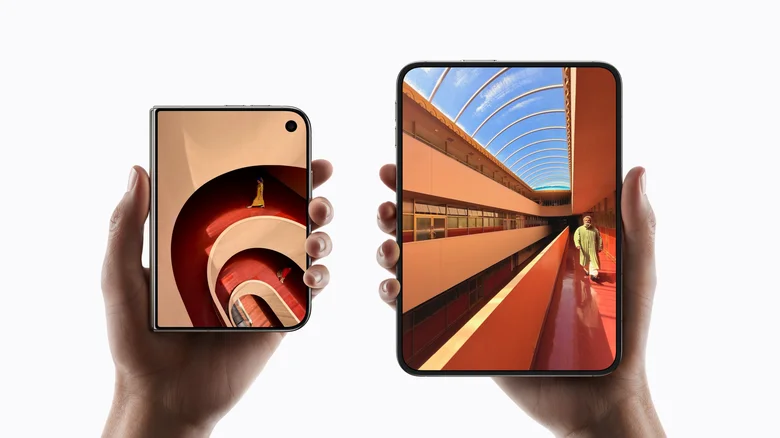
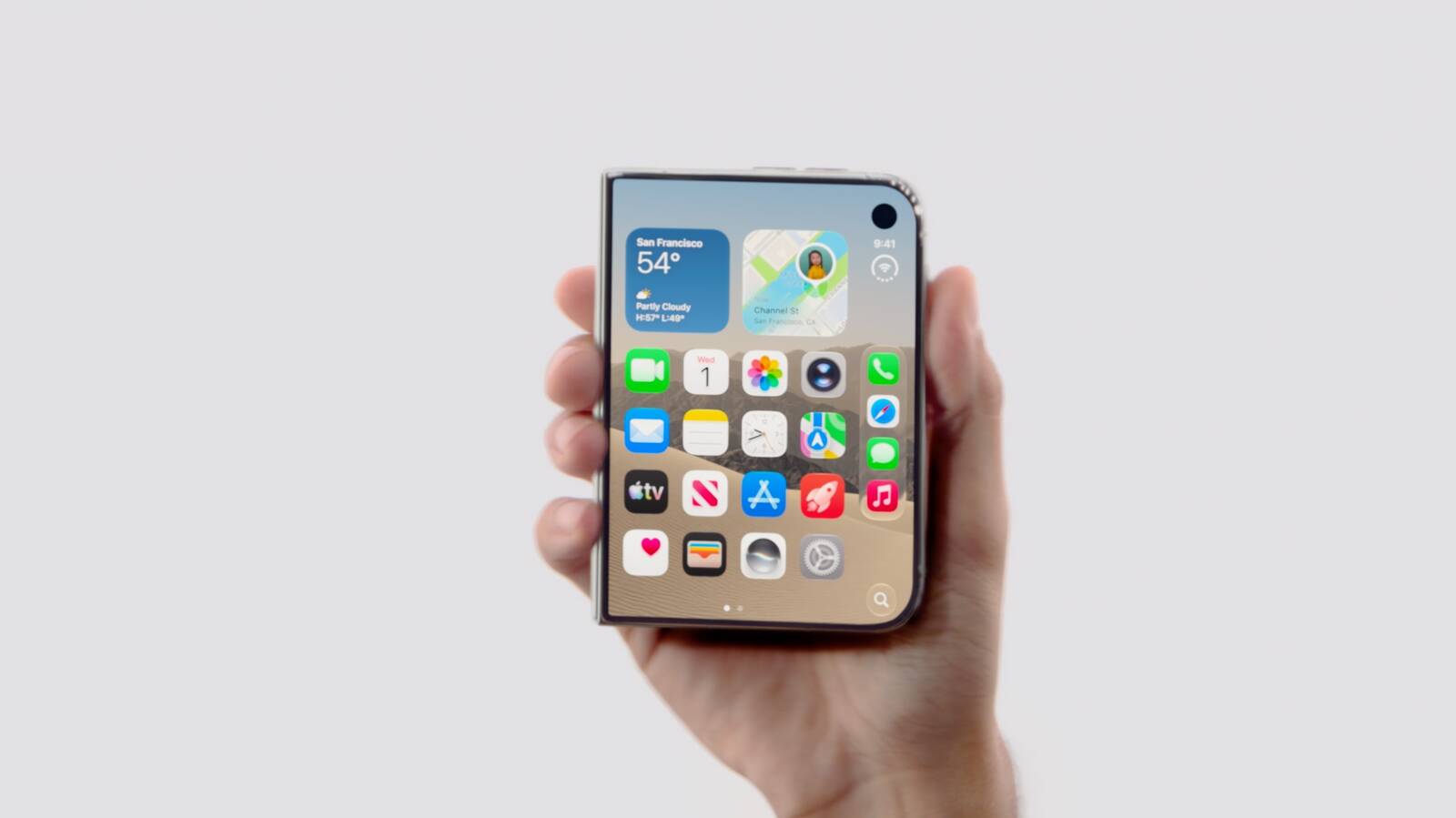
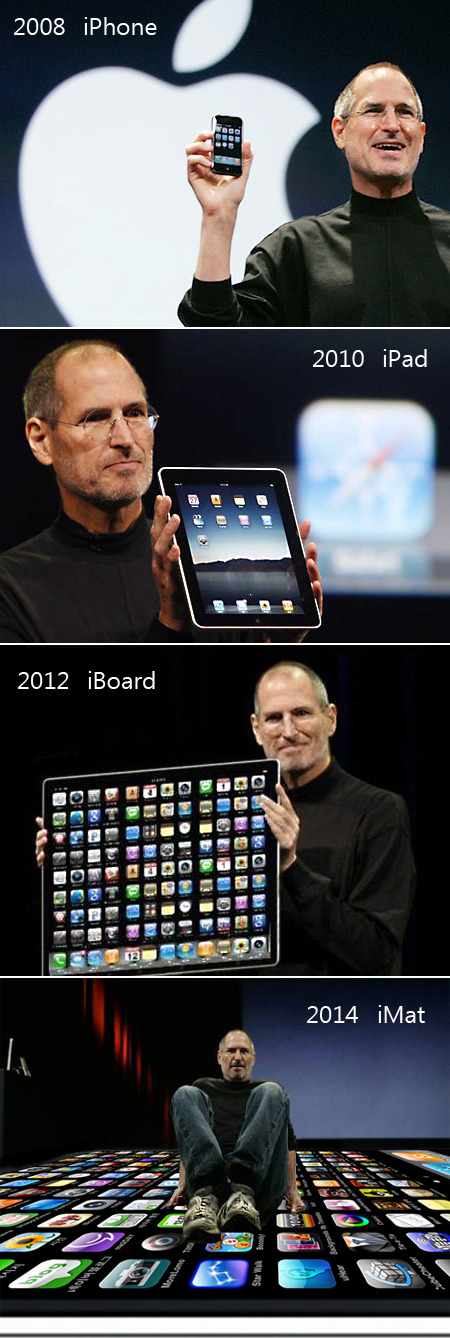

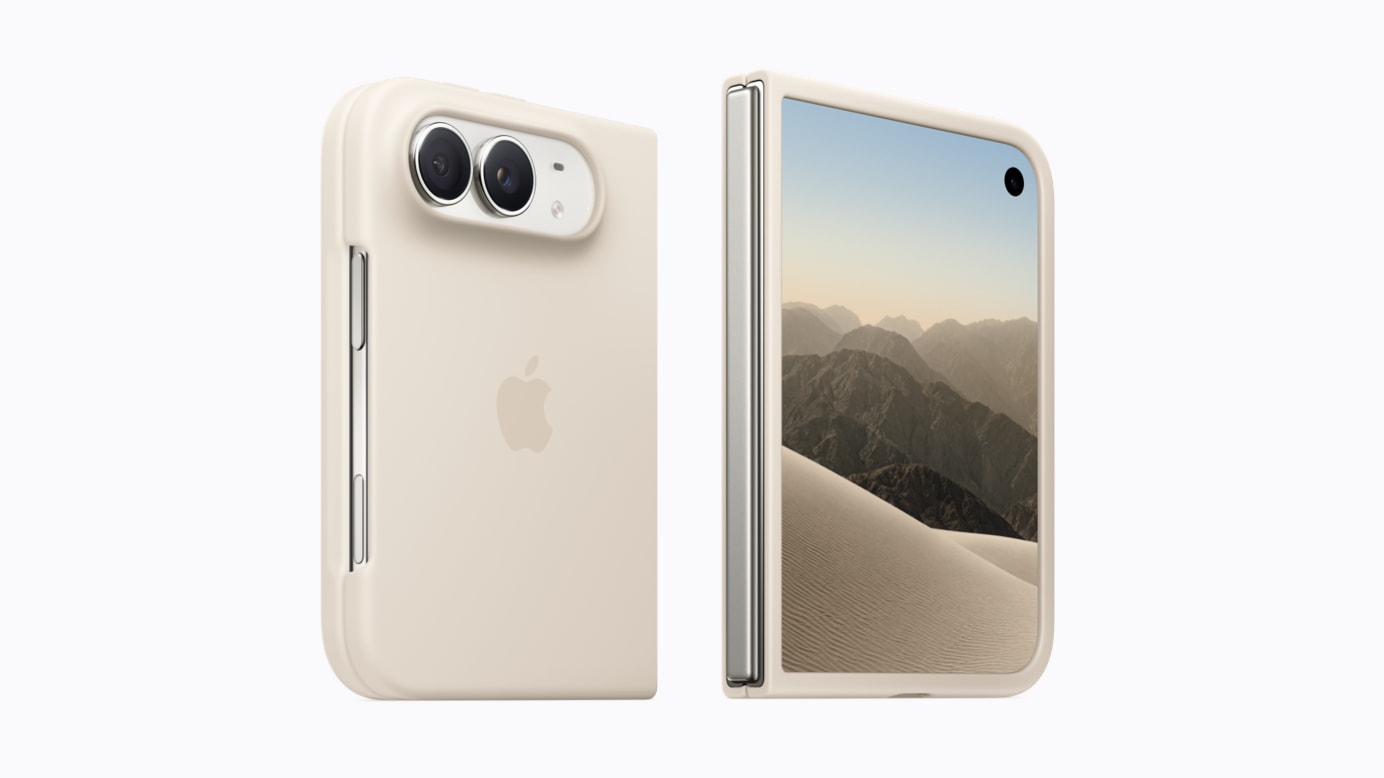
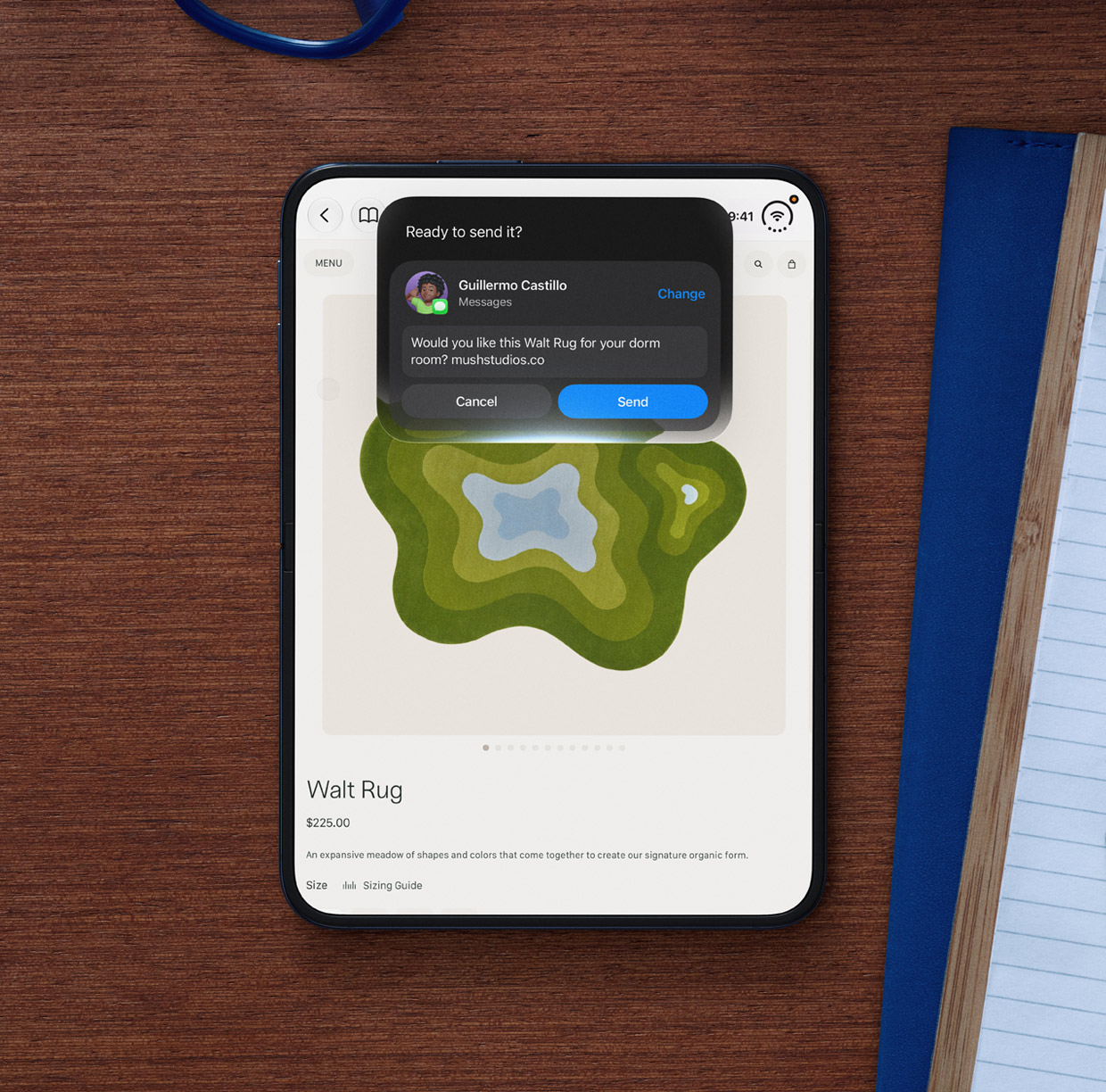
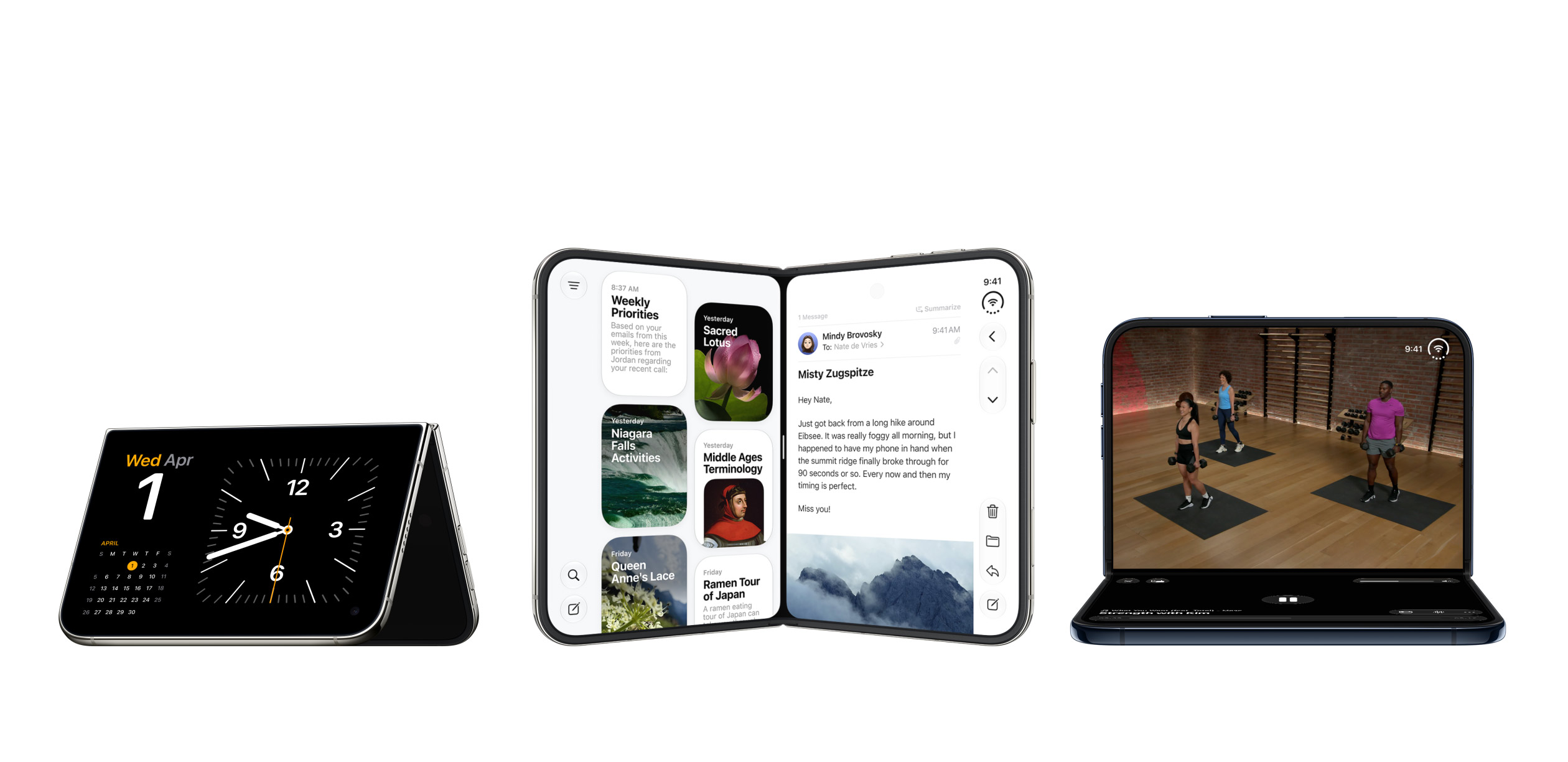


reply